



Medical Tourism: Who Can You Trust?Transparent Infomation · Expert Guidance · Informed Choices
Seeking medical treatment abroad doesn’t mean that the more money you spend, the better the outcome will be, nor does it mean that the more appealing the promises, the more reliable they are.
In recent years, an increasing number of patients from places like Malaysia and Indonesia have come to China for medical care. However, when confronted with the promotional materials from different cancer hospitals, many people are left with questions:
Does this hospital truly offer services for international patients?
Are the treatment costs transparent?
Can the promise of “pain-free treatment and immediate discharge” be trusted?
To prevent more international patients from being misled, we have compiled publicly available information from several representative cancer hospitals and compared multiple key dimensions to help you make rational choices and avoid unnecessary detours.
Free Consultation · Book NowChoose the Right Hospital, Avoid Pitfalls
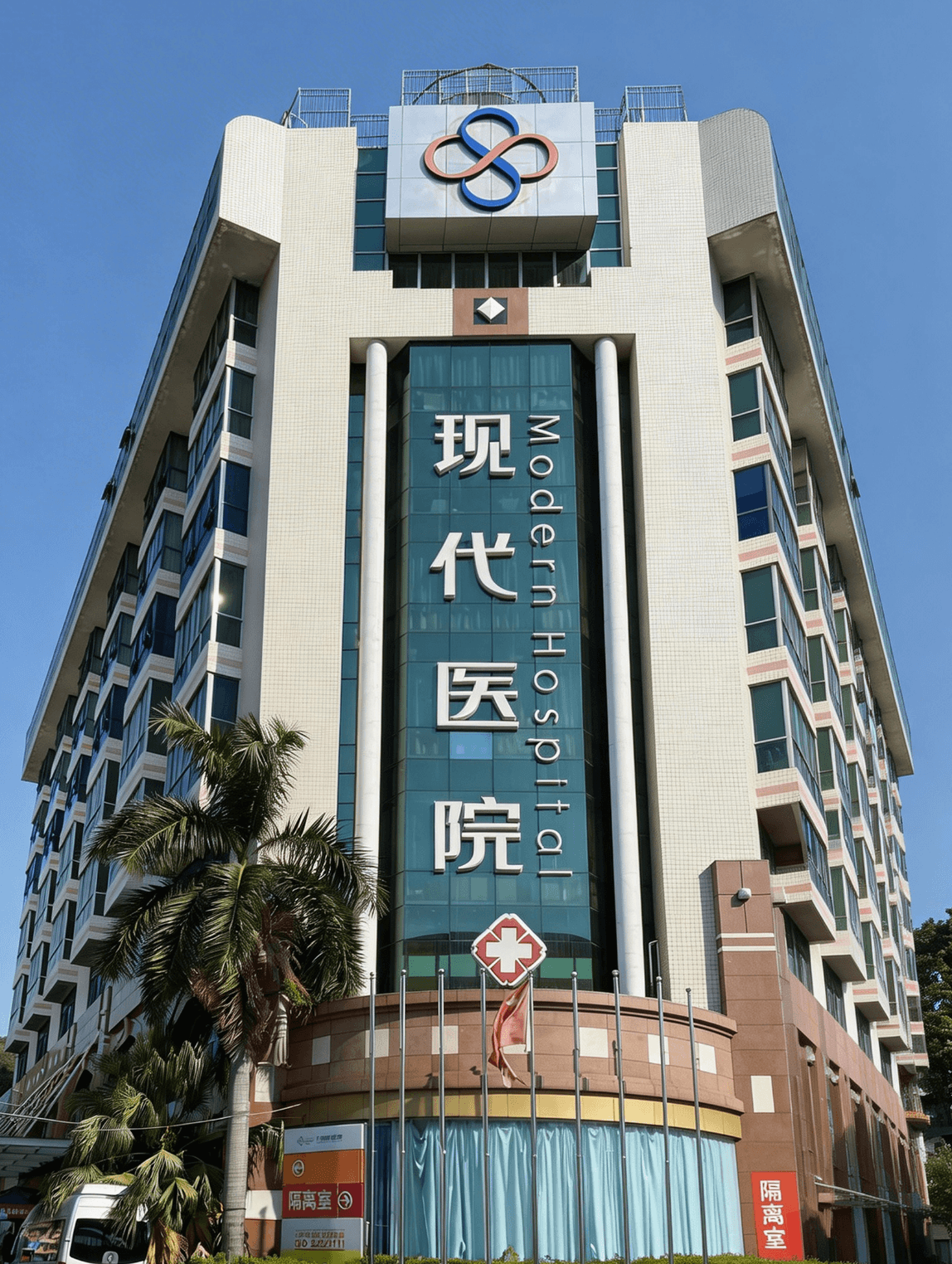
| Modern Cancer Hospital Guangzhou | A cancer specialty hospital in the southwest region | |
|---|---|---|
| Establishment Time | 2005 | 2018 |
| Location & International Transportation | Guangzhou – Global first-tier city 200+ international routes at Baiyun Airport, frequent direct flights from Southeast Asia | Southeast Asia routes developing Fewer direct flights, some transfers required |
| Multilingual Services | Offer multilingual translations in English, Indonesian, Thai, Vietnamese & Russian | N/A |
| Featured Treatments | Create personalized minimally invasive treatment plans blending Chinese and Western medicine | Gyro knife (Conventional radiotherapy) |
| Treatment Approach | Multidisciplinary Team (MDT) + Combination of 18 Minimally Invasive Technologies Personalized treatment based on cancer type, stage, and patient condition | Mainly uses Gyro Knife One device for multiple cancer types |
| Real Case Sharing | Videos/interviews with overseas patients | Few cases with lack of detailed information |
| Overseas Service Centers | Has its own service center in Malaysia with over 10 years of local presence – not an agency Provides full support and on-site assistance | No overseas branches currently. Works through agency partners, with primary patient reception in China |
| Treatment Cost Structure | Transparent breakdown of treatment & management fees | Not publicly disclosed & further consultation needed for confirmation |
| Over-promising or Not | Both website and doctor interviews stress “individual differences; no guarantee of painless, quick discharge” | Exaggerated claims like “painless” and “treat & go.” Routine radiotherapy labeled as “non-invasive.” |
Strengths and Highlights of Modern Cancer Hospital Guangzhou
10+ years of deep local roots, with dual centers in Kuala Lumpur and Penang
Served tens of thousands of international patients – covering consultation, referral, travel, and follow-up. Truly seamless “home to Guangzhou” support
We don’t rely on exaggerated terminology or false promises.
We rely on genuine healing stories and the trust of every Malaysian patient.
We focus on delivering “authentic, professional, and trustworthy” solutions for minimally invasive cancer treatment abroad!
Common Misconceptions to Avoid
Is “Pain-Free Treatment and Immediate Discharge” Really Reliable?
On the internet and in short videos, many patients come across similar promotional phrases:
“Zero pain, leave right after the procedure!”
“Non-invasive treatment with same-day discharge, complete eradication without recurrence!”
“One treatment, lifelong peace of mind!”
These catchy advertisements may seem appealing and effortless, but they often fail to clarify specific details such as the size and stage of the lesion, individual physical differences, and postoperative recovery arrangements. This can easily mislead patients into thinking that the treatment is as simple as undergoing a minor surgical procedure.
Although minimally invasive/ interventional/ cryo/ ablation treatments for tumors cause minimal trauma, the body still needs time to recover.
Some patients with weaker constitutions may experience local swelling, slight bleeding, low-grade fever, or short-term discomfort, all of which are normal parts of the medical recovery process.
Blindly pursuing “leaving immediately” may overlook necessary observation and increase the risk of complications.
Even if surgery or minimally invasive procedures remove local lesions, follow-up visits, examinations, immune support, and nutritional adjustments are still necessary afterward, rather than relying on a “one-time cure.”
International guidelines also emphasize: “Continuous monitoring and individualized rehabilitation are equally important, regardless of the treatment method.”
It’s a key cancer treatment, but labeling it “non-invasive” may cause patients to overlook the need for pre-treatment evaluation and post-treatment care.
Radiation therapy requires precise planning. Some patients may experience skin or mucosal reactions – these are normal and should be monitored.
Truly professional hospitals do not use “pain-free and immediate discharge” as a gimmick. Instead, they clearly communicate genuine treatment plans, risk assessments, and postoperative management strategies, enabling patients and their families to be fully informed.
If a hospital blindly promises “painless and effortless discharge” without providing individualized risk explanations or postoperative follow-up plans, that is the biggest red flag.
Real Treatment Stories from International Patients
Yoo khee Chai
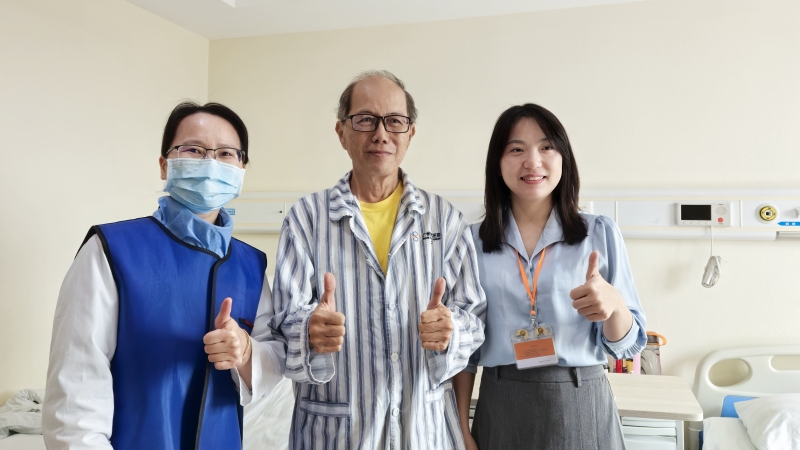
(Yoo khee Chai)
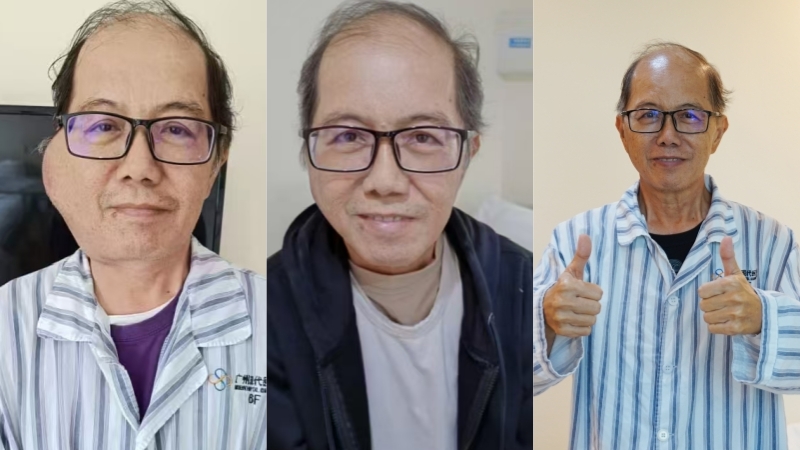
(Before treatment VS After first treatment VS After overall treatment)
Yip Woon Thing
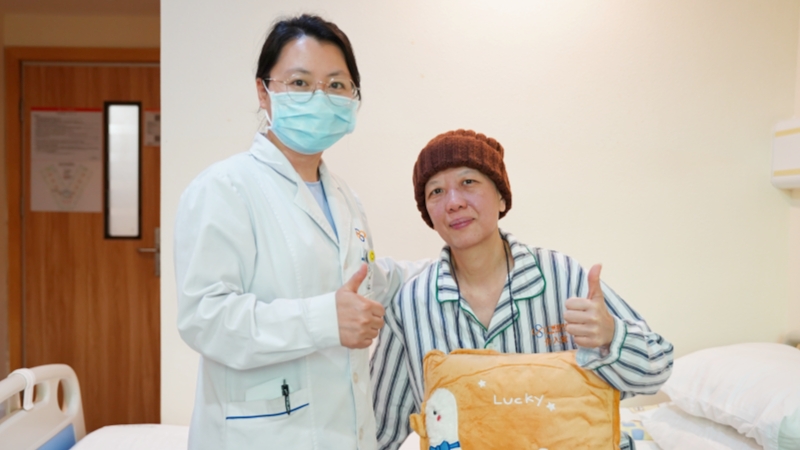
(Yip Woon Thing)
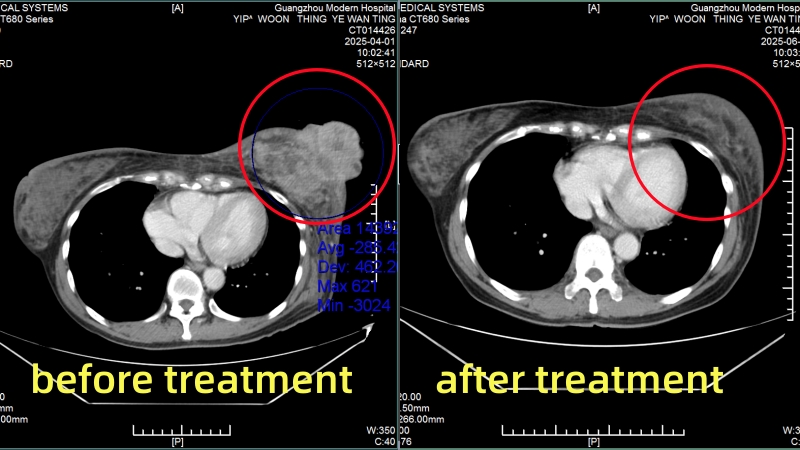
(Before treatment VS After first treatment)
Tan Soy Mok
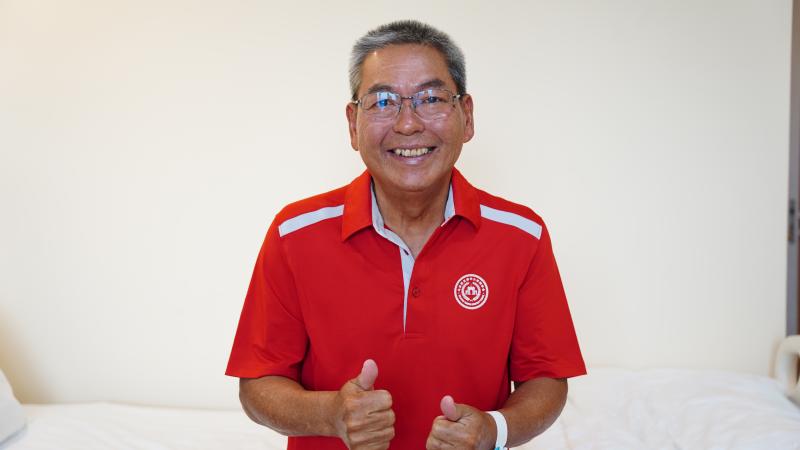
(Tan Soy Mok )
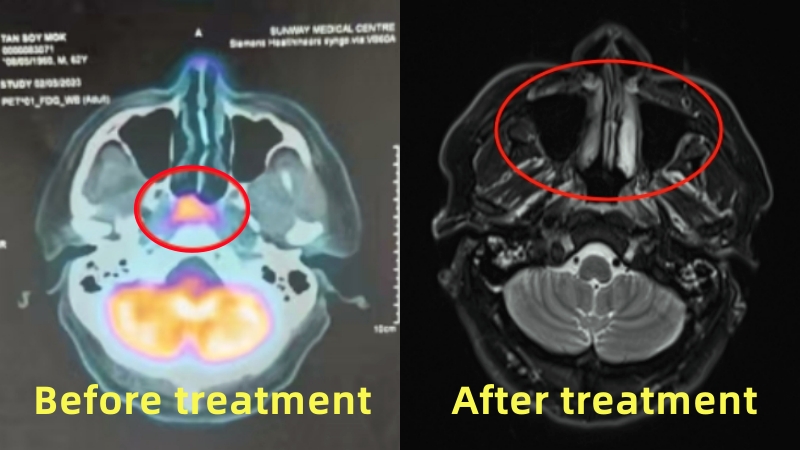
(Before treatment VS After treatment)
Rational Choice Matters More Than Advertisements
When it comes to cancer treatment, it’s not about who shouts the loudest slogans; it’s about who is truly reliable.
Truly responsible hospitals never lure patients with claims like “pain-free and discharge immediately” or “one-time cure.” Instead, they rely on real-life cases, individualized treatment plans, and professional whole-course management to help patients achieve longer survival and a better quality of life.
Advertisements can be copied and pasted, but professionalism cannot be faked.
Every treatment plan should be scientifically tailored based on a patient’s physical condition.
Every patient deserves authentic and verifiable anti-cancer stories, not just flashy gimmicks.
If you also hope to:
✅ Avoid being misled by over-the-top promises;
✅ Have a multidisciplinary team create a personalized treatment plan for you;
✅ Learn about the treatment processes and outcomes of real overseas patients;
✅ Make an informed decision about transnational medical treatment after a remote video consultation.