



 Views:62
 2025-12-26
 Share
Share


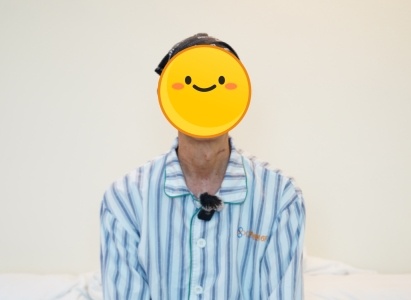
- Wu Wen Bor Malaysia
- Diseases:Tongue Cancer
- Treatment programs:Interventional Therapy + Seed Implantation + Natural Therapy
When 60-year-old Wu Wen Bor discovered that a small lump on his tongue tip was a highly active cancer, he faced a brutal choice: undergo conventional treatment in Malaysia that could cost him his entire tongue, or travel to China in search of a glimmer of hope. His story is one of fear, courage, choice, and rebirth.
Sudden Bad News|Cancer Strikes – Is “Tongue Removal” the Only Option?
In September 2024, Malaysian Chinese Wu Wen Bor unexpectedly noticed a lump measuring approximately 2.21.5cm on his tongue tip. At first, he thought it was just ordinary inflammation, but the accompanying melanin deposition left him uneasy. He went to a local hospital for an excisional biopsy. The report hit him like a thunderbolt—tongue melanoma, with highly active cancer cells (Ki-67 > 50%).
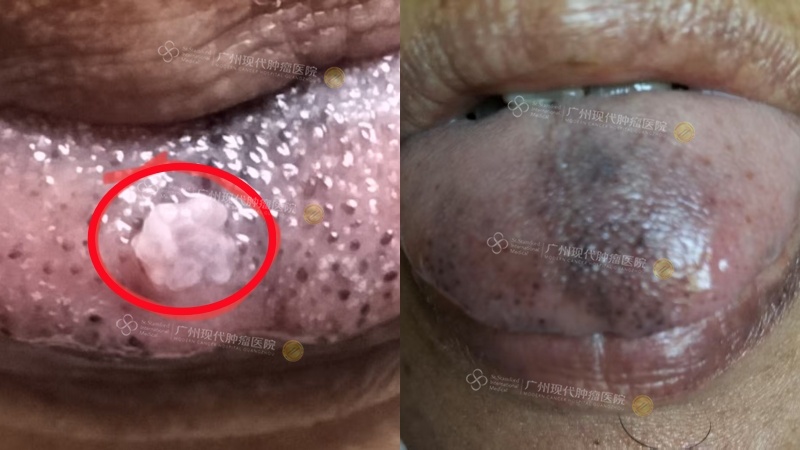
(The lump and melanin deposition on the tongue tip)
After a brief recovery from the excisional biopsy at a local hospital in October 2024, Wu Wen Bor experienced difficulties eating and speaking. He had hoped everything would improve, but by February 2025, the tumor had recurred. He sought help from another hospital, where another excisional biopsy was performed. The result was undeniable: cancer. For anyone, this would be a devastating diagnosis—especially for a 60-year-old husband and father.
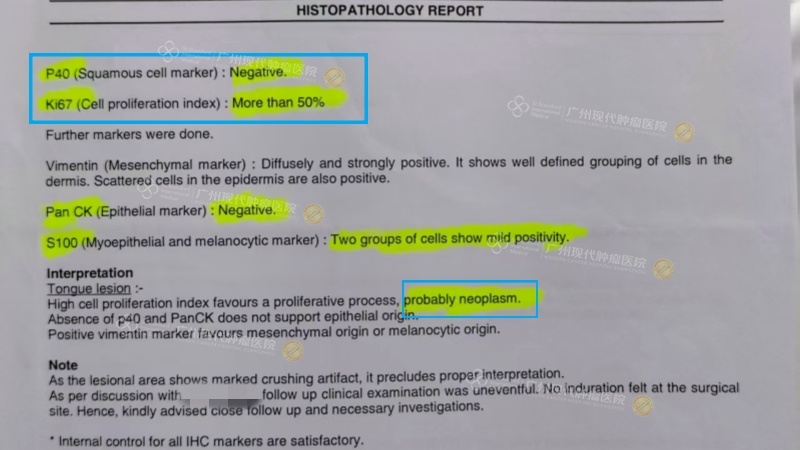
(Image: Wu Wen Bor’s local medical report showing Ki-67 > 50%)
What made him even more desperate was that the treatment options given by doctors in Malaysia were limited to just three: radiotherapy, chemotherapy, or total glossectomy (complete tongue removal). In his eyes, each option came with an unbearable cost. The thought of potential disfigurement, loss of speech, and difficulty eating filled him with resistance.
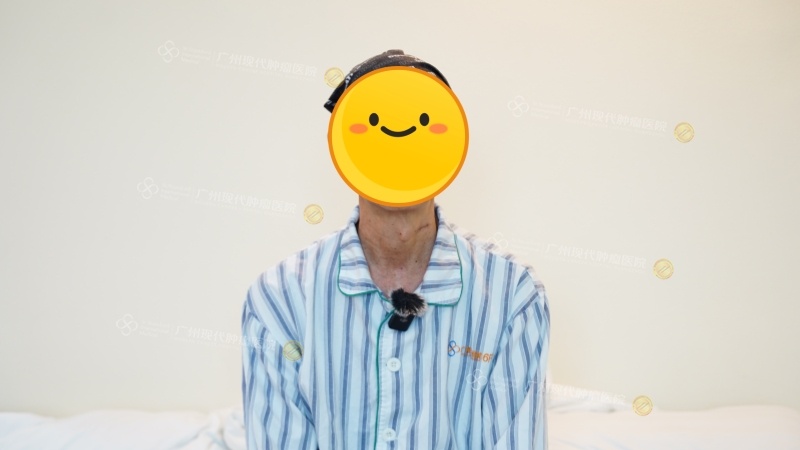
(Wu Wen Bor)
Torn between the desire to live and the fear of losing his quality of life after treatment, he felt painted into a corner. Caught in this dilemma, he began looking abroad, urgently searching for a new treatment that could save his tongue—and his quality of life.
The turning point came in mid-April 2025, when Dr. Lin Jing from Modern Cancer Hospital Guangzhou held a seminar at Wisma MCA in Kuala Lumpur. Hoping for a chance, Wu Wen Bor brought his medical reports and attended. It was there that he first learned about minimally invasive interventional therapy.
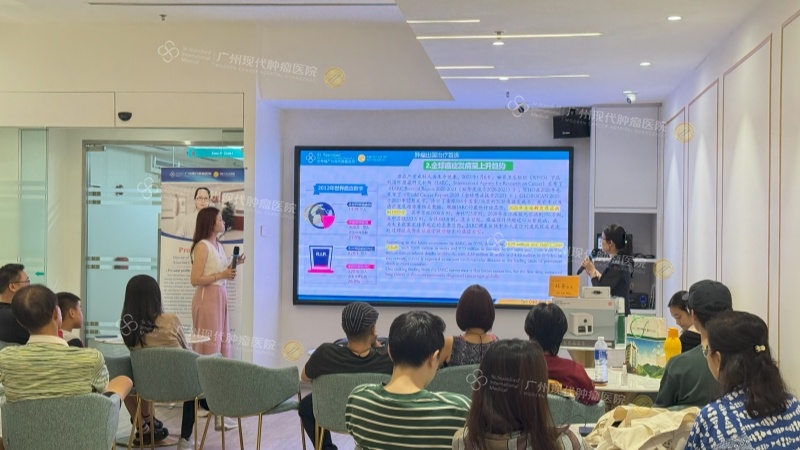
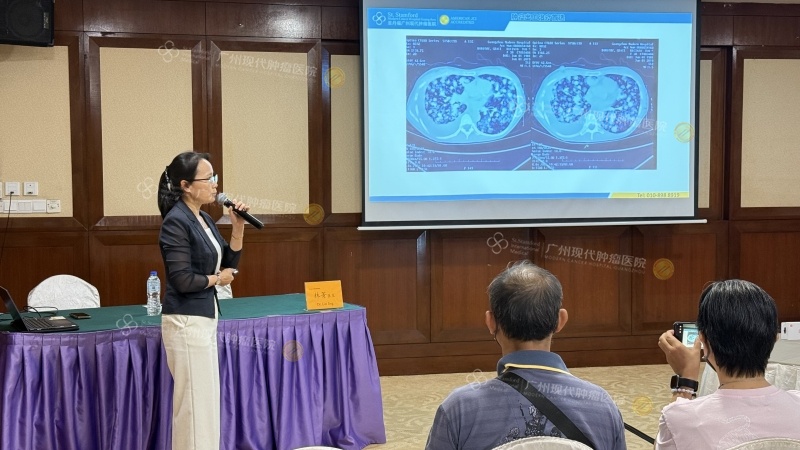
(Dr. Lin Jing's Previous Offline Event)
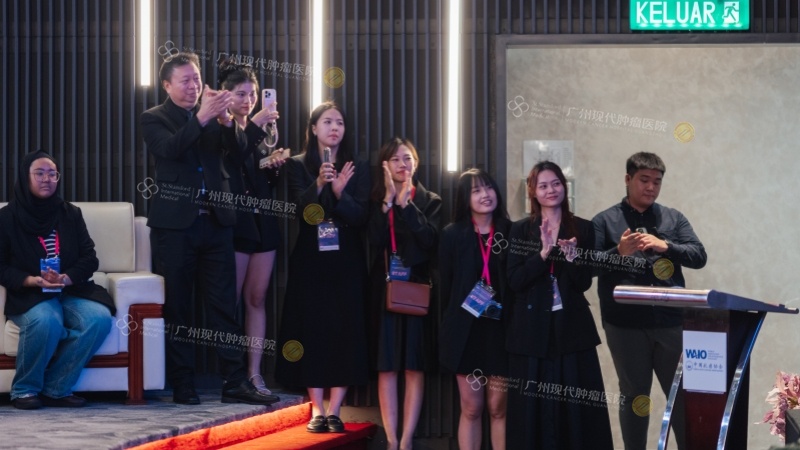
(Our Hospital’s International Service Center Team in Malaysia)
Upon arrival at the hospital, Wu Wen Bor immediately underwent a thorough examination. The results revealed a mass in his neck, which was confirmed via excisional biopsy as lymph node metastasis of tongue melanoma (Pathological Stage: III). Since he firmly refused conventional treatment options, our hospital's MDT (Multi-Disciplinary Team) fully respected his wishes. After extensive discussion, we developed an integrated minimally invasive treatment plan centered on "Interventional Therapy + Seed Implantation Therapy + Natural Therapy."
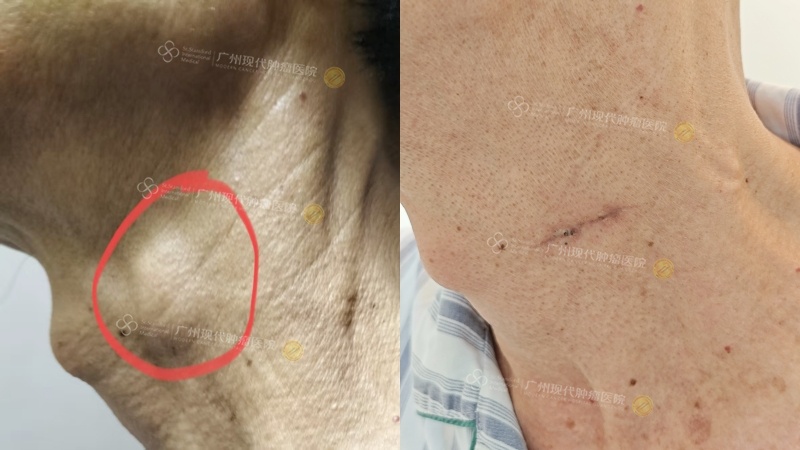
(Neck lymph node before and after treatment)
In contrast, the minimally invasive treatment plan developed by our MDT for Wu Wen Bor combined "Interventional Therapy + Seed Implantation + Natural Therapy":
Radioactive seeds were precisely implanted into the tongue tip, functioning like targeted radiation to continuously eliminate tumor cells 24/7 and effectively inhibit cancer spread.
Local perfusion of high-concentration antitumor drugs was applied to the cervical lymph node lesions, accurately targeting the tumor while protecting surrounding healthy tissue.
Natural Therapy was used to enhance the patient’s immune function, reduce treatment side effects, and prevent cancer recurrence—ultimately achieving the dual goals of preserving the tongue and improving quality of life.
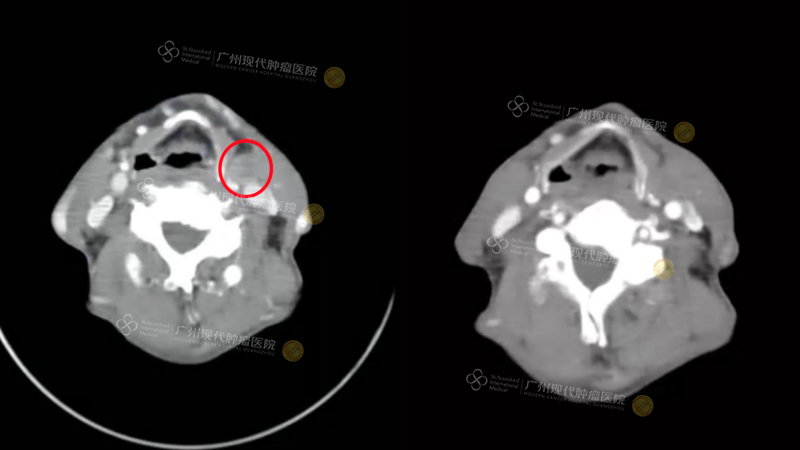
( Metastatic neck lymph node — Admission scan on April 29 vs. Follow-up CT on August 1)
Admitted in late April 2025 and successfully discharged on August 28 after undergoing six interventional therapy sessions and radioactive seed implantation at the tongue tip, Wu Wen Bor has now seen the cancer cells in both the tongue tip and neck lesions completely deactivated.“In just four months, my cancer was cured. I never expected it to be so fast—I thought it would take at least one or two years to return to a normal life.” Faced with such remarkable results, he was deeply moved and repeatedly expressed his amazement at the power of minimally invasive technology.
What pleasantly surprised him was that the entire treatment process did not cause severe pain. Wu Wen Bor mentioned that aside from mild fatigue and a temporary loss of appetite for a few days after the procedures, he experienced almost no significant discomfort. What excited him the most, however, was the successful achievement of the treatment goal—his tongue was preserved intact. Compared to the previously warned risks of "disfigurement, speech difficulties, and oral ulceration," the outcome made him feel incredibly fortunate. This overwhelming joy dissolved all his earlier worries and initial fears about the unknown.
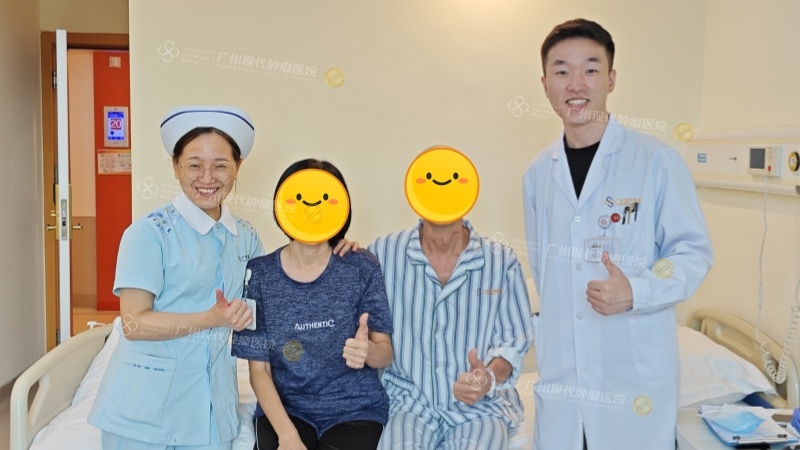
Wu Wen Bor did not hesitate to praise the medical expertise and service at Modern Cancer Hospital Guangzhou. From the moment he was picked up at the airport, he experienced meticulous care. During his hospital stay, he gained not only a gradually recovering body but also warmth from the medical staff. Dr. Lin Jing, Dr. Dong, the head nurse, the nurses, and even the cleaning auntie—all offered him kind smiles and caring support. Daily light-hearted jokes and patient nursing made him feel an unprecedented sense of comfort far from home. Before being discharged, he specifically wrote a thank-you letter, naming every one of them, simply because “they were truly so good to me.”
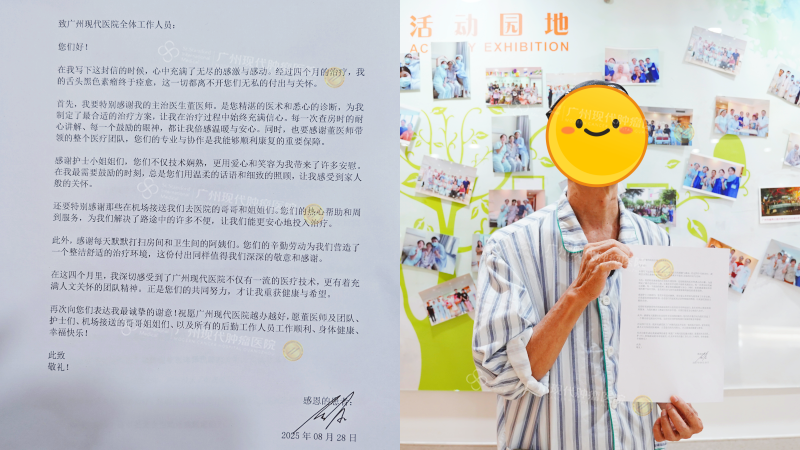
(Wu Wen Bor’s thank-you letter)
Therefore, he plans to bring the materials he carefully collected and his experience in China back to Malaysia. He hopes to introduce more cancer patients to minimally invasive technologies such as particle implantation, interventional therapy, cryotherapy, and thermotherapy—offering encouragement and hope to those facing similar struggles.
“Why limit yourself to surgery, radiotherapy, or chemotherapy? In China, there are so many better options.” This is the message he wants to share with fellow cancer patients.
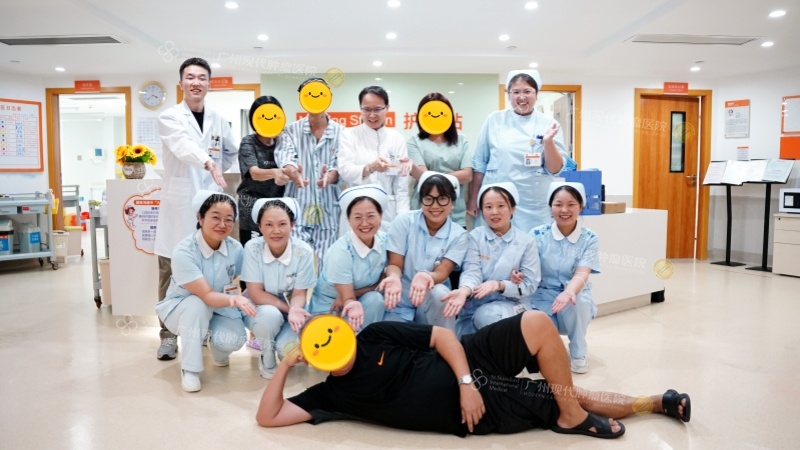
(Wu Wen Bor and other cancer patients with our medical team before discharge)
He is willing to become a bridge, conveying China’s advanced medical technology and hope for life to more people in need.