Breast Cancer
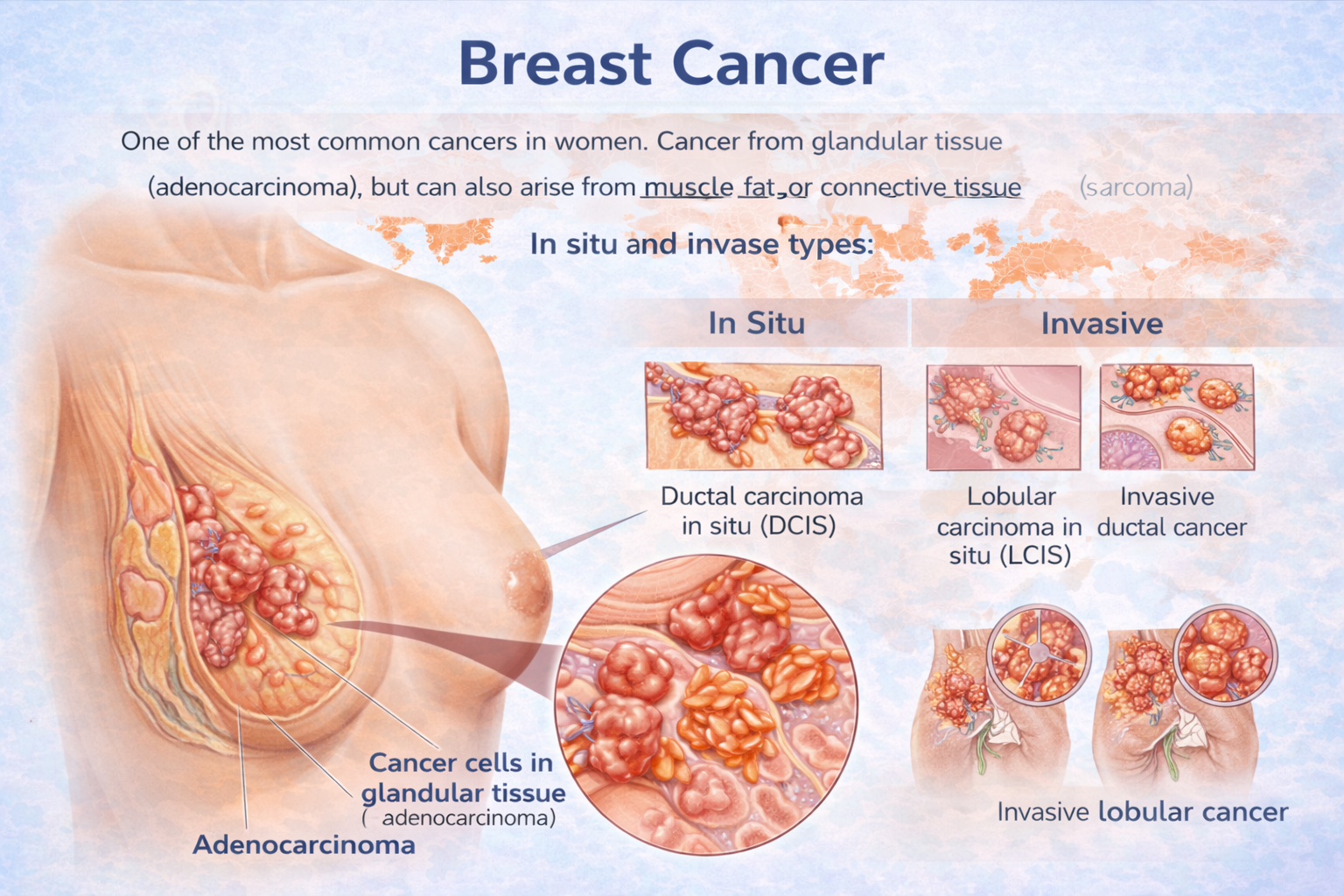
Breast cancer is one of the most common cancers in women. It usually occurs in the breast tissue and is a type of cancer called "adenocarcinoma", which means that the cancer cells originate from the glandular tissue. There are also other types, such as sarcomas that originate from muscle, fat or connective tissue. Based on the histopathologic type of breast cancer, breast cancer is classified into two broad categories: breast cancer in situ and invasive cancer.
Types
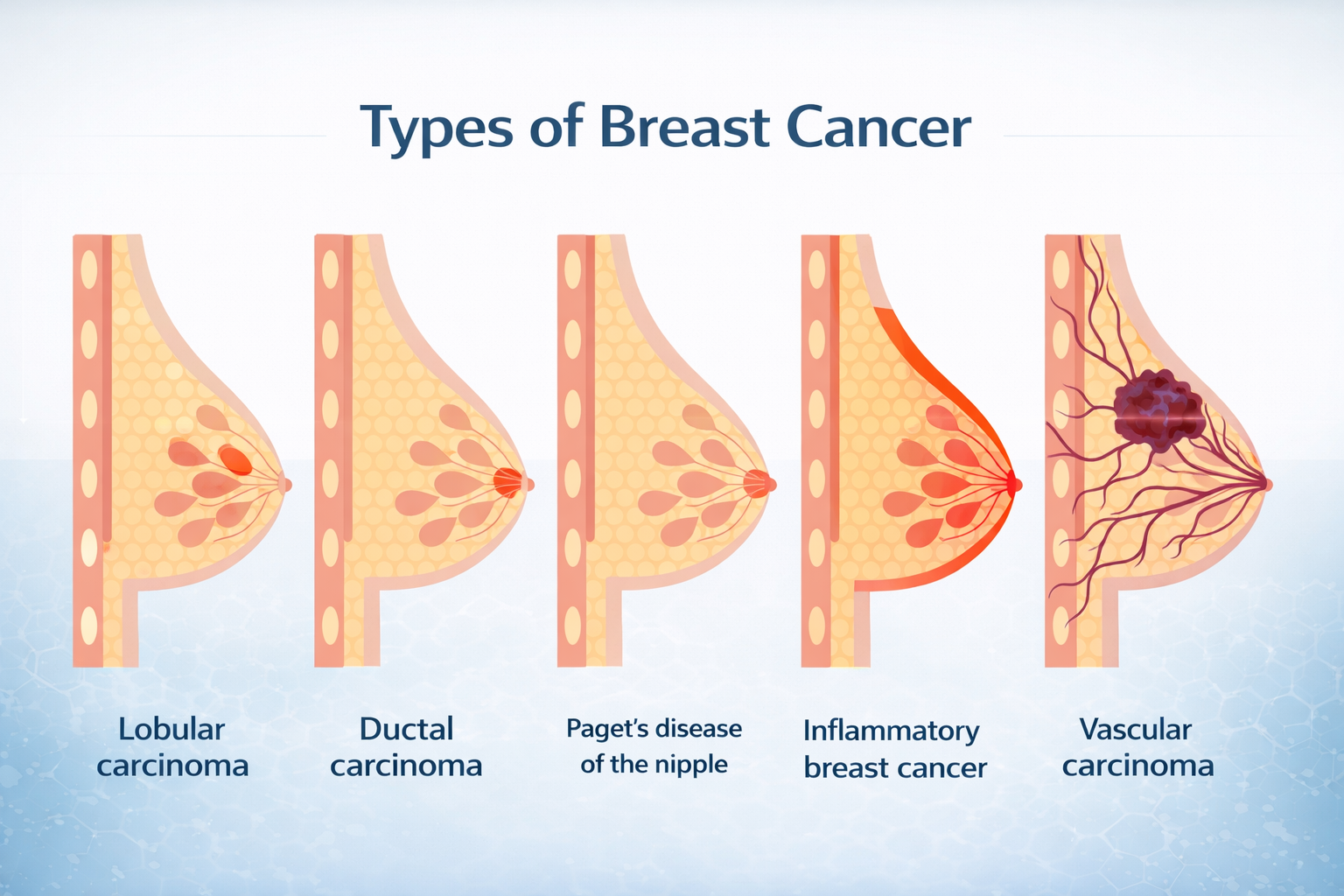
Breast cancer is classified based on where it starts, how it behaves, and its molecular features.
Ductal Carcinoma in Situ (DCIS)
Non-invasive cancer confined to the milk ducts.
Invasive Ductal Carcinoma (IDC)
Most common type; cancer spreads beyond the ducts into surrounding tissue.
Invasive Lobular Carcinoma (ILC)
Starts in lobules and can spread more diffusely within the breast.
Inflammatory breast cancer
Paget disease of the nipple
Medullary, mucinous, tubular carcinoma
Molecular Subtypes (based on receptors)
Stages
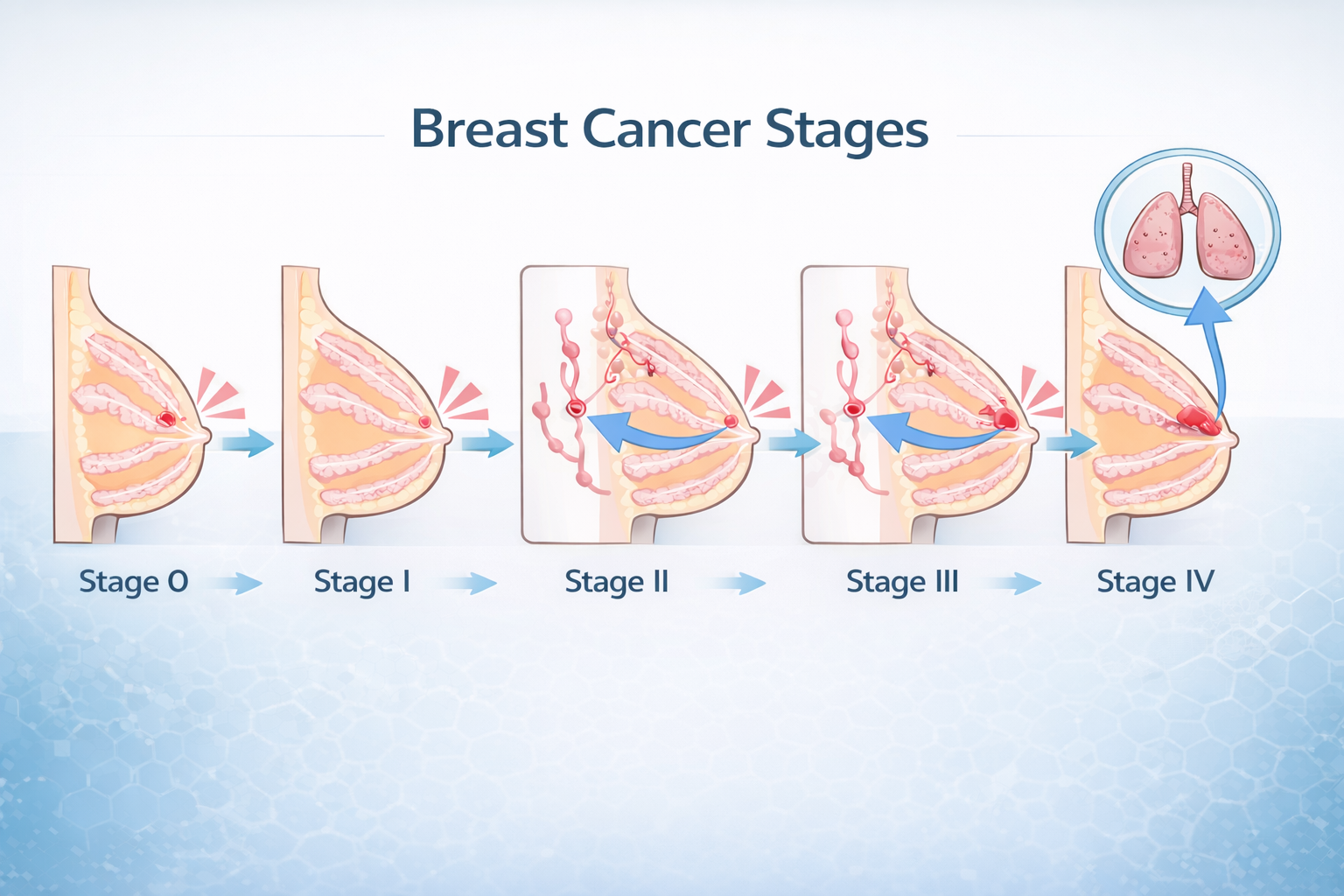
Breast cancer staging describes how advanced the disease is, using the TNM system (Tumor size, lymph Nodes, Metastasis).
Stage 0 – Non-invasive (DCIS)
Stage I – Small tumor, no or minimal lymph node involvement
Stage II – Larger tumor and/or limited lymph node spread
Stage III – Locally advanced disease with extensive lymph node involvement
Stage IV – Metastatic breast cancer (spread to organs such as bone, liver, lung, or brain)
Risk Factors
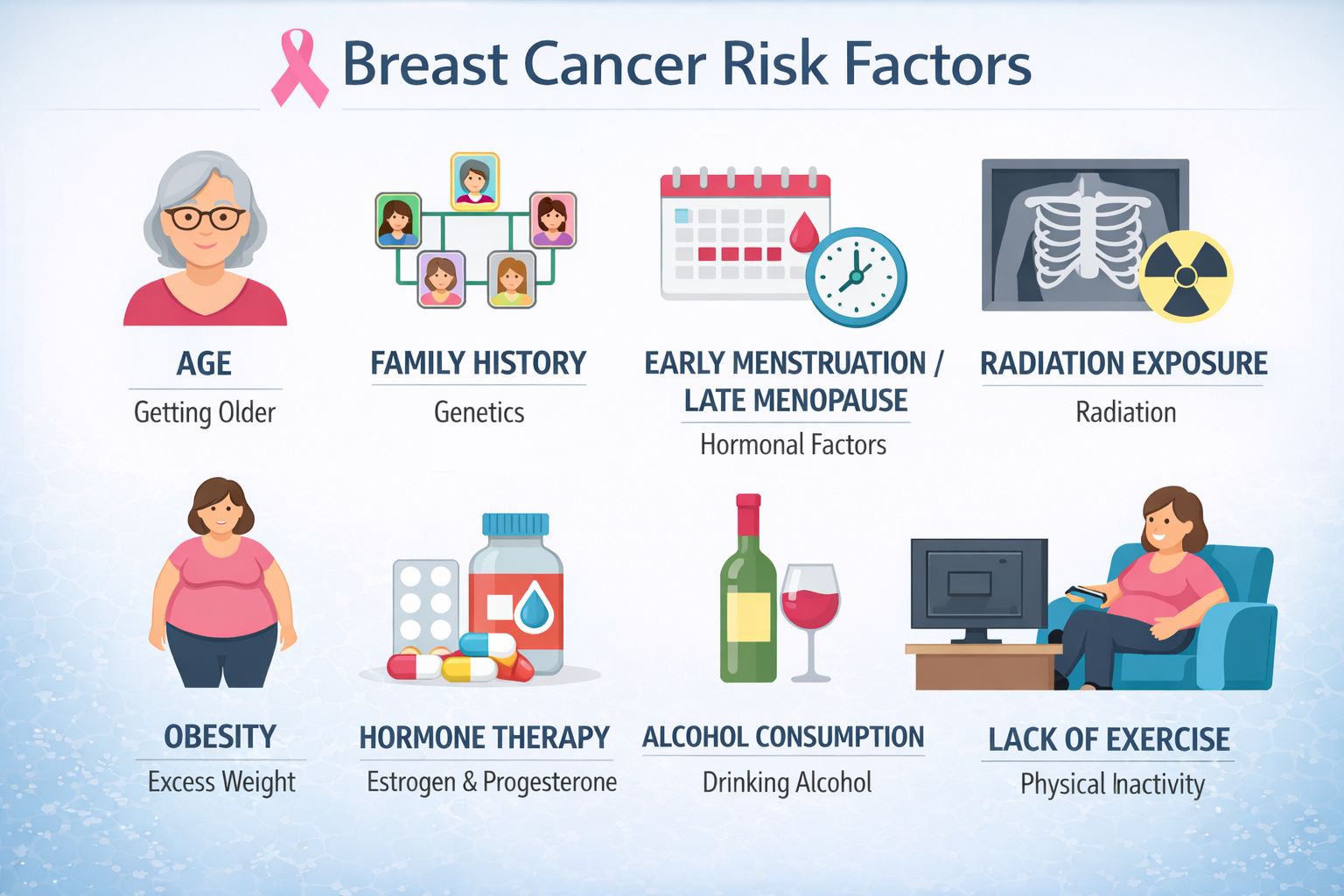
Several factors increase the likelihood of developing breast cancer:
Female sex
Increasing age
Family history of breast or ovarian cancer
Genetic mutations (e.g.BRCA1, BRCA2)
Early menarche or late menopause
Symptoms
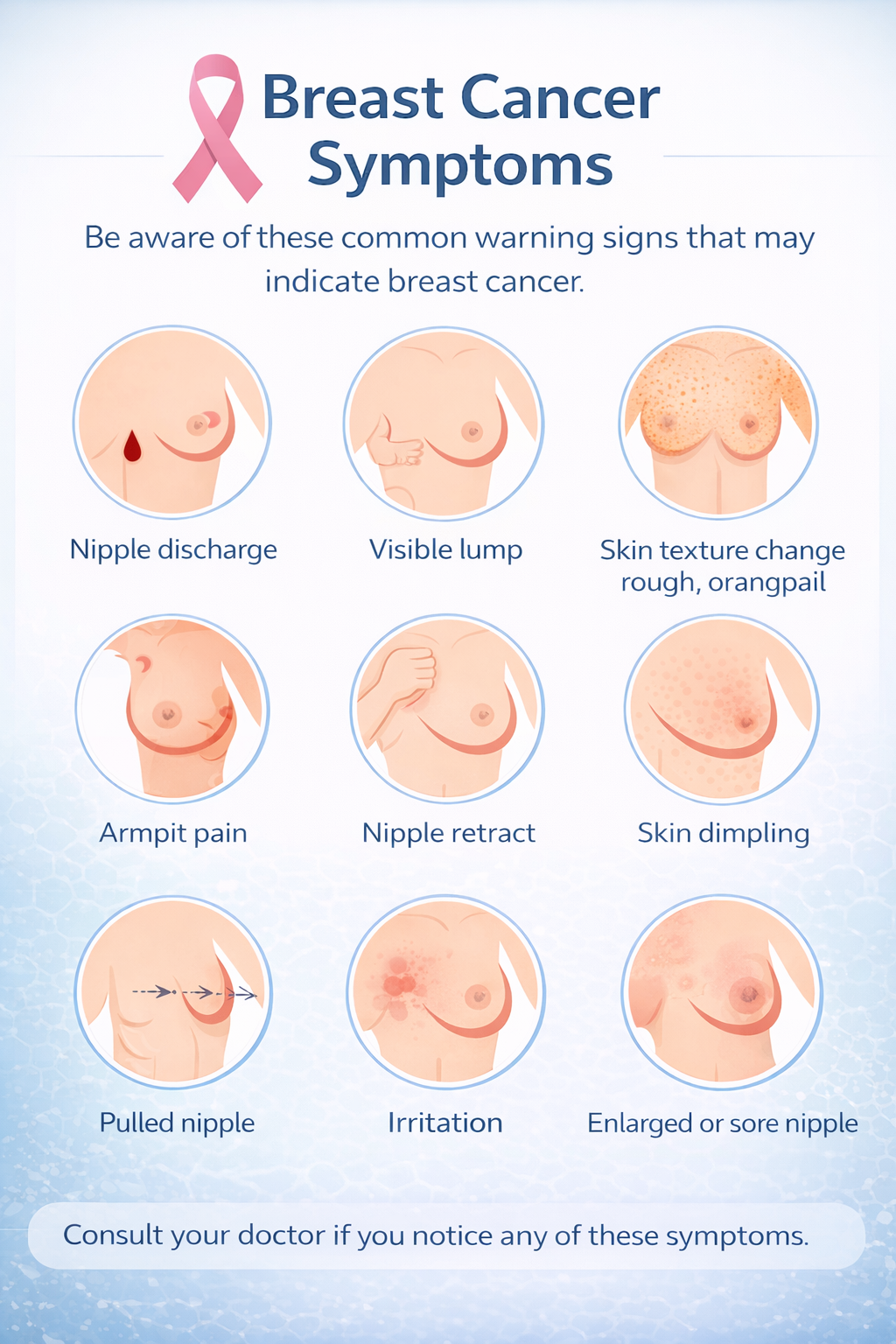
Early breast cancer may be asymptomatic. Common signs include:
Painless breast lump or thickening
Change in breast size or shape
Skin dimpling or puckering
Nipple inversion or discharge (especially bloody)
Redness or scaling of nipple or breast skin
Swelling of lymph nodes in the armpit or collarbone area
Diagnosis
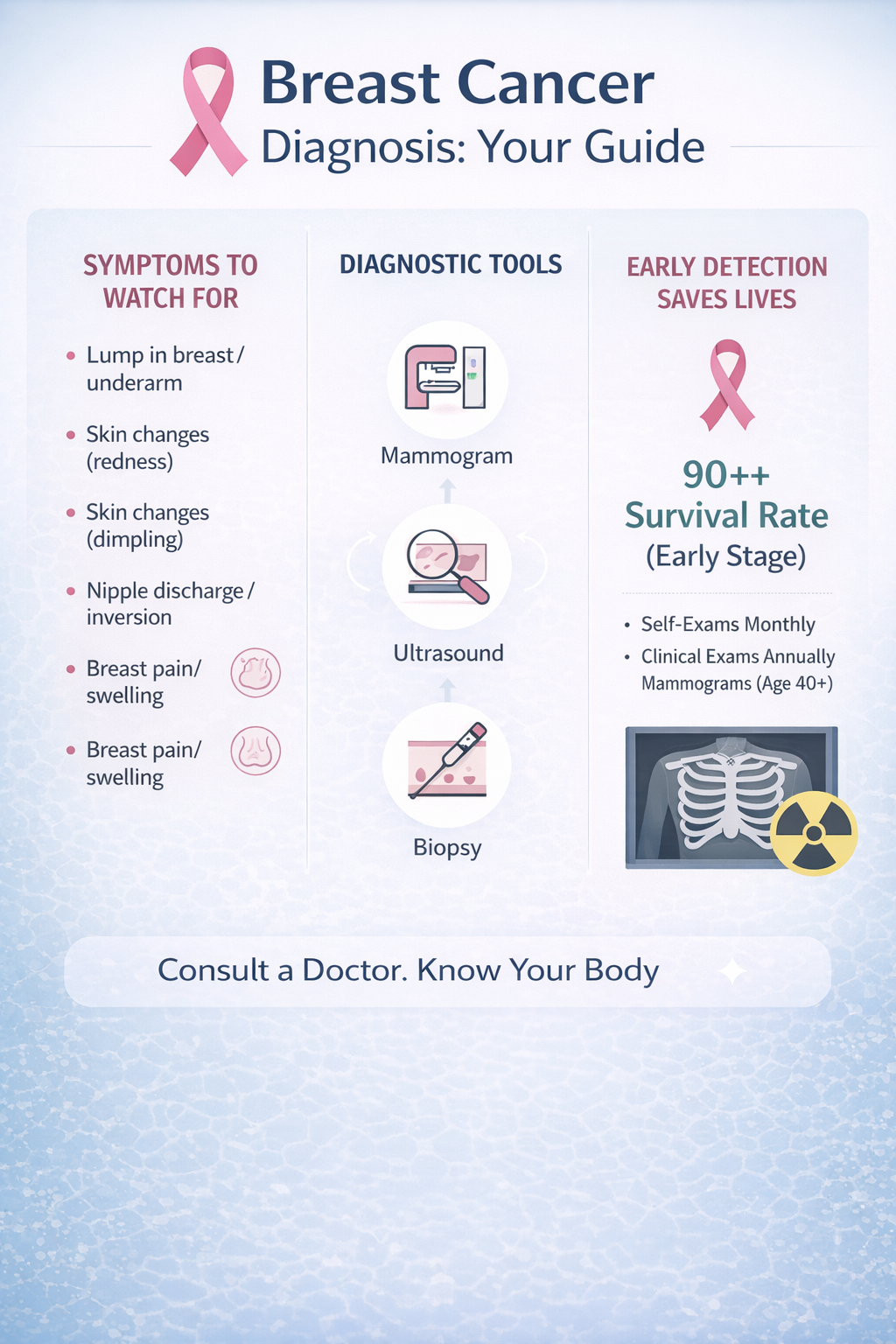
Diagnosis usually involves a combination of clinical, imaging, and pathological tests.
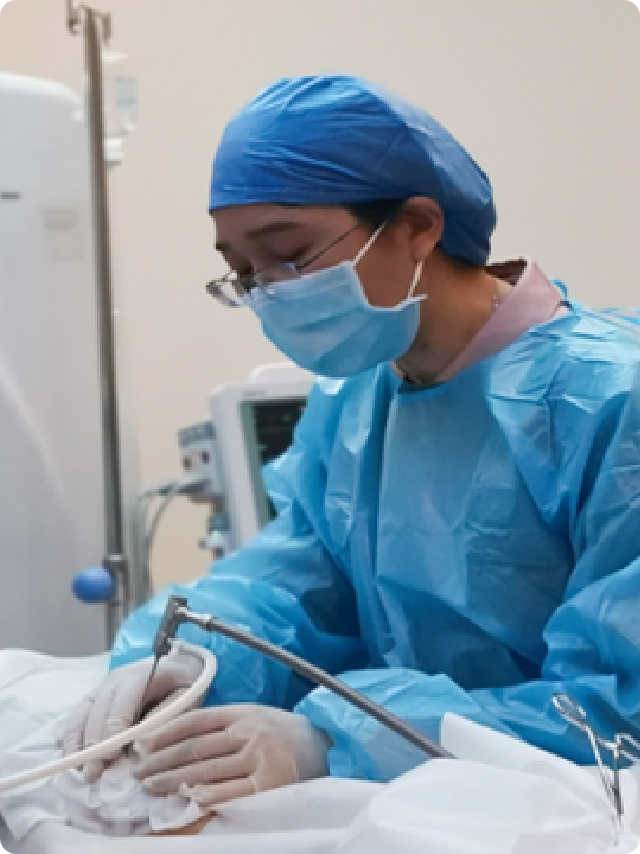
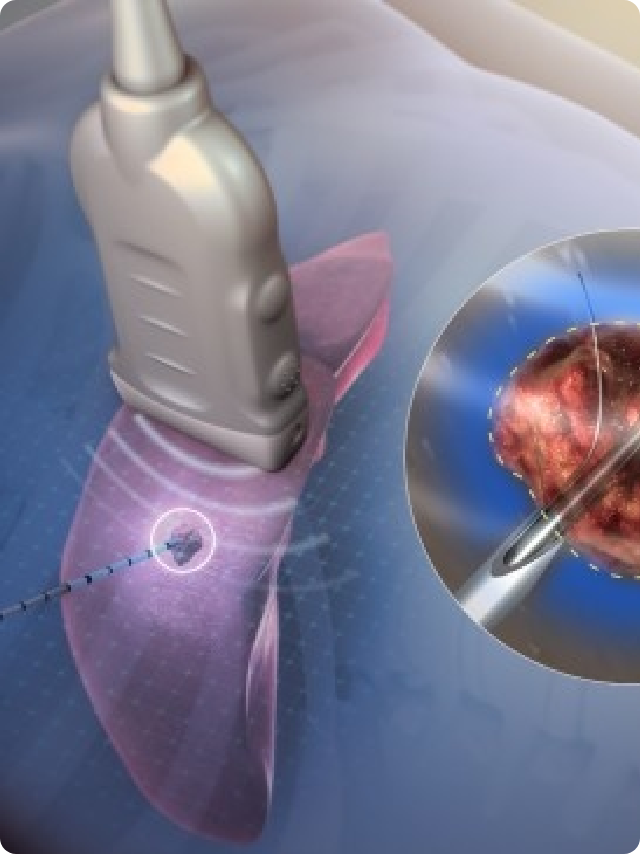
Core needle biopsy
Fine needle aspiration
Surgical biopsy
Q1: Is breast cancer preventable?
Not entirely, but risk can be reduced through lifestyle modification and regular screening.
Q2: Is breast cancer fatal?
Survival depends on stage and subtype. Early detection significantly improves outcomes.
Q3: Do all breast lumps require biopsy?
Not all lumps are cancerous, but persistent or suspicious lumps require evaluation.
Q4: Can breast cancer recur after treatment?
Yes. Long-term follow-up is essential to detect recurrence early.
Q5: Is screening important even without symptoms?
Yes. Many early breast cancers are asymptomatic and detected only through screening.