Colorectal Cancer
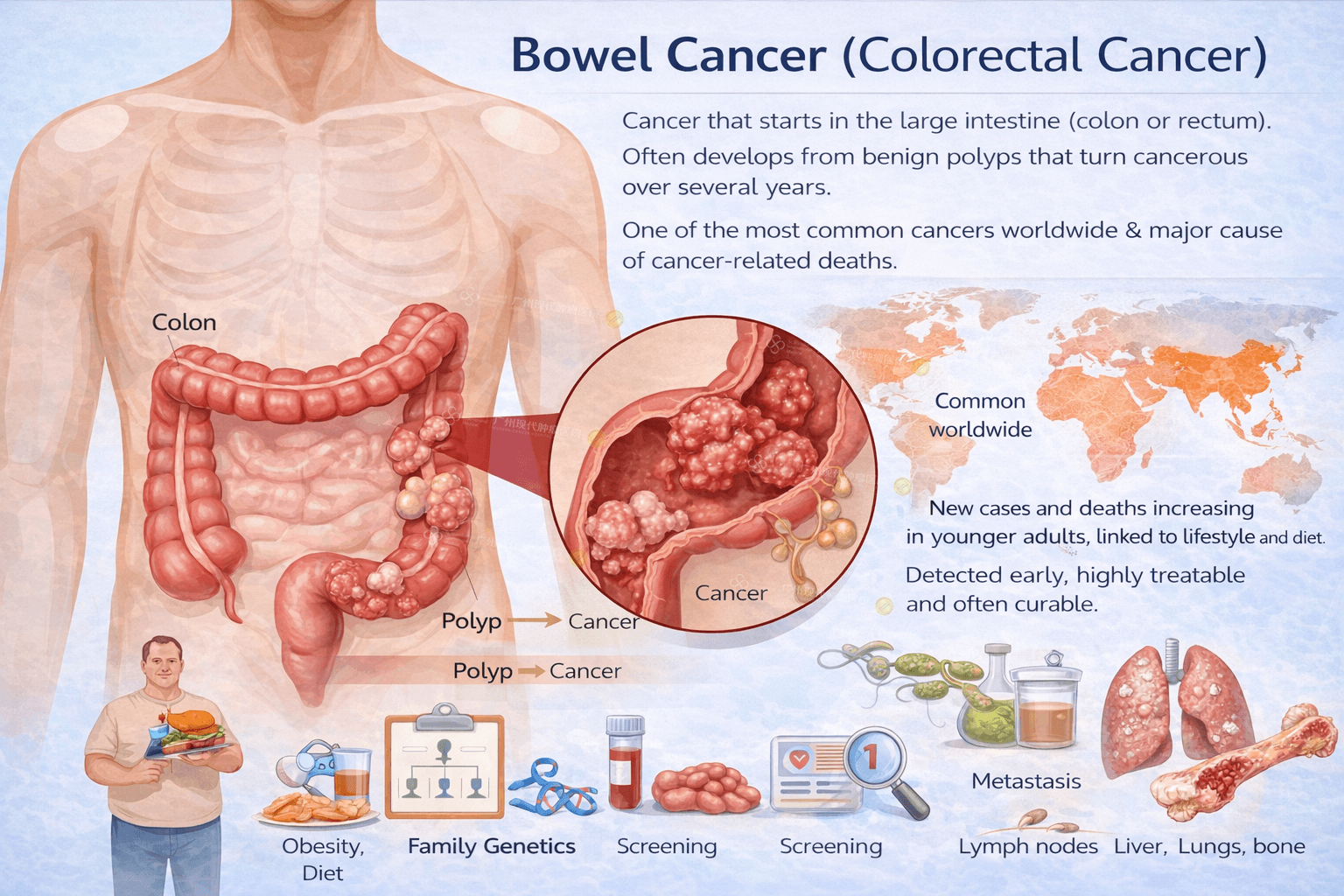
Bowel cancer, also known as colorectal cancer, is a cancer that starts in the large intestine, which includes the colon and rectum. It usually develops slowly over several years, often beginning as a benign polyp (a small growth on the bowel lining) that later turns cancerous.
It is one of the most common cancers worldwide and a major cause of cancer-related deaths, but early detection makes it highly treatable and often curable.
Bowel cancer arises when normal cells in the lining of the colon or rectum undergo genetic mutations, leading to uncontrolled growth. These abnormal cells can invade nearby tissues and may spread (metastasize) to lymph nodes, liver, lungs, or other organs.
Most cases occur in people over 50, but rates are increasing in younger adults, partly due to lifestyle and dietary factors.
Types
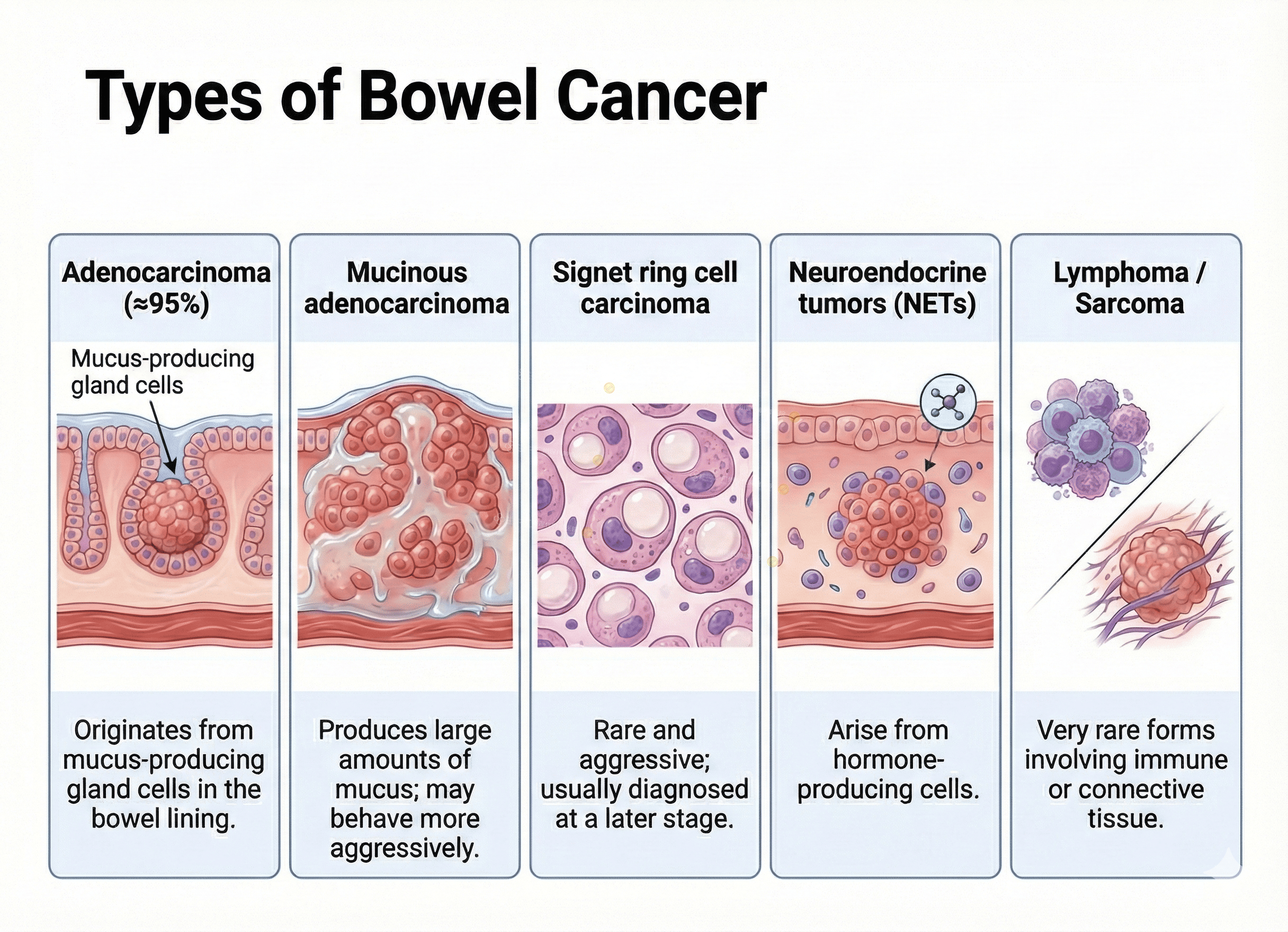
Bowel cancer is classified based on the type of cell involved:
Adenocarcinoma (≈95%)
Originates from mucus-producing gland cells in the bowel lining.
Mucinous adenocarcinoma
Produces large amounts of mucus; may behave more aggressively.
Signet ring cell carcinoma
Rare and aggressive; usually diagnosed at a later stage.
Neuroendocrine tumors (NETs)
Arise from hormone-producing cells.
Lymphoma / Sarcoma
Very rare forms involving immune or connective tissue.
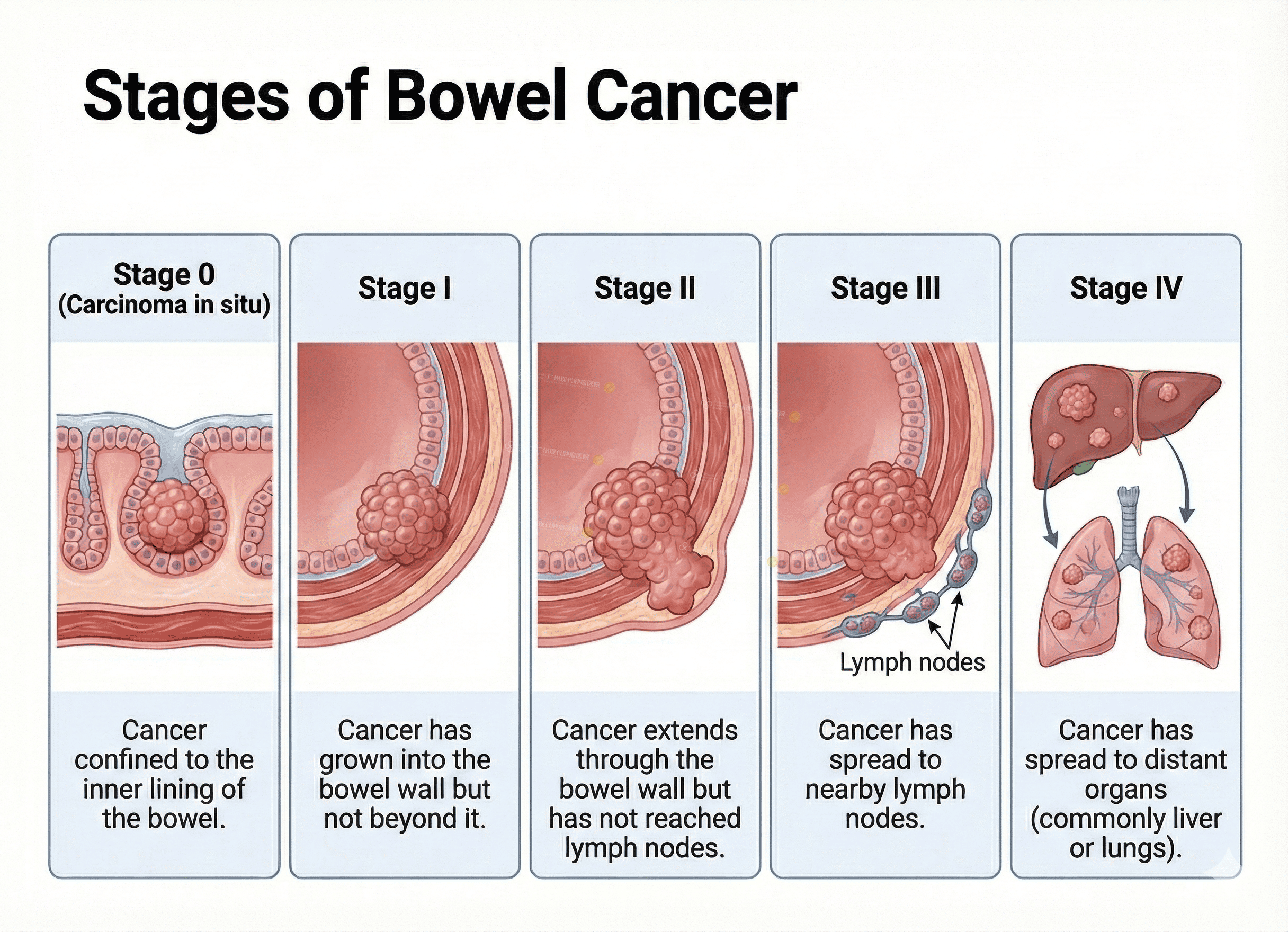
Stages
Stage 0 (Carcinoma in situ)
Cancer confined to the inner lining of the bowel.
Stage I
Cancer has grown into the bowel wall but not beyond it.
Stage II
Cancer extends through the bowel wall but has not reached lymph nodes.
Stage III
Cancer has spread to nearby lymph nodes.
Stage IV
Cancer has spread to distant organs (commonly liver or lungs).
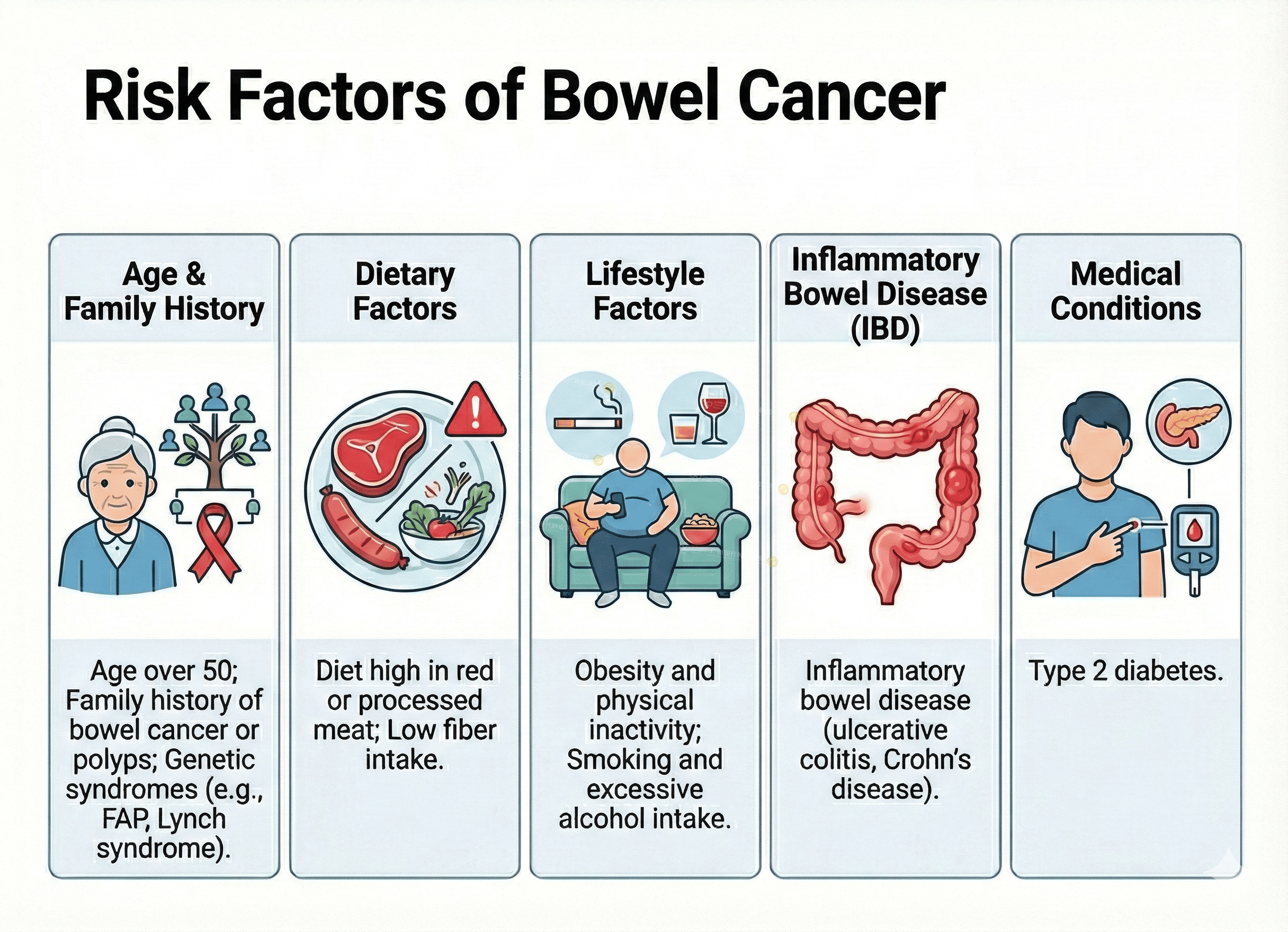
Risk Factors
Age over 50
Family history of bowel cancer or polyps
Inflammatory bowel disease (ulcerative colitis, Crohn’s disease)
Diet high in red or processed meat
Low fiber intake
Obesity and physical inactivity
Smoking and excessive alcohol intake
Type 2 diabetes
Genetic syndromes (e.g. FAP, Lynch syndrome)
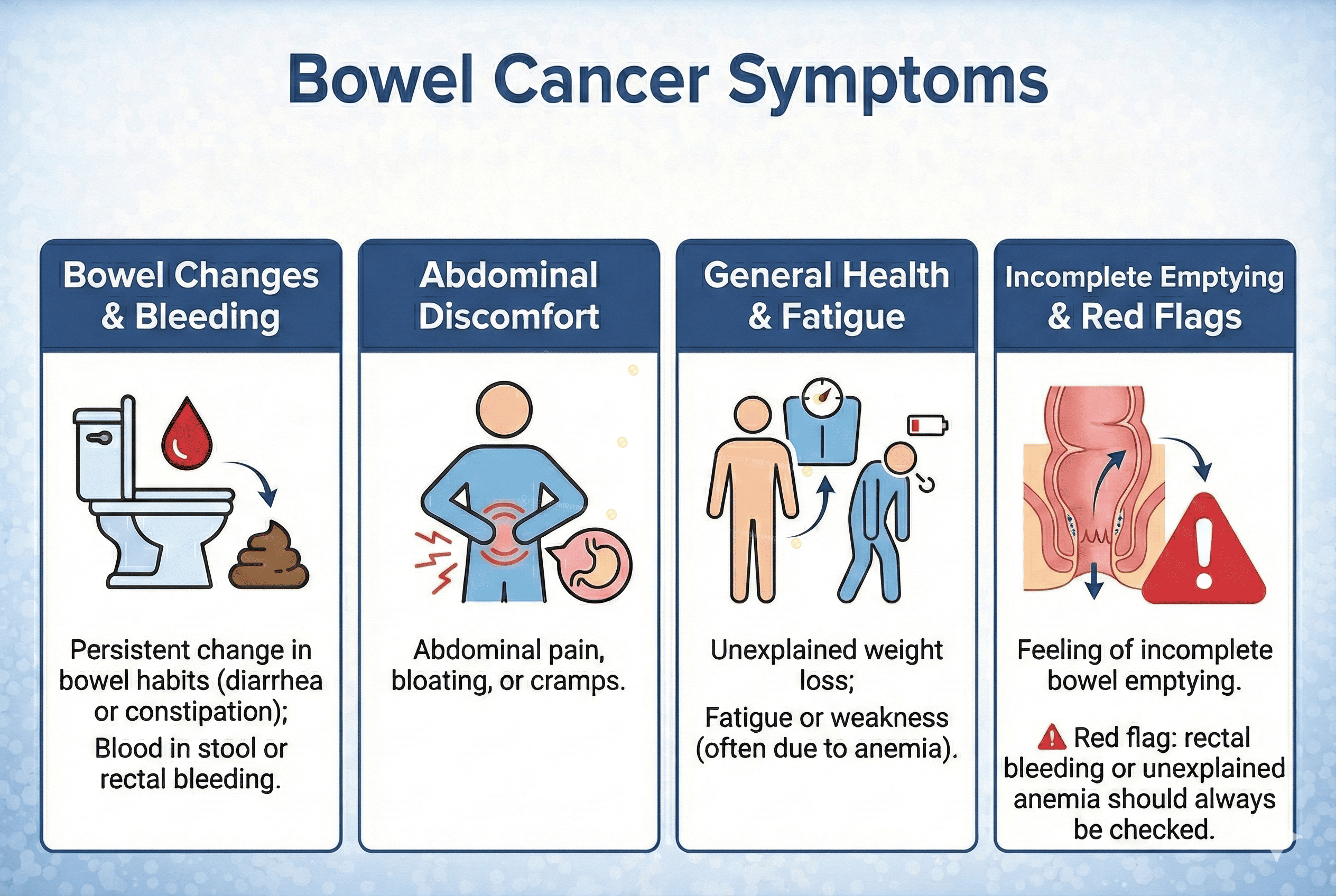
Symptoms
Persistent change in bowel habits (diarrhea or constipation)
Blood in stool or rectal bleeding
Abdominal pain, bloating, or cramps
Unexplained weight loss
Fatigue or weakness (often due to anemia)
Feeling of incomplete bowel emptying
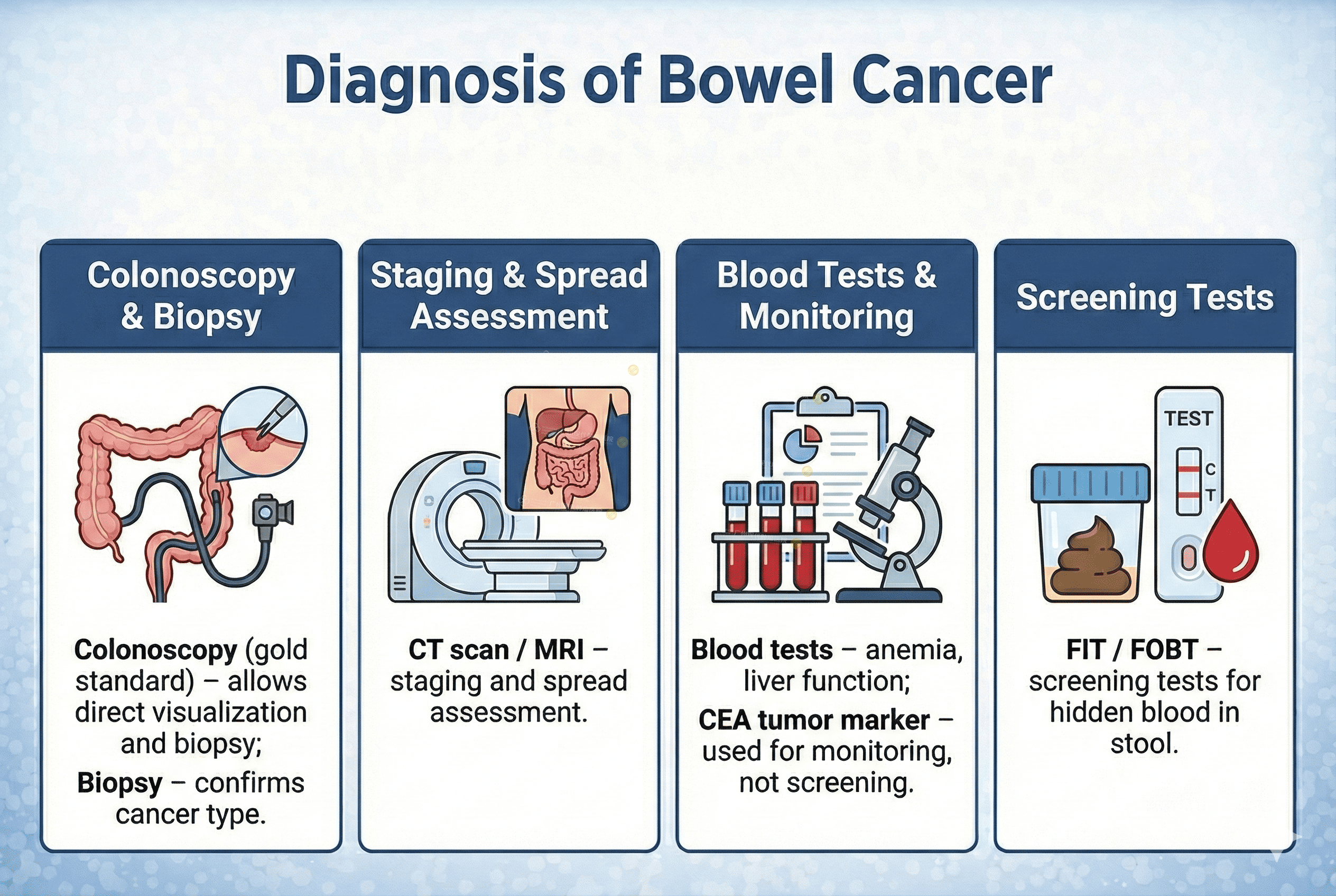
Diagnosis
Colonoscopy (gold standard) – allows direct visualization and biopsy
Biopsy – confirms cancer type
CT scan / MRI – staging and spread assessment
Blood tests – anemia, liver function
CEA tumor marker – used for monitoring, not screening
FIT / FOBT – screening tests for hidden blood in stool
Facts (FAQ)
Q1: Is bowel cancer preventable?
Many cases can be prevented with regular screening and healthy lifestyle choices.
Q2: At what age should screening start?
Usually from age 45–50, earlier if there’s a family history.
Q3: Is bowel cancer curable?
Yes — especially when detected early. Stage I survival rates exceed 90%.
Q4: Does blood in stool always mean cancer?
No, but it should never be ignored.
Q5: Can young people get bowel cancer?
Yes. Rates are increasing in people under 50.