Hodgkin's lymphoma
Description
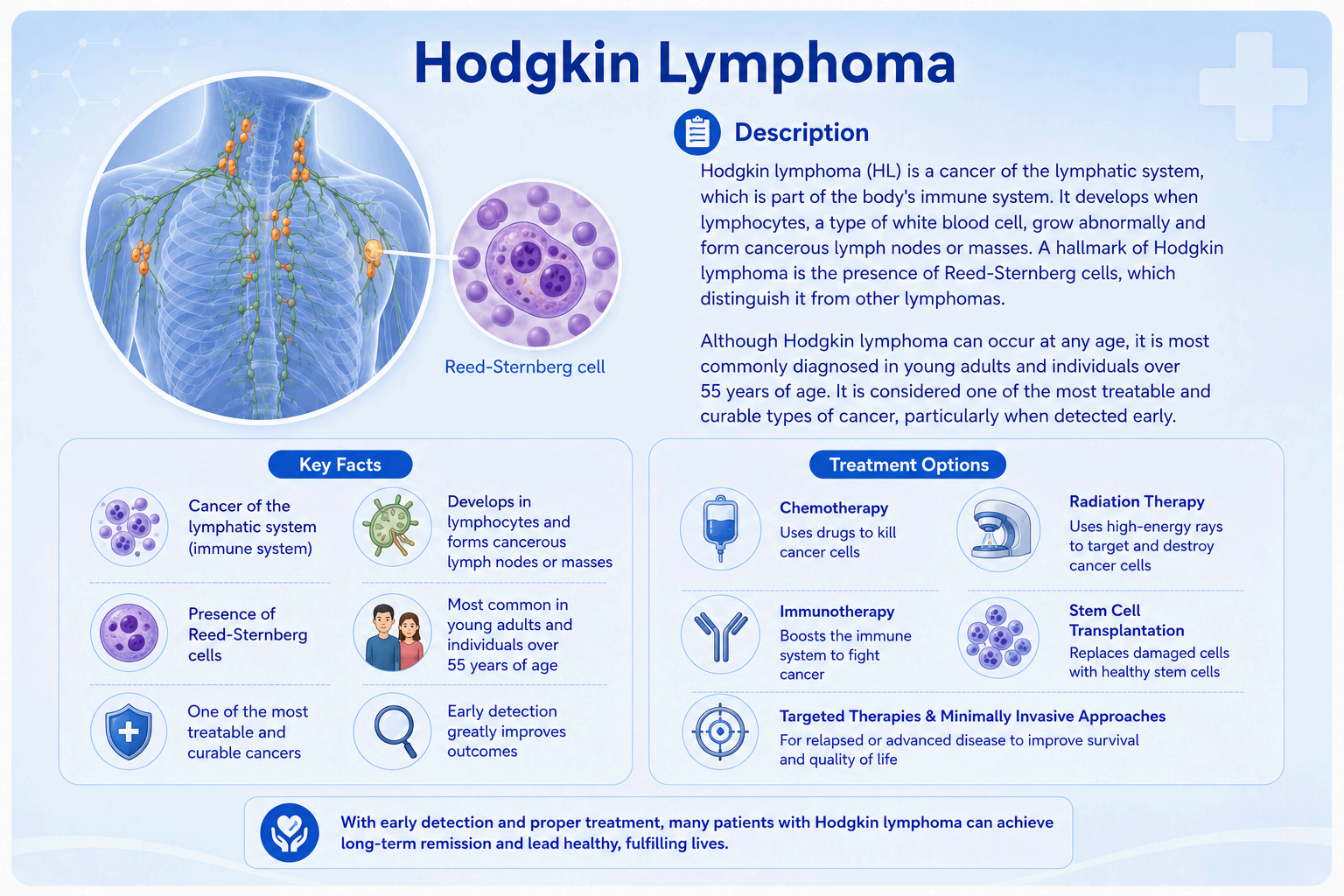
Hodgkin lymphoma (HL) is a cancer of the lymphatic system, which is part of the body's immune system. It develops when lymphocytes, a type of white blood cell, grow abnormally and form cancerous lymph nodes or masses. A hallmark of Hodgkin lymphoma is the presence ofReed-Sternberg cells, which distinguish it from other lymphomas. Although Hodgkin lymphoma can occur at any age, it is most commonly diagnosed in young adults and individuals over 55 years of age. It is considered one of the most treatable and curable types of cancer, particularly when detected early.

Treatment depends on the stage of the disease and may include chemotherapy, radiation therapy, immunotherapy, or stem cell transplantation. For patients with relapsed or advanced disease, newer targeted therapies and minimally invasive treatment approaches can help improve survival and quality of life.
Types

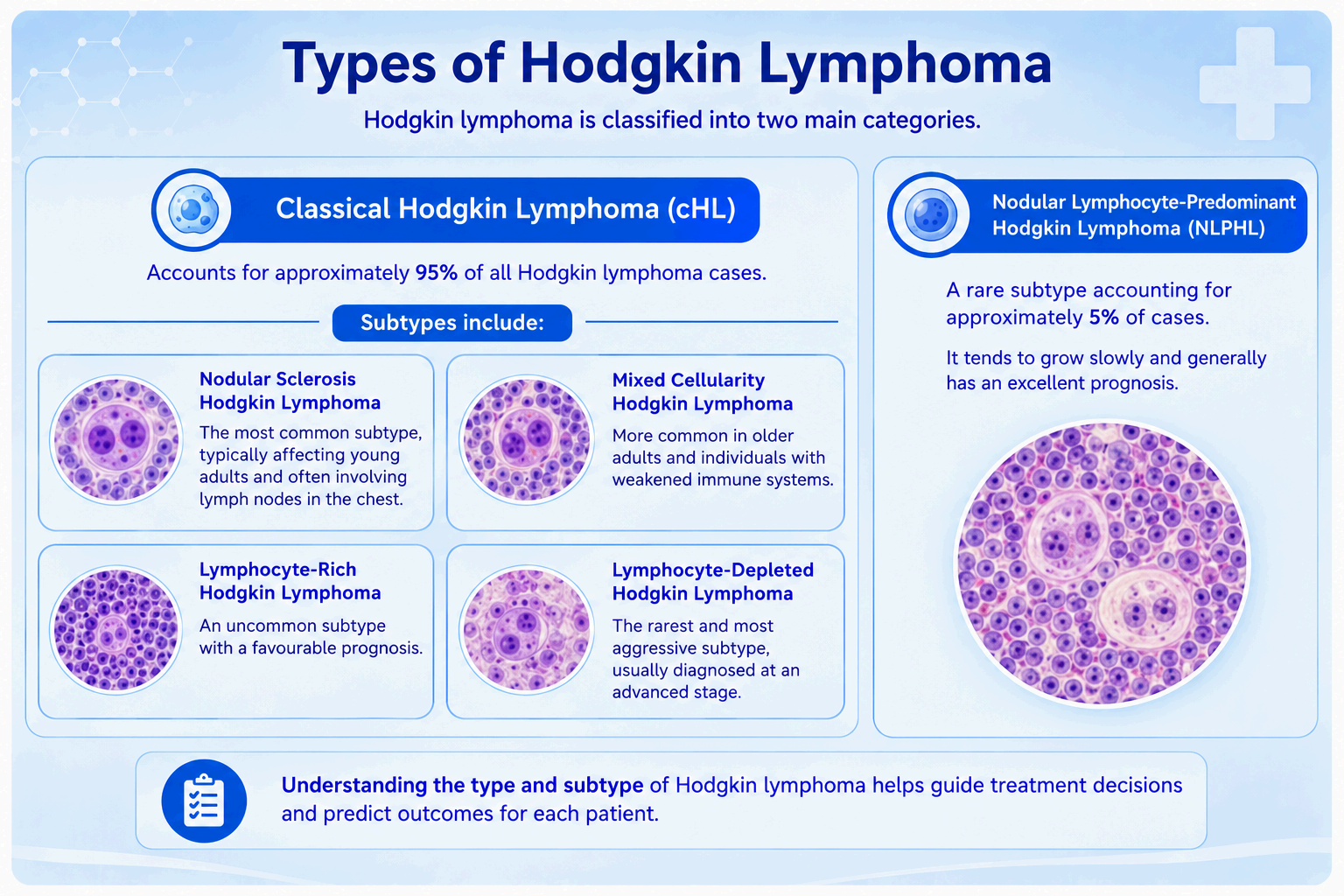
Hodgkin lymphoma is classified into two main categories.
Classical Hodgkin Lymphoma (cHL)
Accounts for approximately 95% of all Hodgkin lymphoma cases.
Subtypes include:
Nodular Sclerosis Hodgkin Lymphoma
The most common subtype, typically affecting young adults and often involving lymph nodes in the chest.
Mixed Cellularity Hodgkin Lymphoma
More common in older adults and individuals with weakened immune systems.
Lymphocyte-Rich Hodgkin Lymphoma
An uncommon subtype with a favourable prognosis.
Lymphocyte-Depleted Hodgkin Lymphoma
The rarest and most aggressive subtype, usually diagnosed at an advanced stage.
Nodular Lymphocyte-Predominant Hodgkin Lymphoma (NLPHL)
A rare subtype accounting for approximately 5% of cases. It tends to grow slowly and generally has an excellent prognosis.
Stages

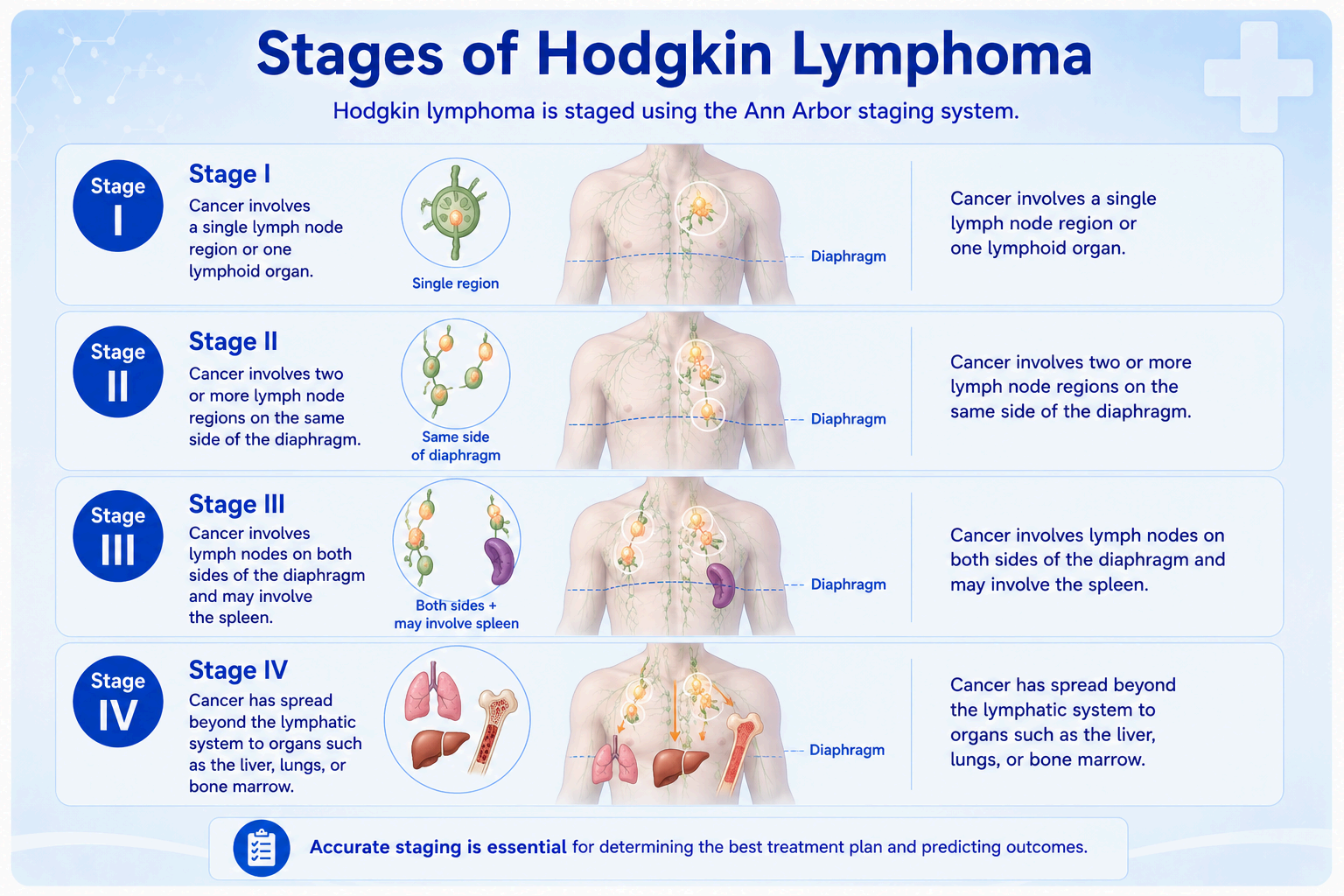
Hodgkin lymphoma is staged using the Ann Arbor staging system.
Stage I:Cancer involves a single lymph node region or one lymphoid organ.
Stage II:Cancer involves two or more lymph node regions on the same side of the diaphragm.
Stage III:Cancer involves lymph nodes on both sides of the diaphragm and may involve the spleen.
Stage IV:Cancer has spread beyond the lymphatic system to organs such as the liver, lungs, or bone marrow.
Risk Factors

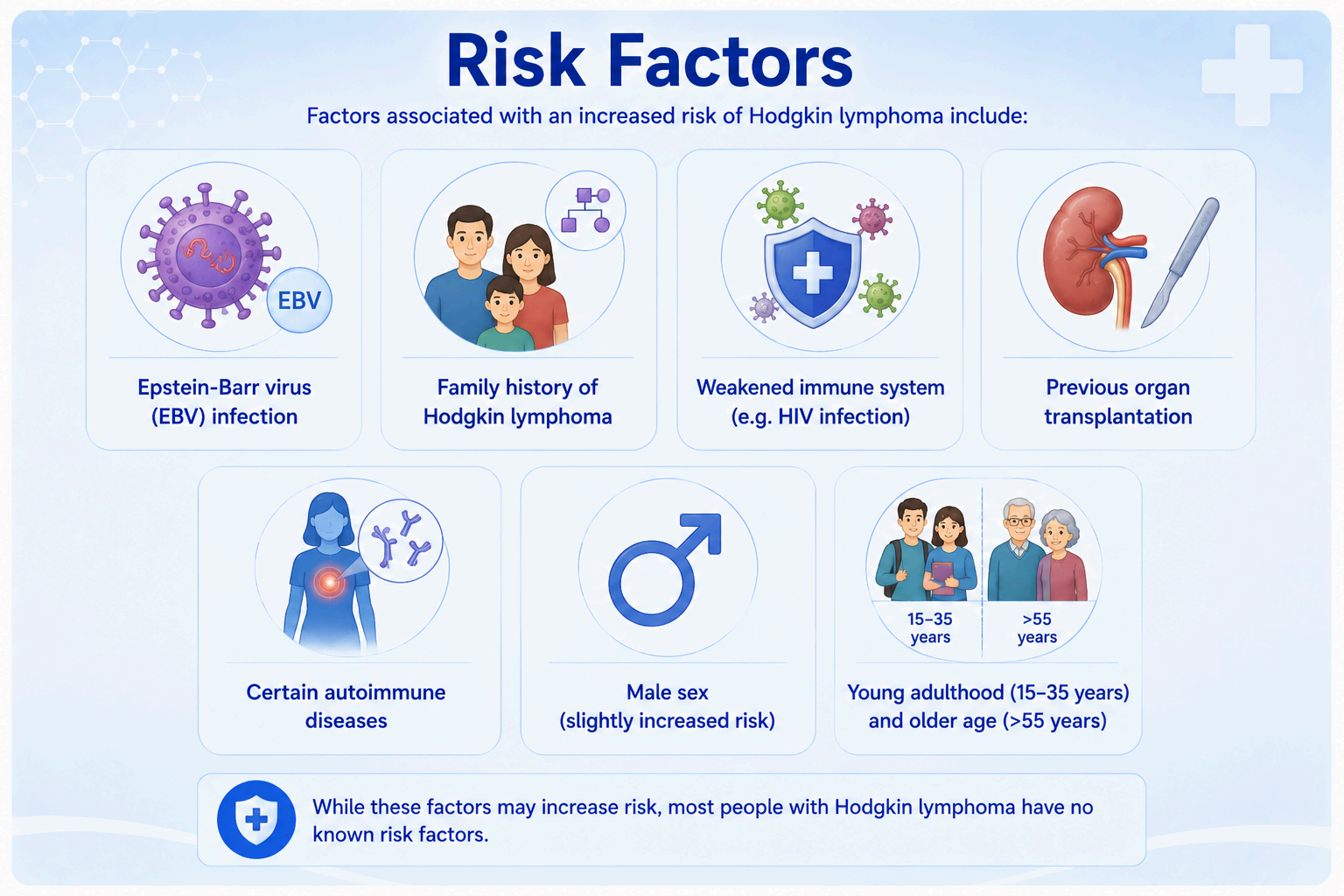
Factors associated with an increased risk of Hodgkin lymphoma include:
Epstein-Barr virus (EBV) infection
Family history of Hodgkin lymphoma
Weakened immune system (e.g. HIV infection)
Previous organ transplantation
Certain autoimmune diseases
Male sex (slightly increased risk)
Young adulthood (15–35 years) and older age (>55 years)
Symptoms

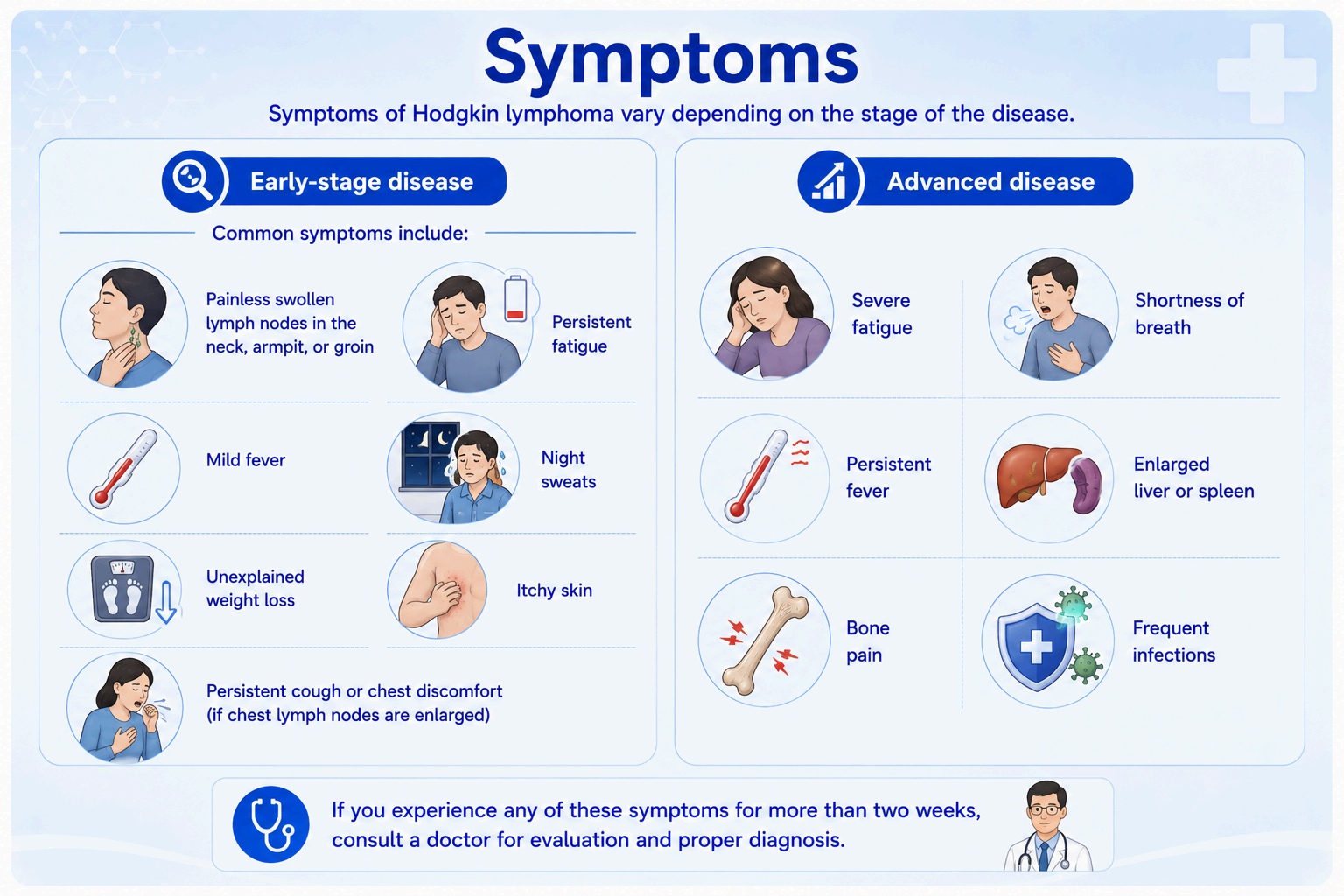
Early-stage disease
Common symptoms include:
Painless swollen lymph nodes in the neck, armpit, or groin
Persistent fatigue
Mild fever
Night sweats
Unexplained weight loss
Itchy skin
Persistent cough or chest discomfort (if chest lymph nodes are enlarged)
Advanced disease
Severe fatigue
Shortness of breath
Persistent fever
Enlarged liver or spleen
Bone pain
Frequent infections
Diagnosis

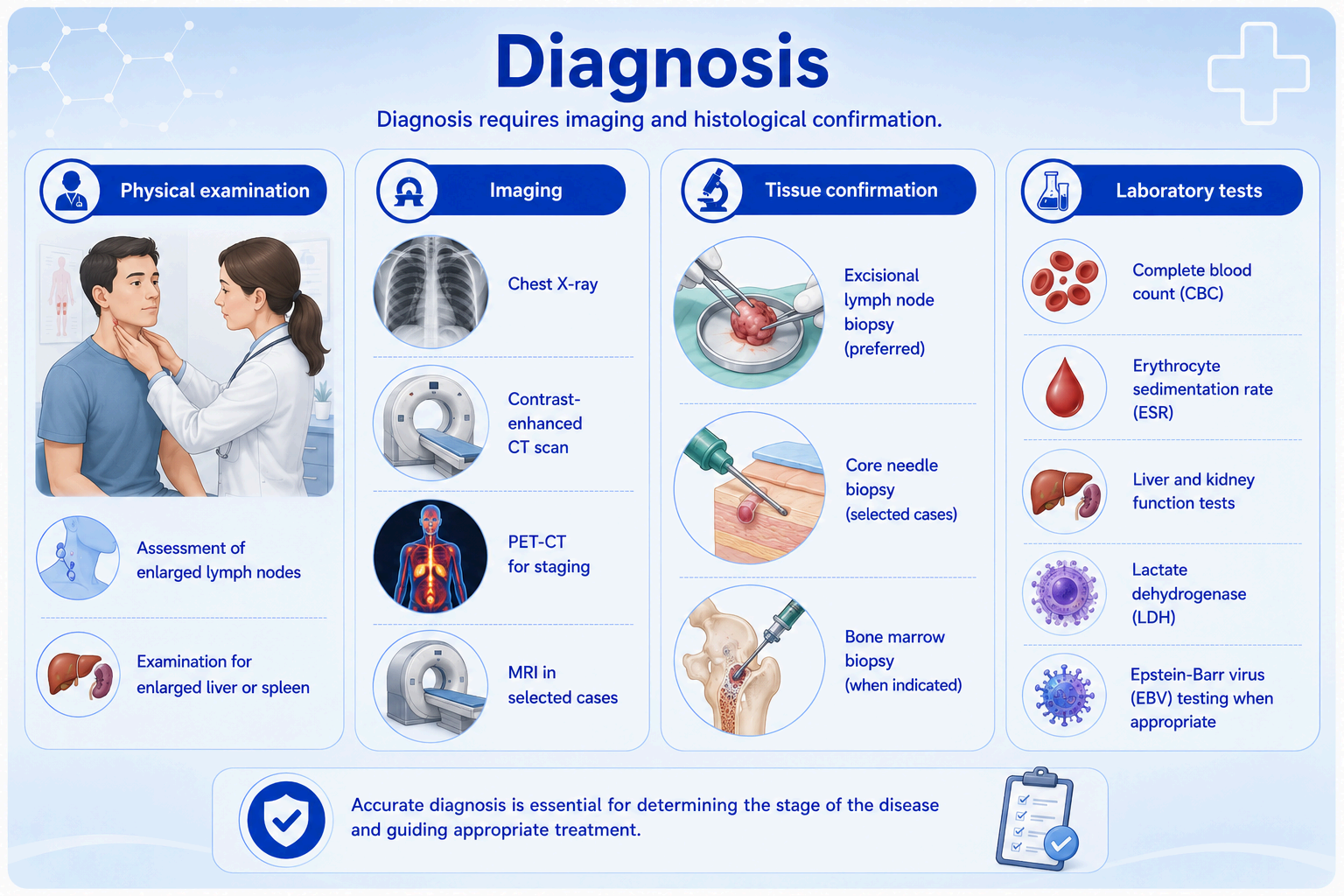
Diagnosis requires imaging and histological confirmation.
Physical examination
Assessment of enlarged lymph nodes
Examination for enlarged liver or spleen
Imaging
Chest X-ray
Contrast-enhanced CT scan
PET-CT for staging
MRI in selected cases
Tissue confirmation
Excisional lymph node biopsy (preferred)
Core needle biopsy (selected cases)
Bone marrow biopsy (when indicated)
Laboratory tests
Complete blood count (CBC)
Erythrocyte sedimentation rate (ESR)
Liver and kidney function tests
Lactate dehydrogenase (LDH)
Epstein-Barr virus (EBV) testing when appropriate
Facts (FAQ)
Q1: Is Hodgkin lymphoma curable?
Yes. Hodgkin lymphoma is one of the most curable cancers, especially when diagnosed early and treated appropriately.
Q2: What is the difference between Hodgkin lymphoma and non-Hodgkin lymphoma?
Hodgkin lymphoma is characterised by the presence of Reed-Sternberg cells, while non-Hodgkin lymphoma includes a diverse group of lymphoid cancers without these cells.
Q3: What is the main treatment for Hodgkin lymphoma?
Treatment usually involves chemotherapy, with or without radiation therapy. Immunotherapy and stem cell transplantation may be used for relapsed or refractory disease.
Q4: What are "B symptoms"?
B symptoms include unexplained fever, drenching night sweats, and unintentional weight loss. These symptoms help determine the stage and prognosis.
Q5: Can Hodgkin lymphoma recur after treatment?
Yes. Although many patients are cured, some may experience recurrence and require additional treatment.
Q6: How is Hodgkin lymphoma diagnosed?
Diagnosis is confirmed through a lymph node biopsy, supported by PET-CT or CT imaging for staging.
Q7: Is Hodgkin lymphoma hereditary?
Most cases are not inherited, although having a close family member with Hodgkin lymphoma may slightly increase the risk.
Q8: What are the warning signs of Hodgkin lymphoma?
Persistent painless swollen lymph nodes, unexplained fever, night sweats, weight loss, fatigue, or persistent itching should be evaluated by a healthcare professional.