Penile Cancer
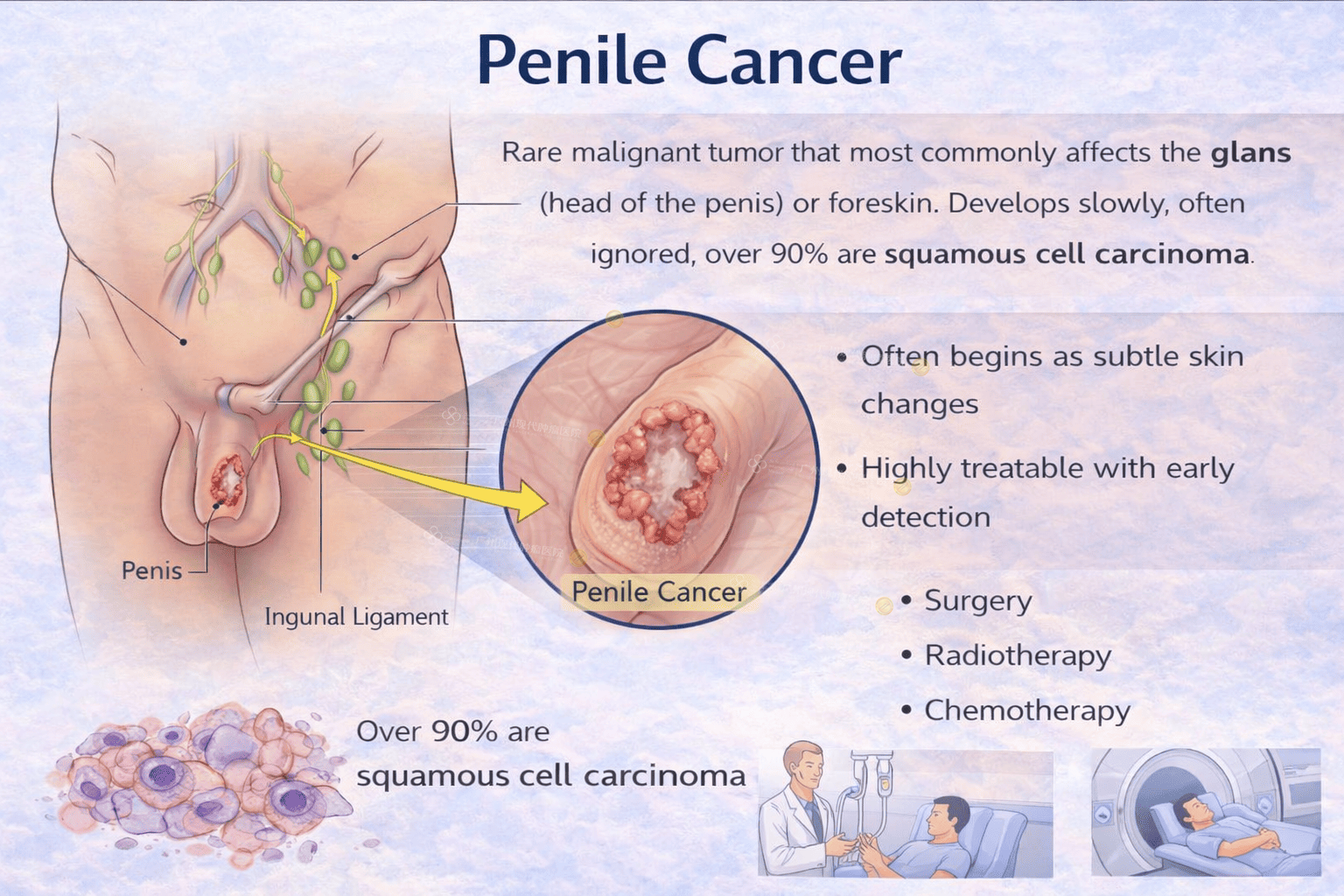
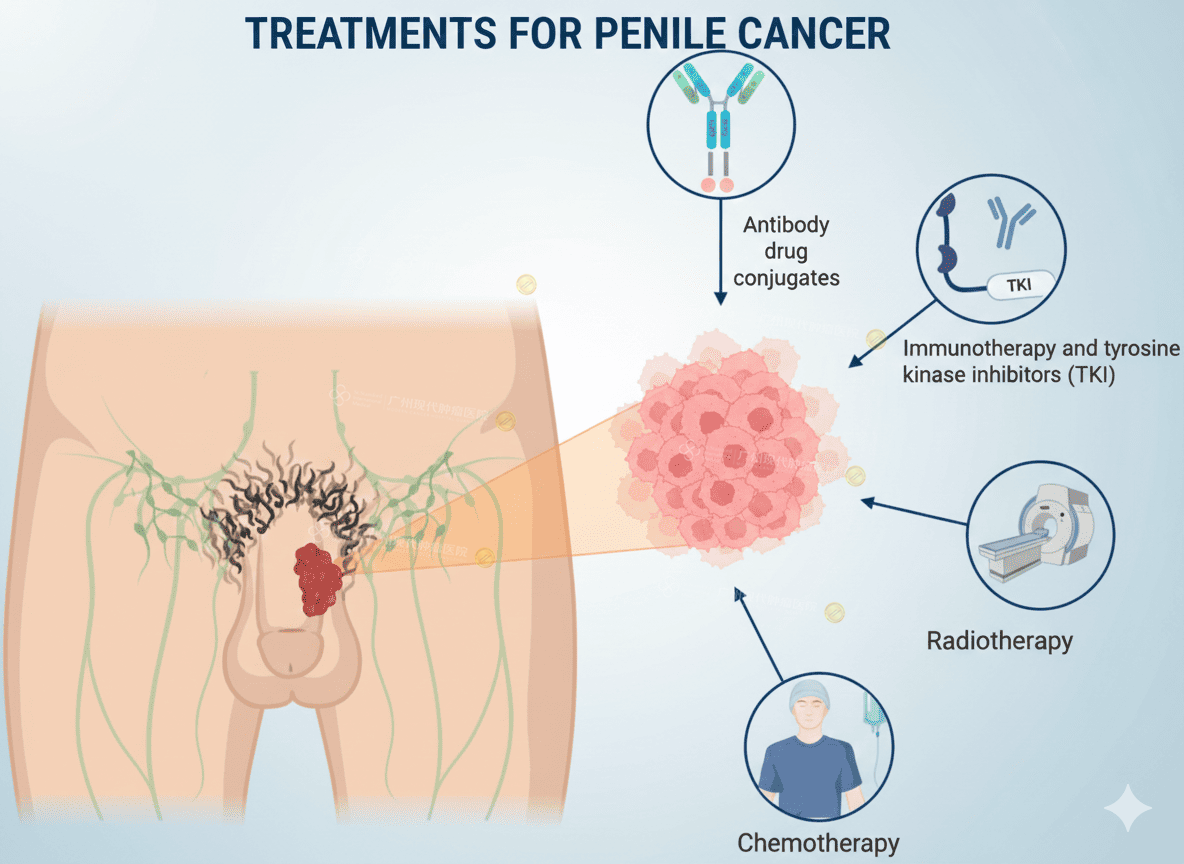
Penile cancer is a rare malignant tumor of the penis, most commonly affecting the glans (head of the penis) or foreskin. It usually develops slowly and may begin as subtle skin changes that are often ignored or mistaken for infection or inflammation.

Over 90% of cases are squamous cell carcinoma, arising from the epithelial lining of the penile skin. Early detection is crucial—when found early, penile cancer is highly treatable with good survival outcomes.
Types
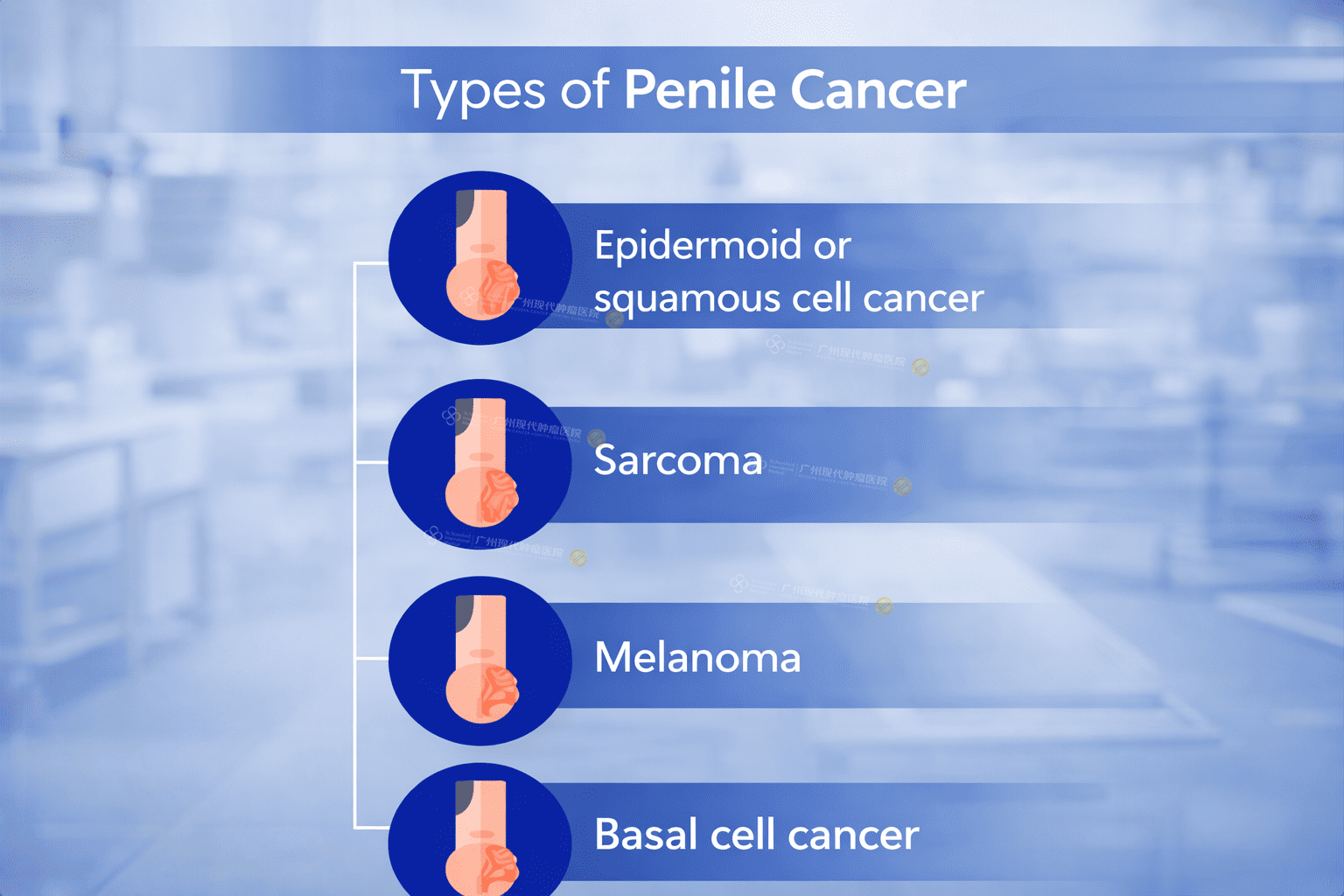
The main histological types include:
1. Squamous Cell Carcinoma (SCC)
Most common type
Subtypes include:
Usual SCC
Verrucous carcinoma (slow-growing, low metastatic risk)
Basaloid carcinoma (more aggressive)
Warty carcinoma (often HPV-related)
2. Melanoma
Rare
Arises from pigment-producing cells
Very aggressive
3. Basal Cell Carcinoma
Extremely rare on the penis
Slow-growing
4. Sarcoma
Originates from connective tissue
Very uncommon
Stages
Penile cancer is staged using the TNM system (Tumor, Node, Metastasis):
Stage 0 (Carcinoma in situ)
Cancer confined to the surface layer
No invasion
Stage I
Tumor invades subepithelial tissue
No lymph node spread
Stage II
Deeper invasion (corpus spongiosum or cavernosum)
No lymph node involvement
Stage III
Spread to inguinal lymph nodes
Stage IV
Spread to pelvic lymph nodes or distant organs (lungs, liver, bone)
Risk Factors
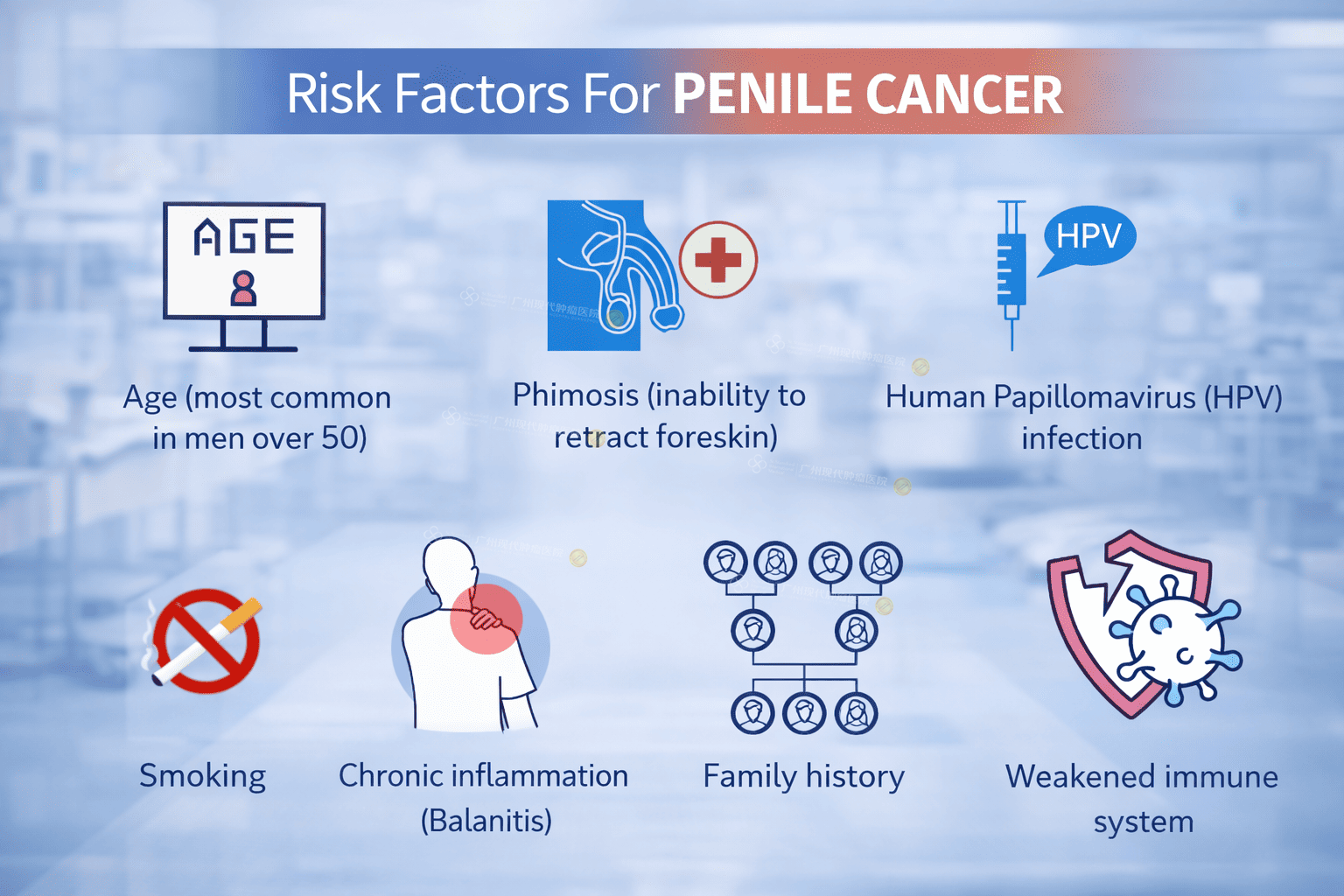
Common risk factors include:
Human papillomavirus (HPV) infection (especially HPV 16 & 18)
Poor genital hygiene
Phimosis (tight foreskin)
Smoking
Chronic inflammation or balanitis
Multiple sexual partners
Lack of circumcision (especially childhood circumcision)
Older age (most common >50 years)
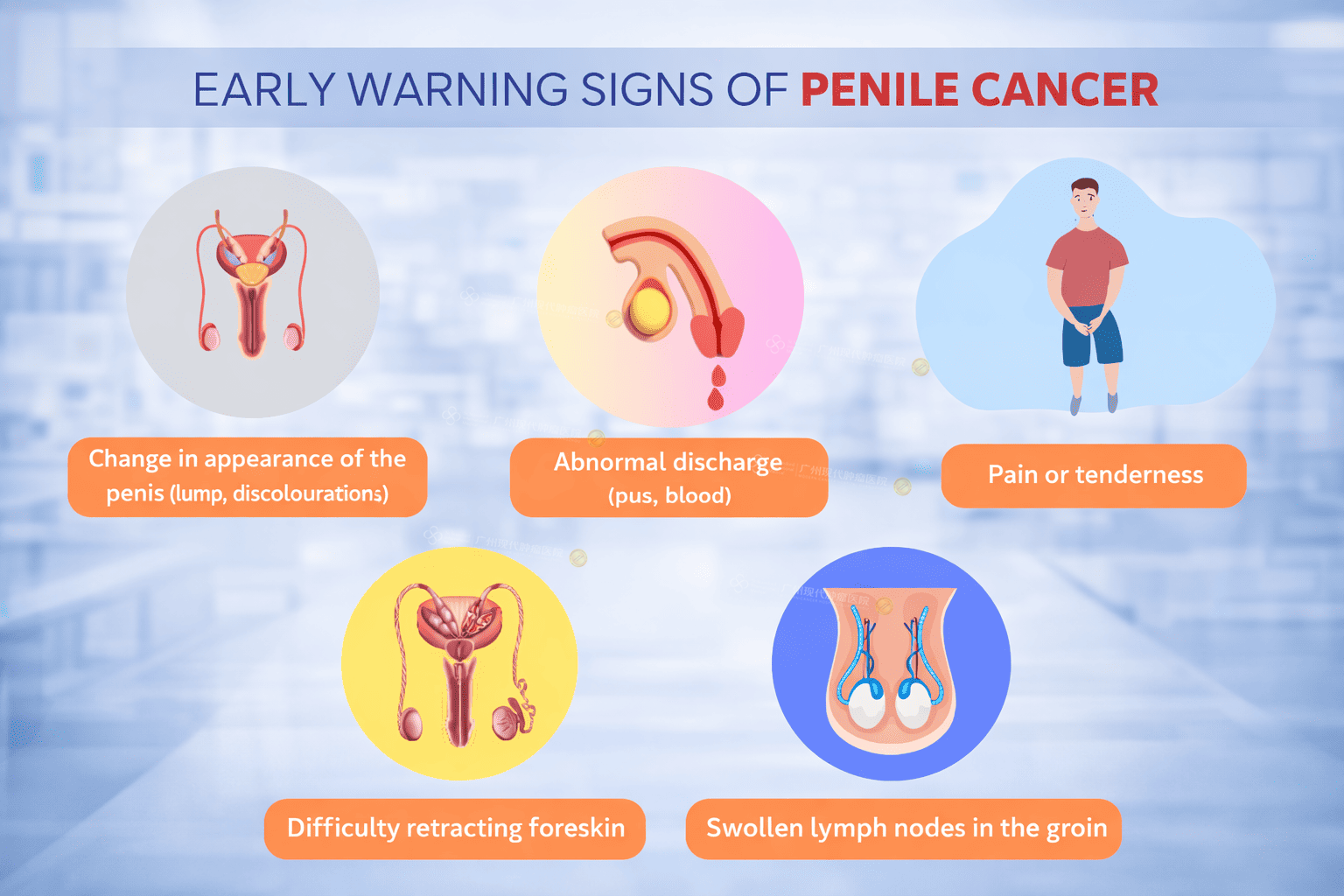
Symptoms
Early symptoms are often painless and subtle:
Persistent ulcer, sore, or lump on the penis
Thickening or discoloration of penile skin
Foul-smelling discharge under foreskin
Bleeding from penile lesion
Pain (late-stage)
Swollen groin lymph nodes
⚠️ Any penile lesion that does not heal within 2–3 weeks should be evaluated.
Diagnosis
Diagnosis usually involves:
Physical examination
Biopsy (gold standard)
HPV testing (in selected cases)
Imaging:
Ultrasound (local extent)
MRI (depth of invasion)
CT or PET scan (lymph node & distant spread)
Lymph node evaluation (sentinel node biopsy or dissection)
Facts (FAQ)
Is penile cancer contagious?
No, but HPV (a major risk factor) is sexually transmitted.
Can circumcision prevent penile cancer?
Childhood circumcision significantly reduces risk, mainly by improving hygiene and reducing HPV persistence.
Is penile cancer curable?
Yes—early-stage penile cancer has a very high cure rate.
Is it common?
Rare in developed countries, more common in regions with poor hygiene and limited healthcare access.
Does it affect sexual function?
Depends on treatment extent. Early detection allows preservation of sexual and urinary function.