Prostate Cancer
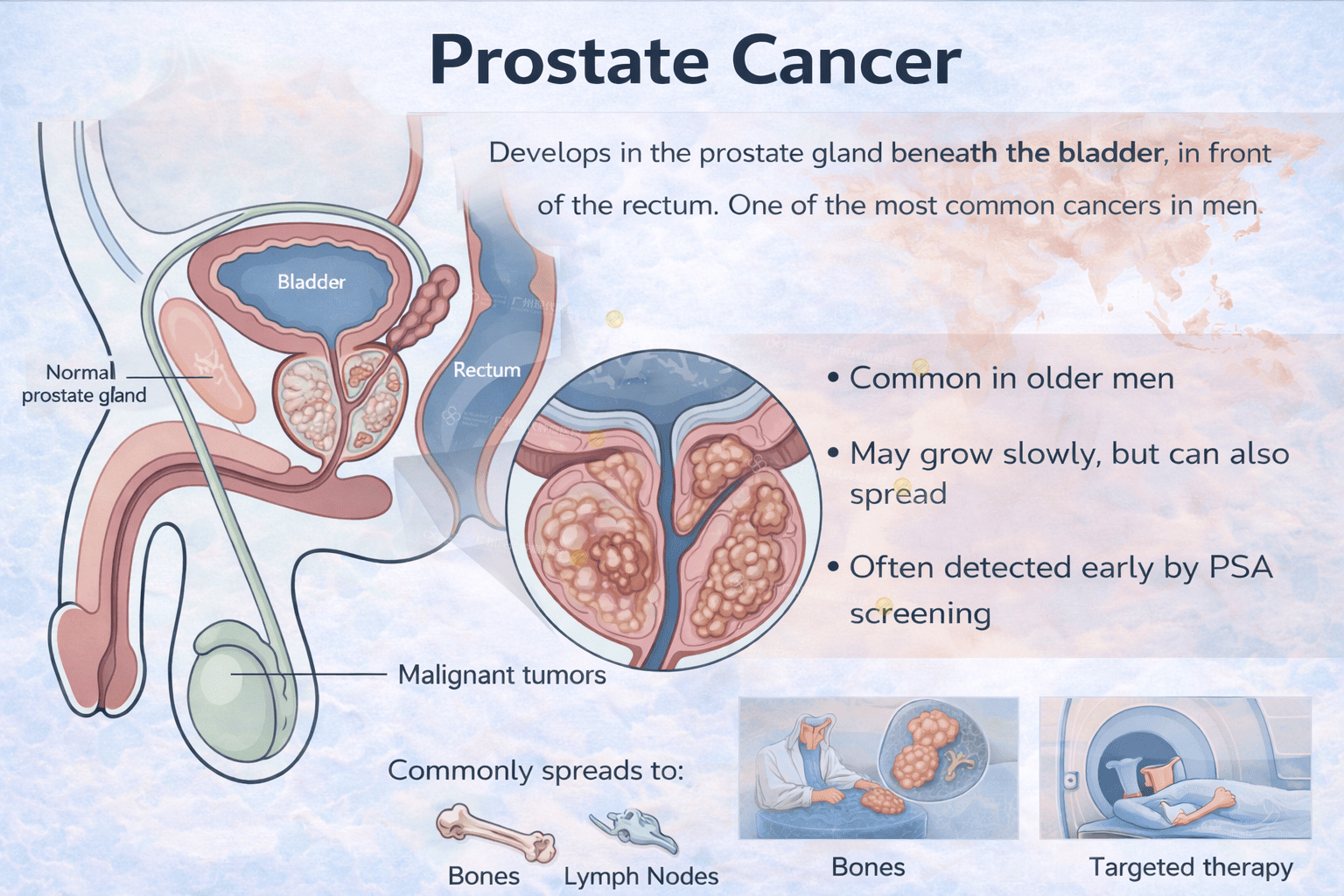
Prostate cancer is a malignancy that develops in the prostate gland, a small walnut-shaped organ located below the bladder and in front of the rectum in men. The prostate produces seminal fluid, which helps nourish and transport sperm.

It is one of the most common cancers in men worldwide, especially in older age groups. Many prostate cancers grow slowly and may not cause symptoms for years, while others are more aggressive and can spread (metastasize) to bones and lymph nodes.
Early detection is common due to PSA (prostate-specific antigen) screening, which means many cases are diagnosed before symptoms appear.
Types
Most prostate cancers are classified based on the cell type involved.
1. Adenocarcinoma (≈95%)
Originates from glandular cells
Typical and most common form
Usually slow-growing but can be aggressive in some cases
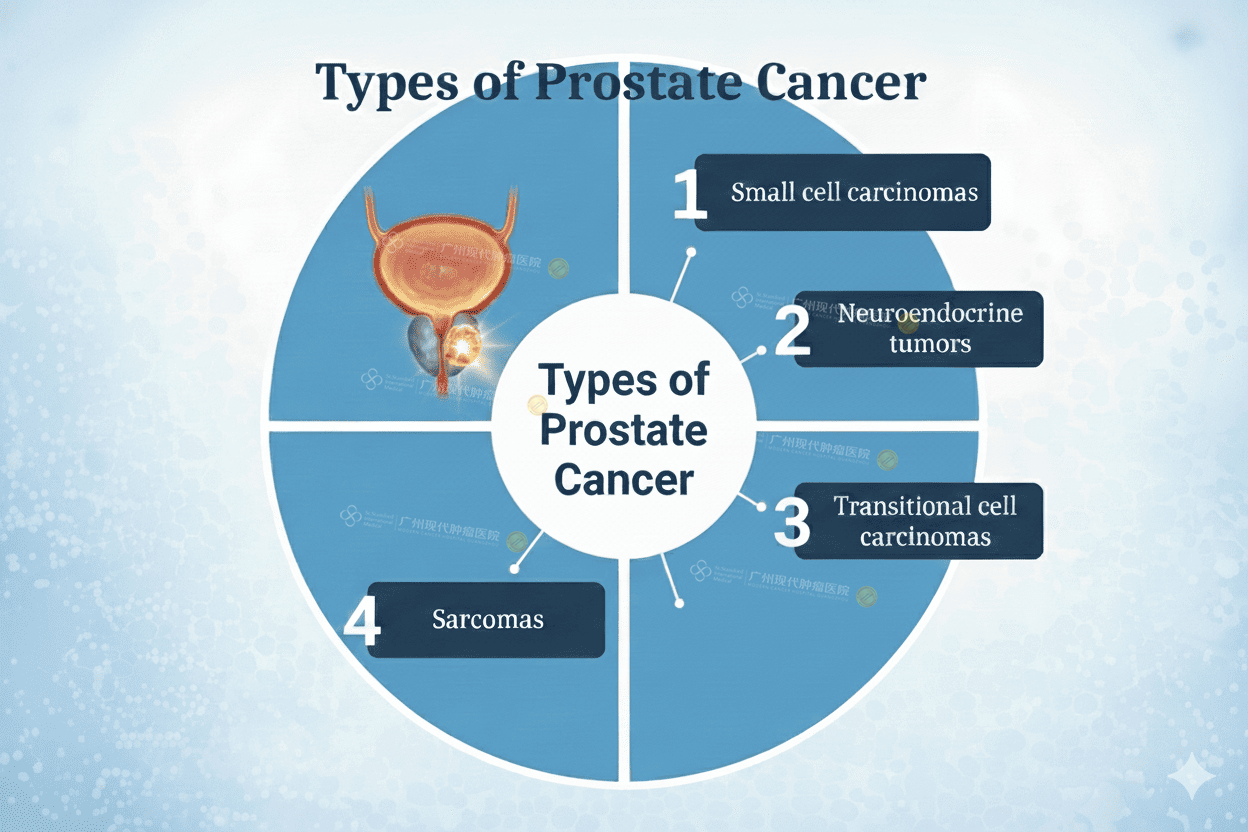
2. Rare Types (uncommon but more aggressive)
Small cell carcinoma
Neuroendocrine tumors
Transitional cell carcinoma
Sarcoma
Stages
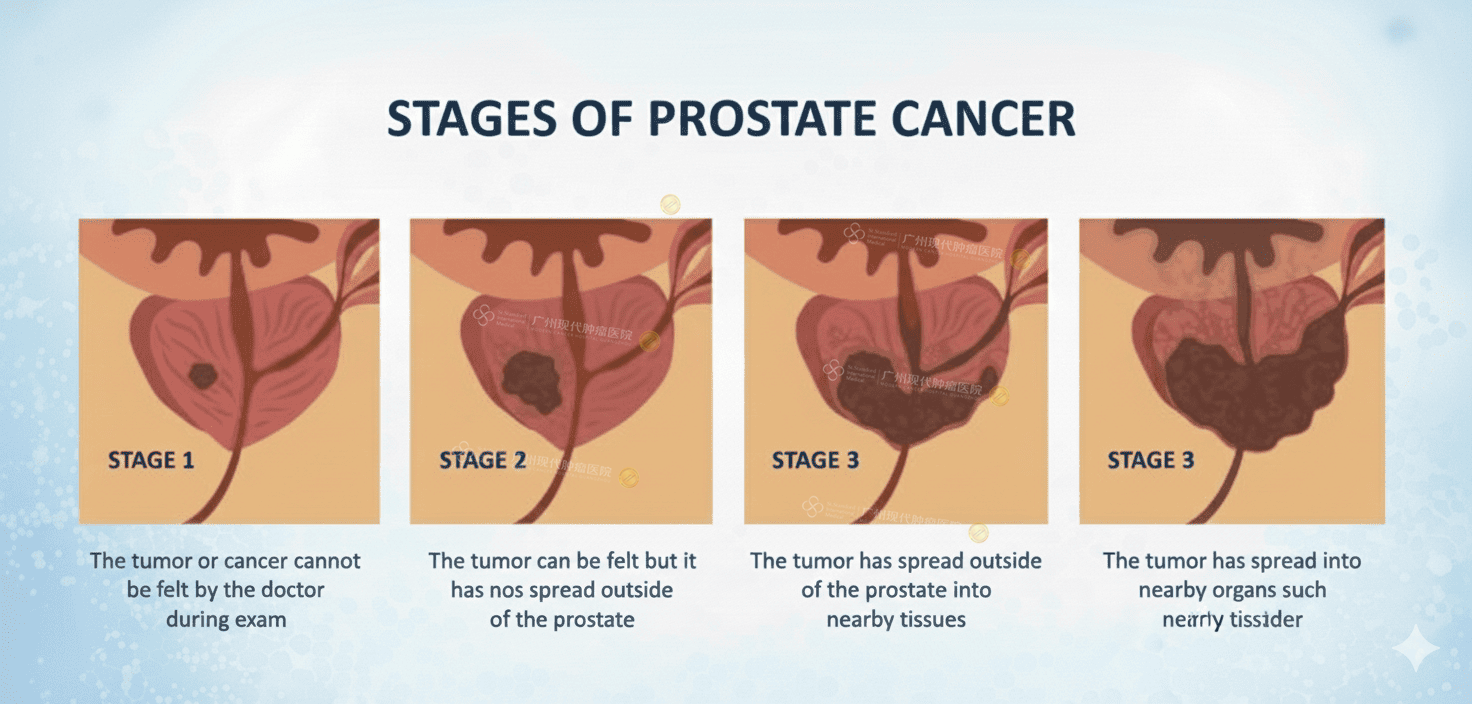
Staging describes how far the cancer has spread and guides treatment decisions.
Stage I
Cancer confined to the prostate
Often discovered incidentally
PSA may be mildly elevated
Stage II
Still limited to the prostate
Higher PSA and abnormal biopsy findings
Stage III
Cancer extends beyond the prostate capsule
May invade seminal vesicles
Stage IV
Cancer spreads to lymph nodes, bones (commonly spine, pelvis, ribs), or other organs
Staging uses the TNM system, PSA level, and Gleason score.
Risk Factors
Increasing age (most cases >50 years)
Family history (father or brother with prostate cancer)
Genetic mutations (BRCA1, BRCA2)
African ancestry (higher risk and mortality)
High-fat diet and obesity
Hormonal factors (androgen exposure)
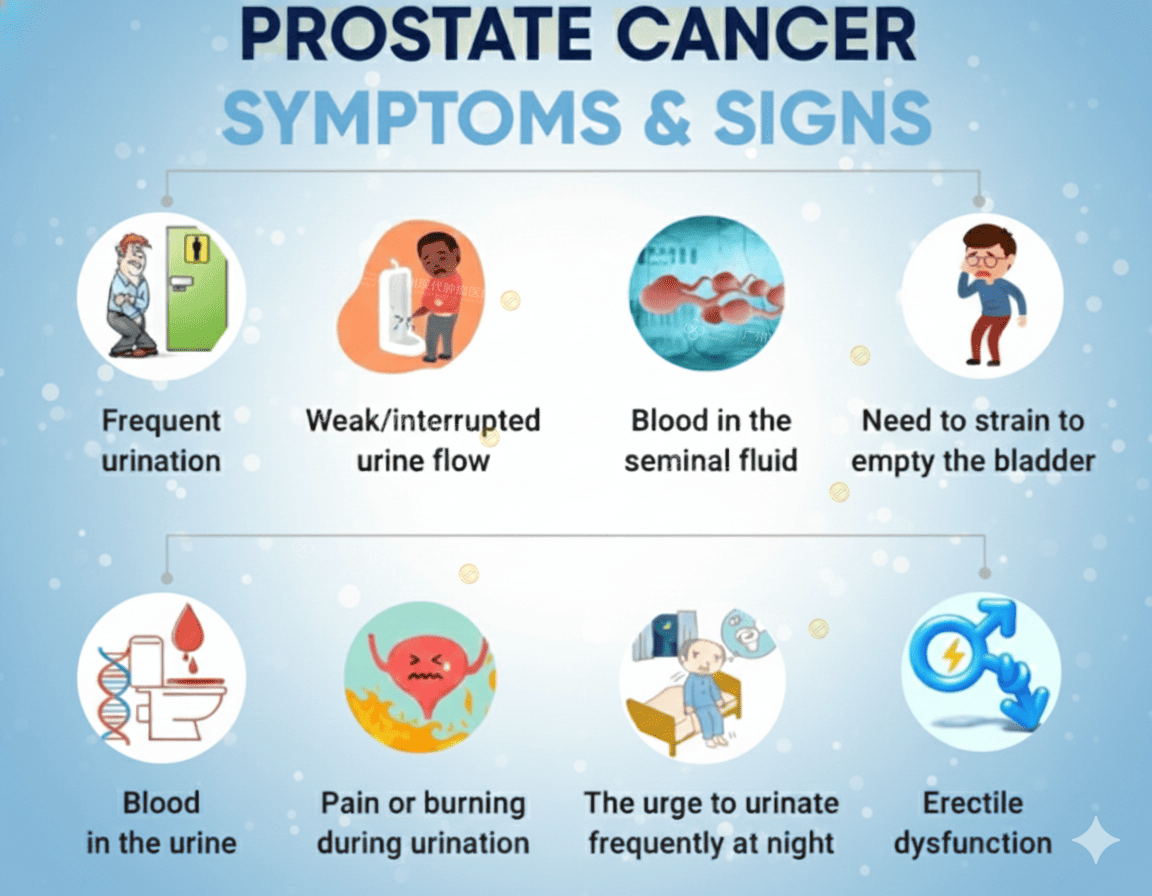
Early prostate cancer is often asymptomatic. Symptoms usually appear in advanced disease.
Urinary symptoms
Difficulty starting urination
Weak urine stream
Frequent urination (especially at night)
Incomplete bladder emptying
Advanced symptoms
Blood in urine or semen
Erectile dysfunction
Bone pain (hips, spine)
Unexplained weight loss
Fatigue
Diagnosis
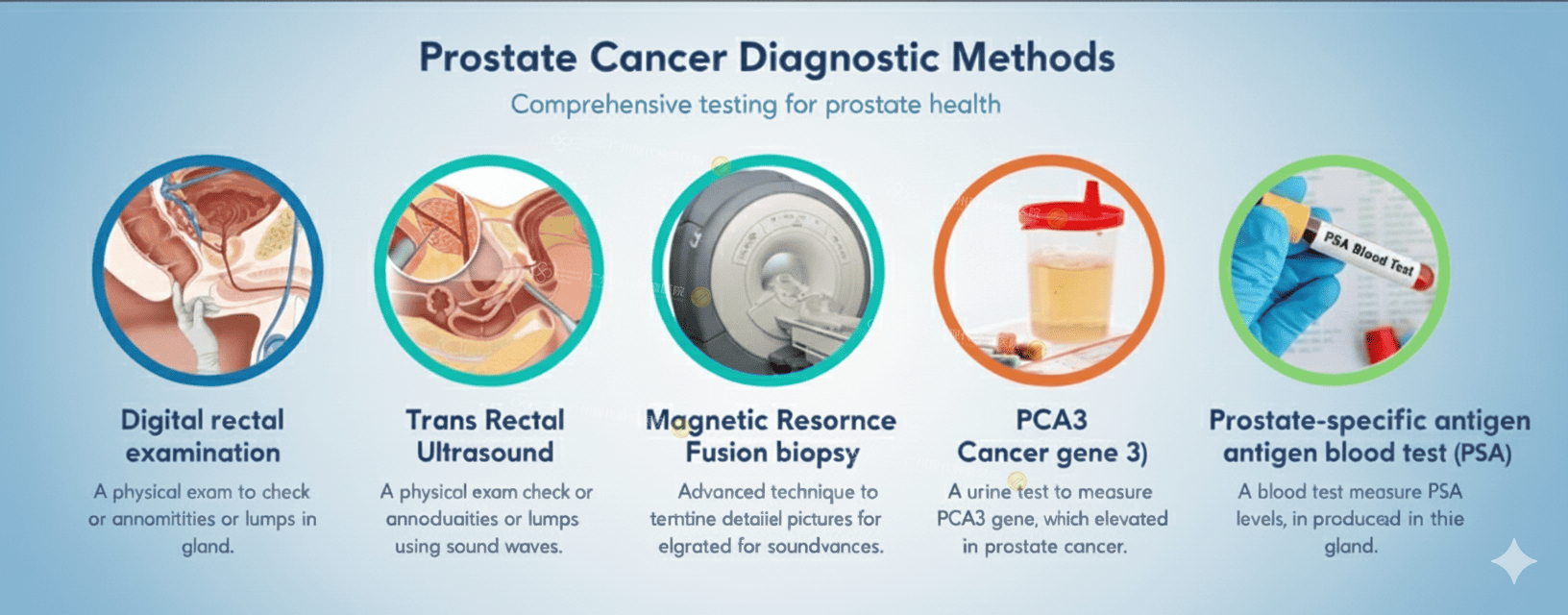
Diagnosis involves a combination of clinical, laboratory, and imaging tools.
1. PSA Blood Test
Elevated PSA suggests prostate disease (not cancer-specific)
2. Digital Rectal Examination (DRE)
Detects hard or irregular prostate nodules
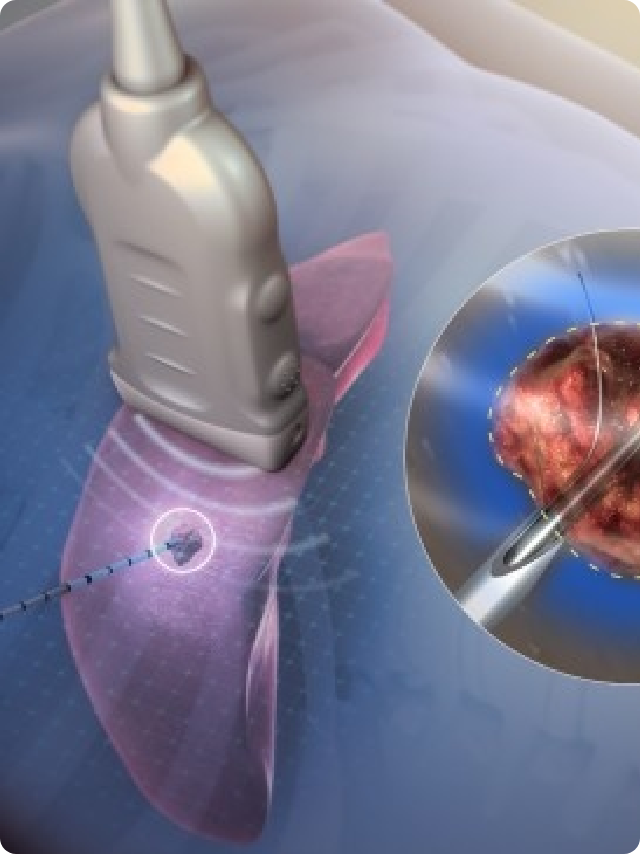
3. Prostate Biopsy
Confirmatory test
Gleason score assigned (tumor aggressiveness)
4. Imaging
MRI prostate (local staging)
CT scan / Bone scan (metastasis)
PSMA PET scan (high-sensitivity staging)
Q1: Is prostate cancer curable?
Yes. Early-stage prostate cancer is highly curable.
Q2: Does high PSA always mean cancer?
No. PSA can be elevated due to benign prostatic hyperplasia (BPH), prostatitis, or infection.
Q3: Who should get screened?
Men ≥50 years
Men ≥45 years with family history or high-risk background
Q4: Can prostate cancer affect sexual function?
Yes. Surgery and radiotherapy may affect erections, but many treatments preserve function with time and support.
Q5: Is prostate cancer slow-growing?
Most are, but some aggressive forms exist—risk stratification is important.