Adrenal Cancer

Description
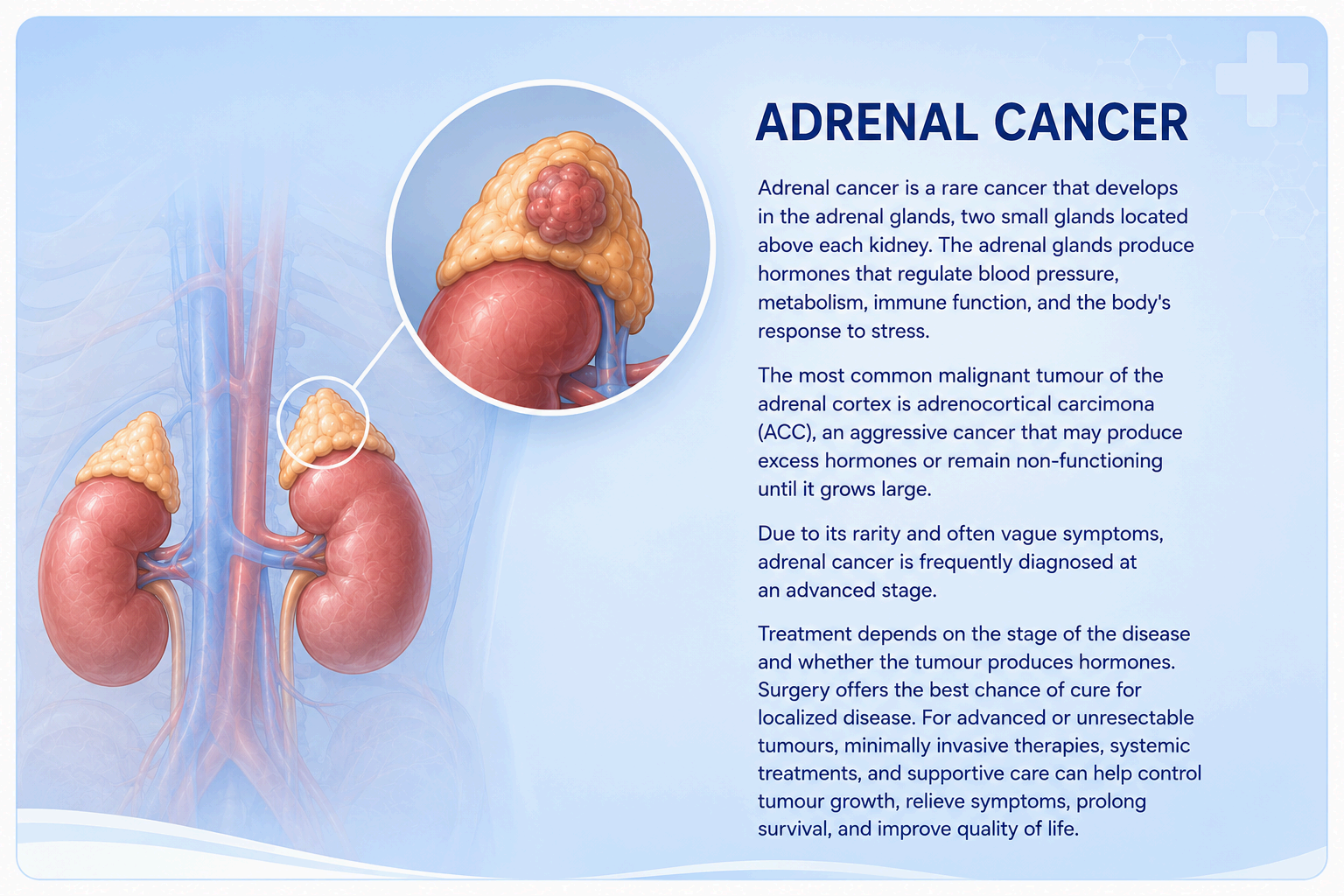
Adrenal cancer is a rare cancer that develops in the adrenal glands, two small glands located above each kidney. The adrenal glands produce hormones that regulate blood pressure, metabolism, immune function, and the body's response to stress. The most common malignant tumour of the adrenal cortex is adrenocortical carcinoma (ACC), an aggressive cancer that may produce excess hormones or remain non-functioning until it grows large. Due to its rarity and often vague symptoms, adrenal cancer is frequently diagnosed at an advanced stage.

Treatment depends on the stage of the disease and whether the tumour produces hormones. Surgery offers the best chance of cure for localized disease. For advanced or unresectable tumours, minimally invasive therapies, systemic treatments, and supportive care can help control tumour growth, relieve symptoms, prolong survival, and improve quality of life.
Types

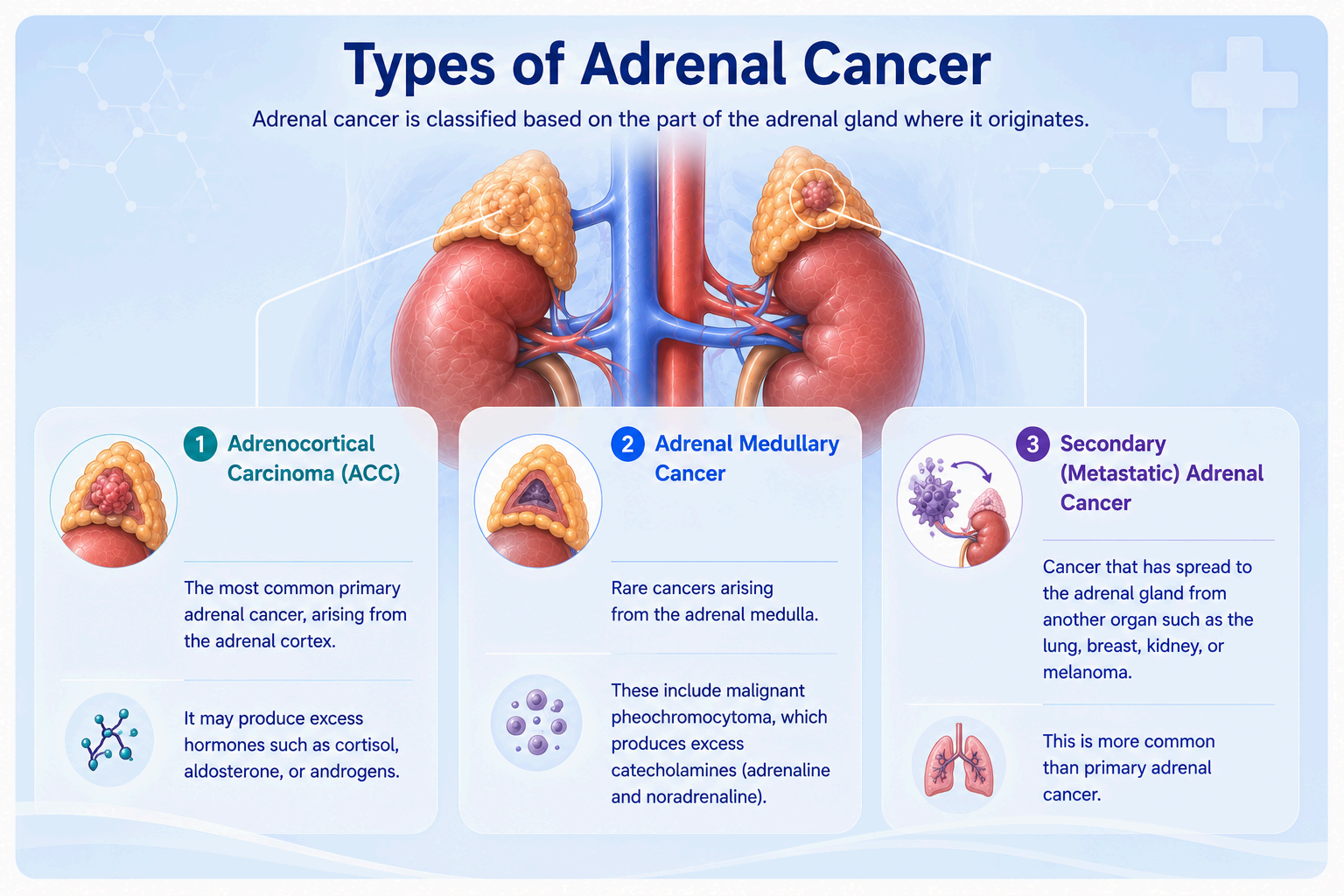
Adrenal cancer is classified based on the part of the adrenal gland where it originates.
Adrenocortical Carcinoma (ACC)
The most common primary adrenal cancer, arising from the adrenal cortex. It may produce excess hormones such as cortisol, aldosterone, or androgens.
Adrenal Medullary Cancer
Rare cancers arising from the adrenal medulla. These include malignant pheochromocytoma, which produces excess catecholamines (adrenaline and noradrenaline).
Secondary (Metastatic) Adrenal Cancer
Cancer that has spread to the adrenal gland from another organ such as the lung, breast, kidney, or melanoma. This is more common than primary adrenal cancer.
Stages

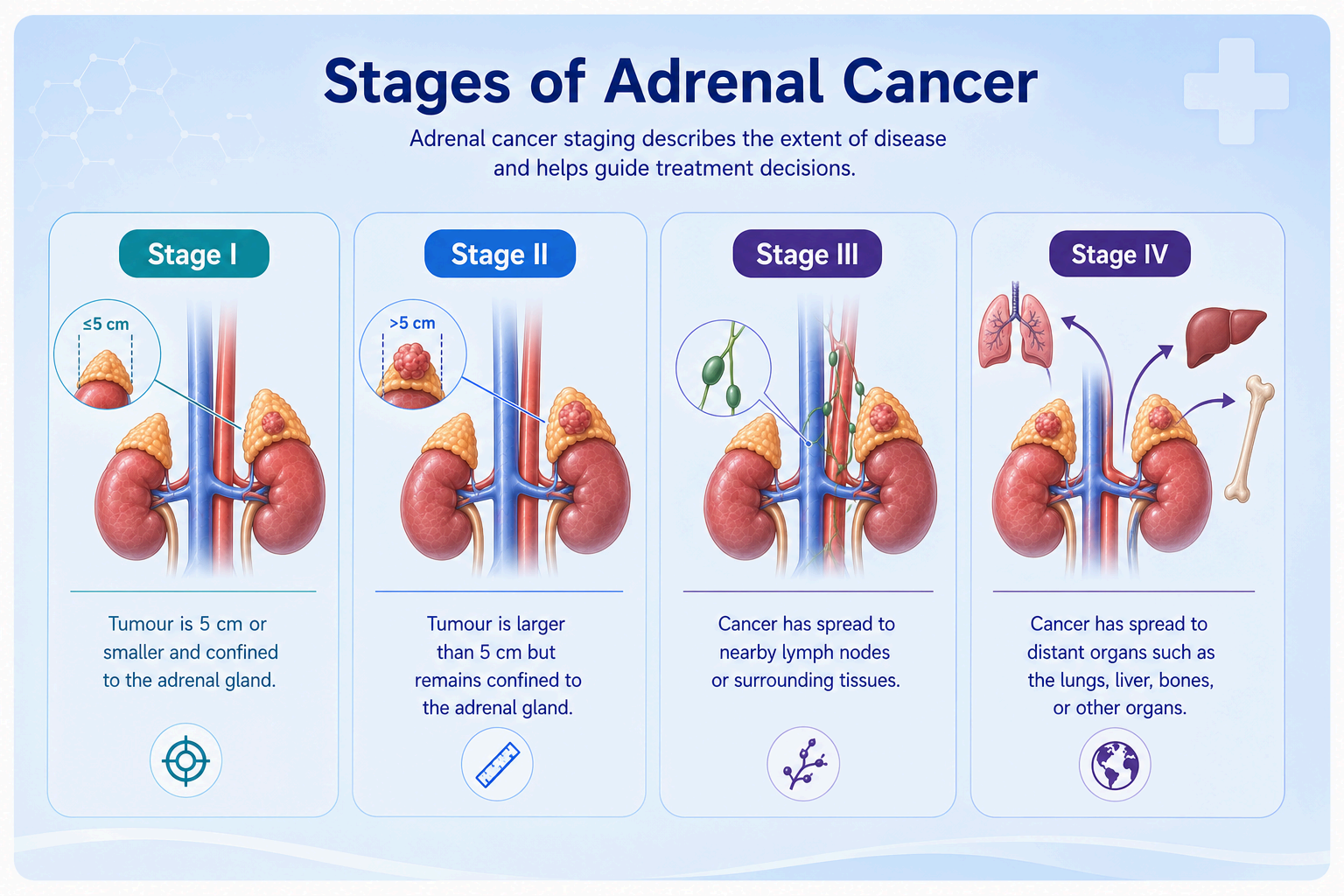
Adrenal cancer staging describes the extent of disease and helps guide treatment decisions.
Stage I:Tumour is 5 cm or smaller and confined to the adrenal gland.
Stage II:Tumour is larger than 5 cm but remains confined to the adrenal gland.
Stage III:Cancer has spread to nearby lymph nodes or surrounding tissues.
Stage IV:Cancer has spread to distant organs such as the lungs, liver, bones, or other organs.
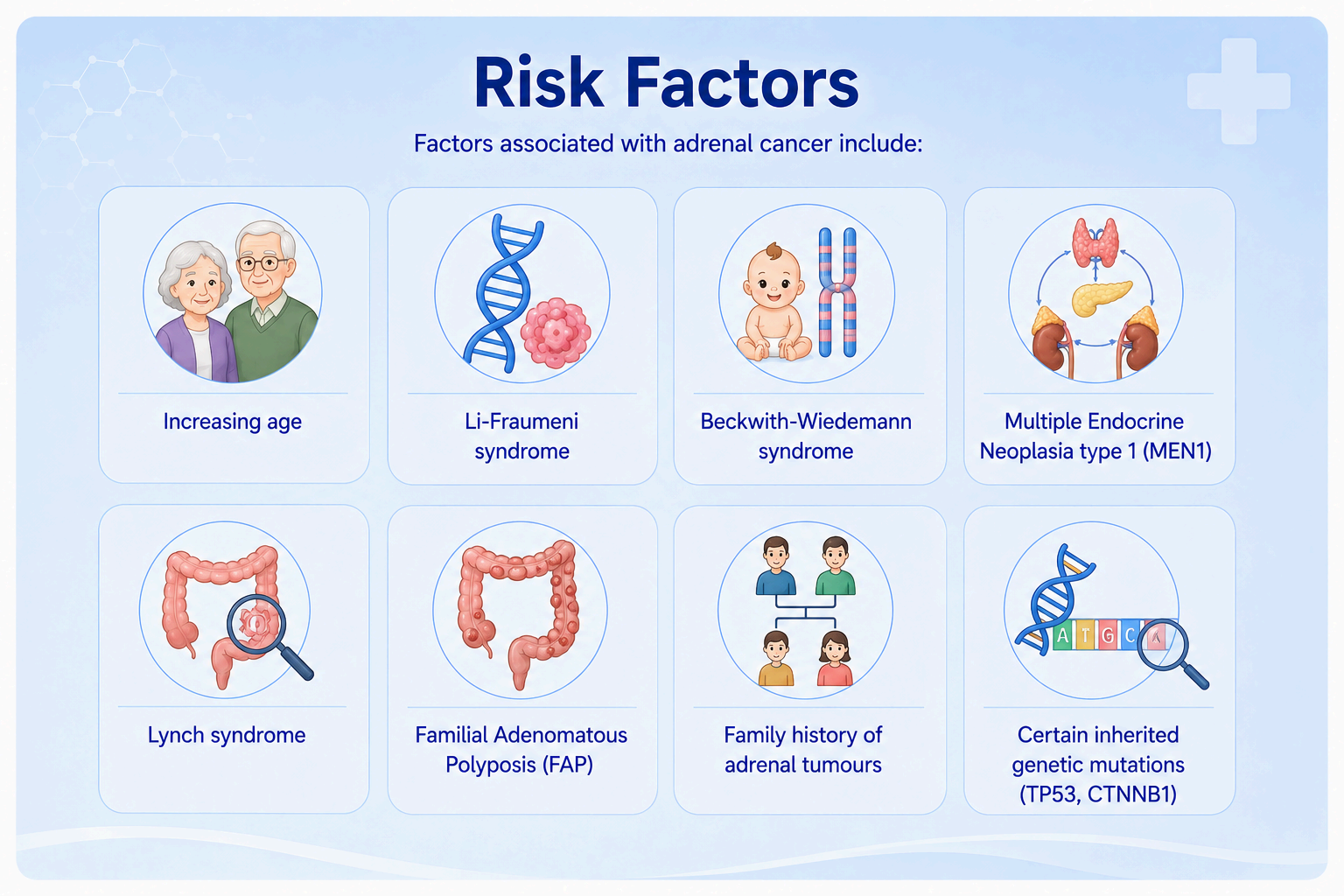
Risk Factors

Factors associated with adrenal cancer include:
Increasing age
Li-Fraumeni syndrome
Beckwith-Wiedemann syndrome
Multiple Endocrine Neoplasia type 1 (MEN1)
Lynch syndrome
Familial Adenomatous Polyposis (FAP)
Family history of adrenal tumours
Certain inherited genetic mutations (TP53, CTNNB1)
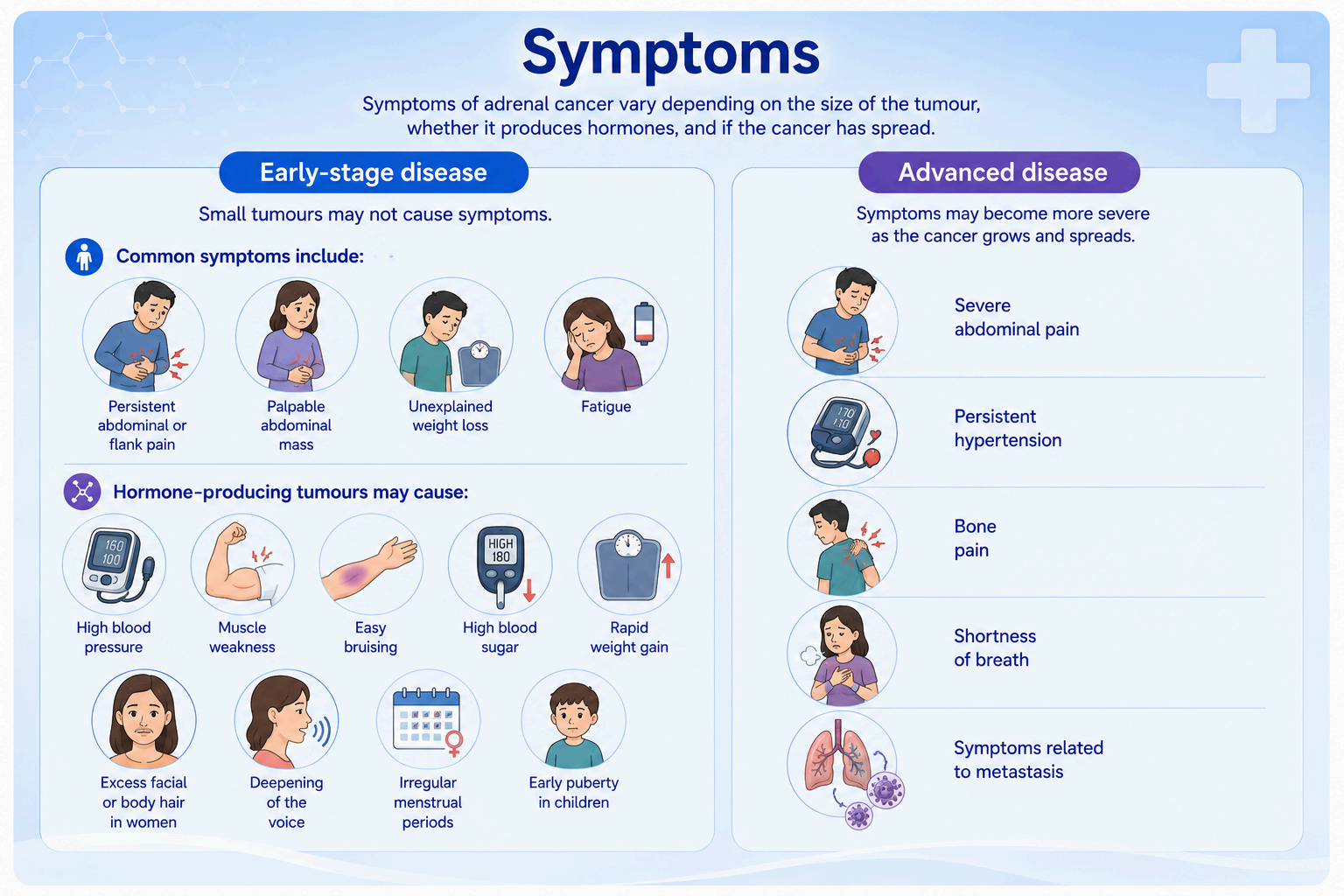
Symptoms

Early-stage disease
Small tumours may not cause symptoms.
Common symptoms include:
Persistent abdominal or flank pain
Palpable abdominal mass
Unexplained weight loss
Fatigue
Hormone-producing tumours may cause:
High blood pressure
Muscle weakness
Easy bruising
High blood sugar
Rapid weight gain
Excess facial or body hair in women
Deepening of the voice
Irregular menstrual periods
Early puberty in children
Advanced disease
Severe abdominal pain
Persistent hypertension
Bone pain
Shortness of breath
Symptoms related to metastasis
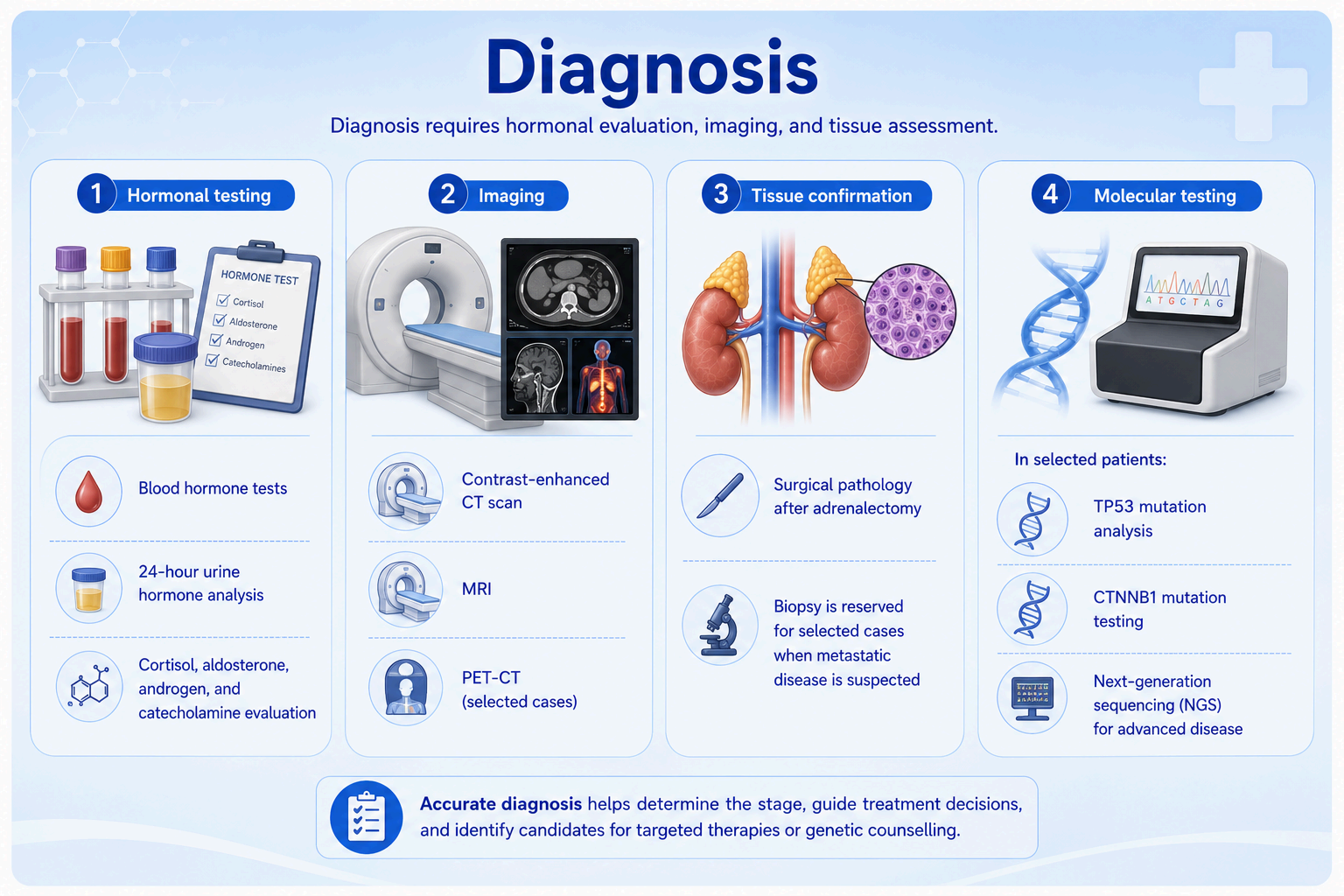
Diagnosis

Diagnosis requires hormonal evaluation, imaging, and tissue assessment.
Hormonal testing
Blood hormone tests
24-hour urine hormone analysis
Cortisol, aldosterone, androgen, and catecholamine evaluation
Imaging
Contrast-enhanced CT scan
MRI
PET-CT (selected cases)
Tissue confirmation
Surgical pathology after adrenalectomy
Biopsy is reserved for selected cases when metastatic disease is suspected
Molecular testing
In selected patients:
TP53 mutation analysis
CTNNB1 mutation testing
Next-generation sequencing (NGS) for advanced disease
Facts (FAQ)
Q1: Is adrenal cancer common?
No. Adrenal cancer is a very rare cancer, with only a small number of cases diagnosed worldwide each year.
Q2: Can adrenal cancer produce hormones?
Yes. Many adrenocortical carcinomas produce excess hormones, causing symptoms such as high blood pressure, weight gain, diabetes, or abnormal hair growth.
Q3: Is adrenal cancer curable?
Localized adrenal cancer can often be cured with complete surgical removal. Advanced disease is usually managed with systemic therapy and supportive treatment.
Q4: What is the main treatment for adrenal cancer?
Surgery is the primary treatment for localized disease. Additional treatments may include mitotane therapy, chemotherapy, radiation therapy, or targeted treatment depending on the stage.
Q5: What causes adrenal cancer?
The exact cause is unknown, but inherited genetic syndromes and certain gene mutations significantly increase the risk.
Q6: How is adrenal cancer diagnosed?
Diagnosis involves hormone testing, CT or MRI imaging, and confirmation through surgical pathology.
Q7: Can adrenal cancer spread to other organs?
Yes. Advanced adrenal cancer commonly spreads to the lungs, liver, bones, and nearby lymph nodes.
Q8: What are the warning signs of adrenal cancer?
Persistent abdominal pain, an abdominal mass, unexplained weight loss, high blood pressure, hormonal changes, or unusual physical changes such as rapid weight gain or excess hair growth should be evaluated by a healthcare professional.