Endometrial Cancer
Description

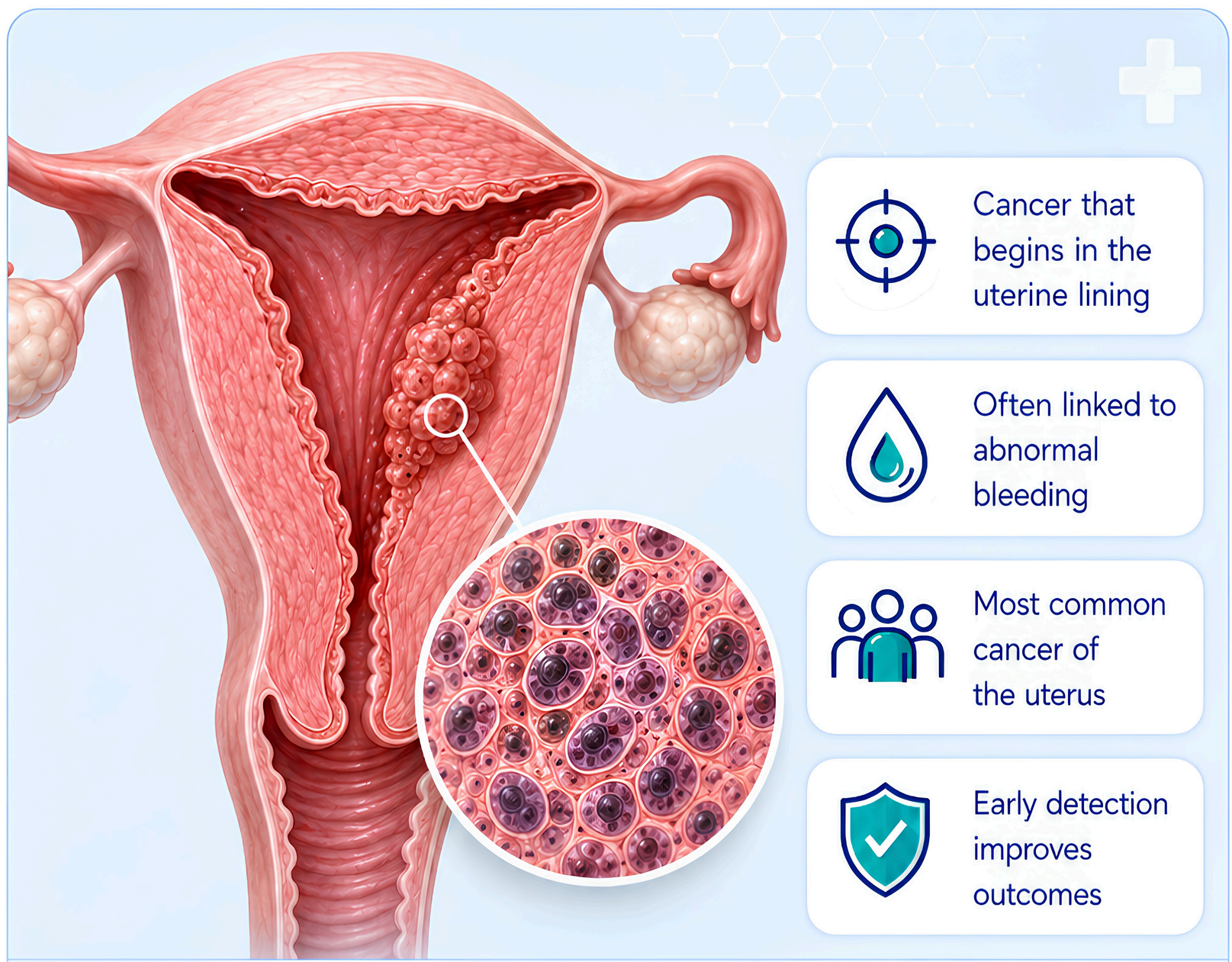
Endometrial cancer is a malignant tumour that begins in the inner lining of the uterus, known as the endometrium. It is one of the most common forms of uterine cancer and is different from uterine sarcoma, which begins in the muscle or connective tissue of the uterus. Many endometrial cancers cause abnormal vaginal bleeding at an early stage and can therefore be detected earlier.
Any vaginal bleeding after menopause should not be considered normal. Women who have not reached menopause should also seek assessment for clearly heavier periods, prolonged bleeding, bleeding between periods or irregular bleeding. Diagnosis usually requires ultrasound and sampling of the endometrium.
Types

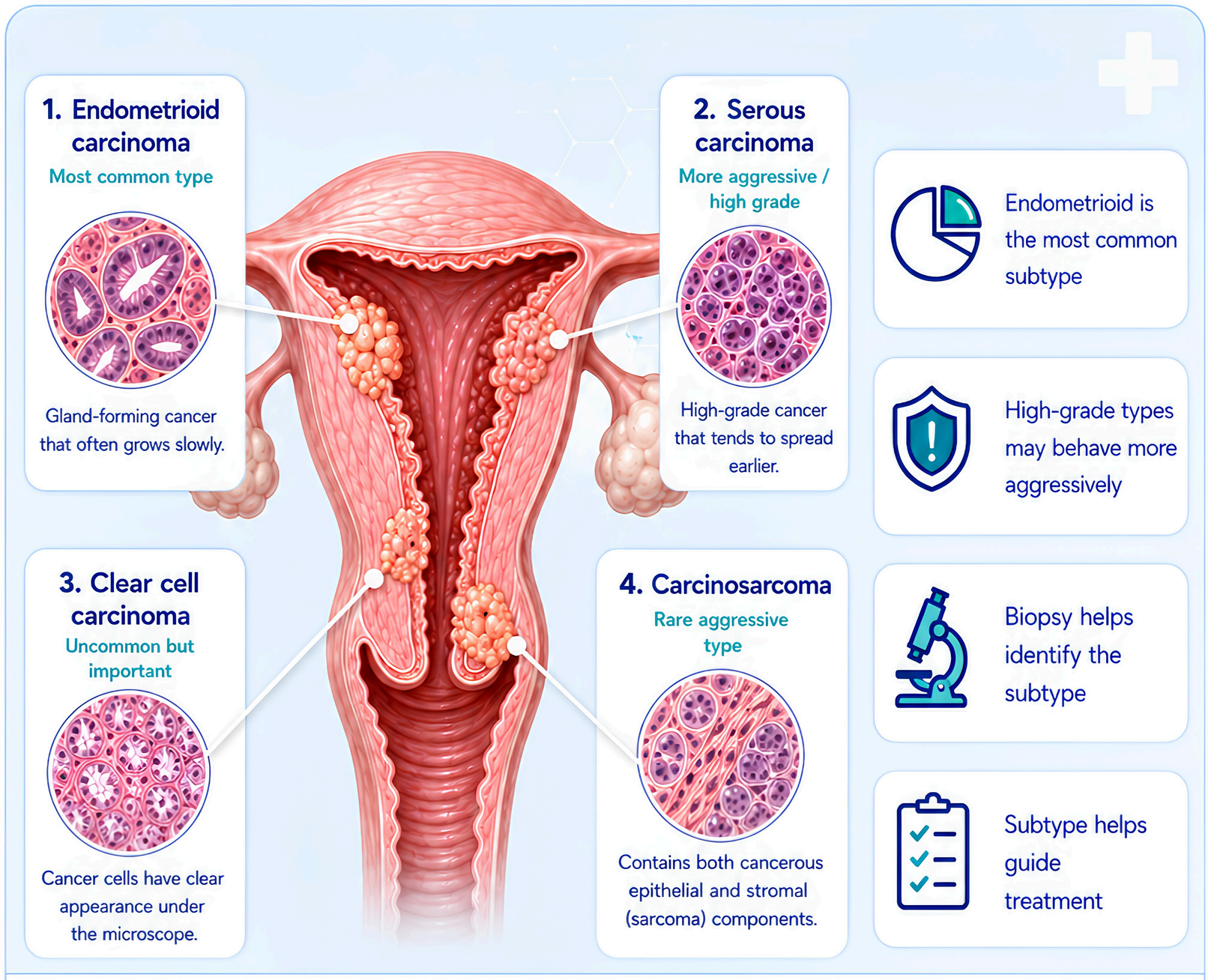
Endometrioid Carcinoma: The most common type. Some cases are associated with prolonged oestrogen stimulation, obesity and metabolic factors.
Serous Carcinoma: Less common but usually more aggressive and may spread at an earlier stage.
Clear Cell Carcinoma: A rare subtype that often has more aggressive biological behaviour.
Undifferentiated or Dedifferentiated Carcinoma and Carcinosarcoma: High-risk pathological types that require treatment planning based on molecular and pathological features.
Stages

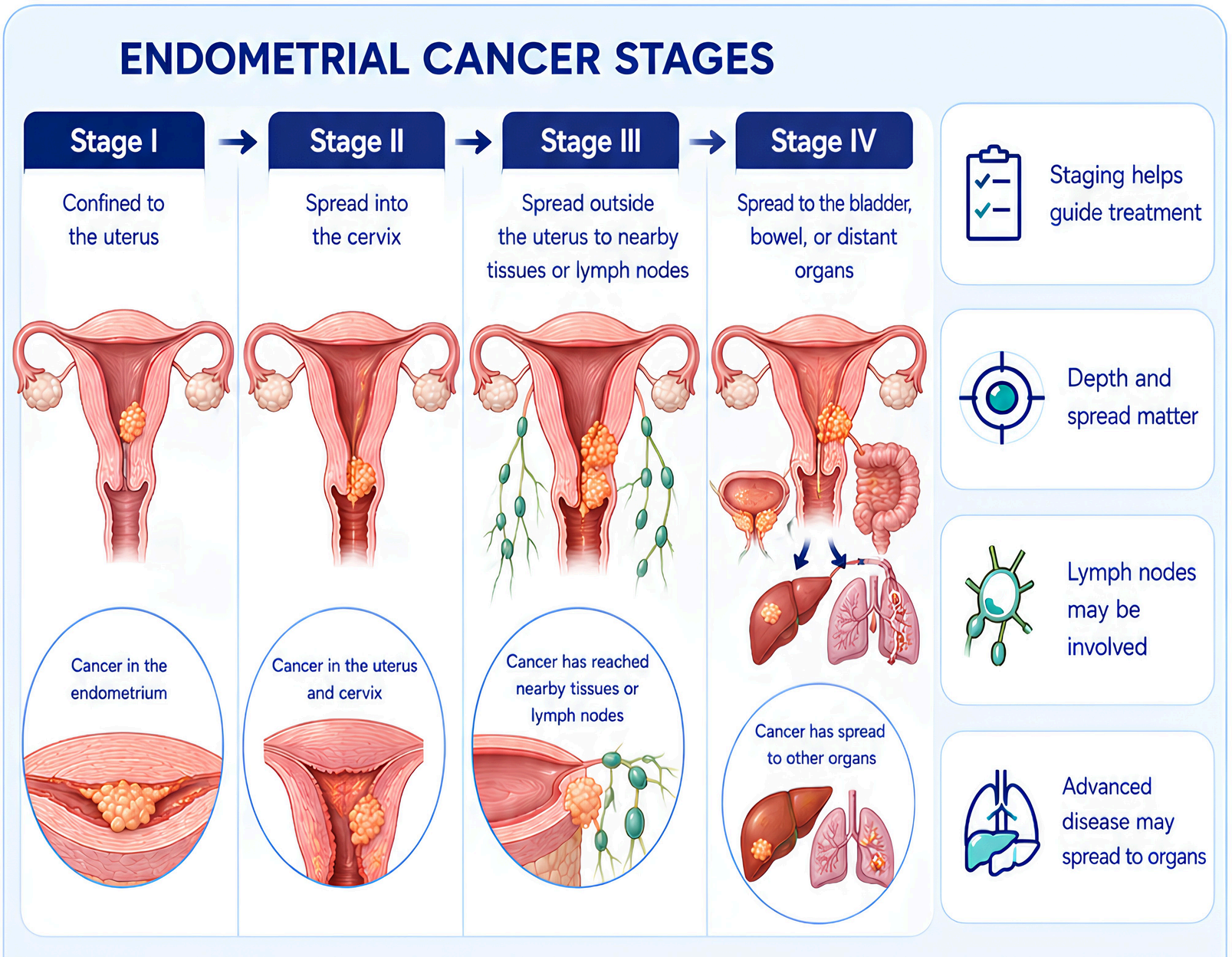
Endometrial cancer is usually staged using the FIGO system. Surgical pathology, imaging and molecular features may also be used to assess risk.
- Stage I: Cancer is confined to the body of the uterus.
- Stage II: Cancer has invaded the cervical stroma but has not spread beyond the uterus.
- Stage III: Cancer has spread outside the uterus to pelvic tissue, the vagina, ovaries or regional lymph nodes.
- Stage IV: Cancer has invaded the lining of the bladder or bowel, or has spread to distant organs beyond the abdomen.
Risk Factors

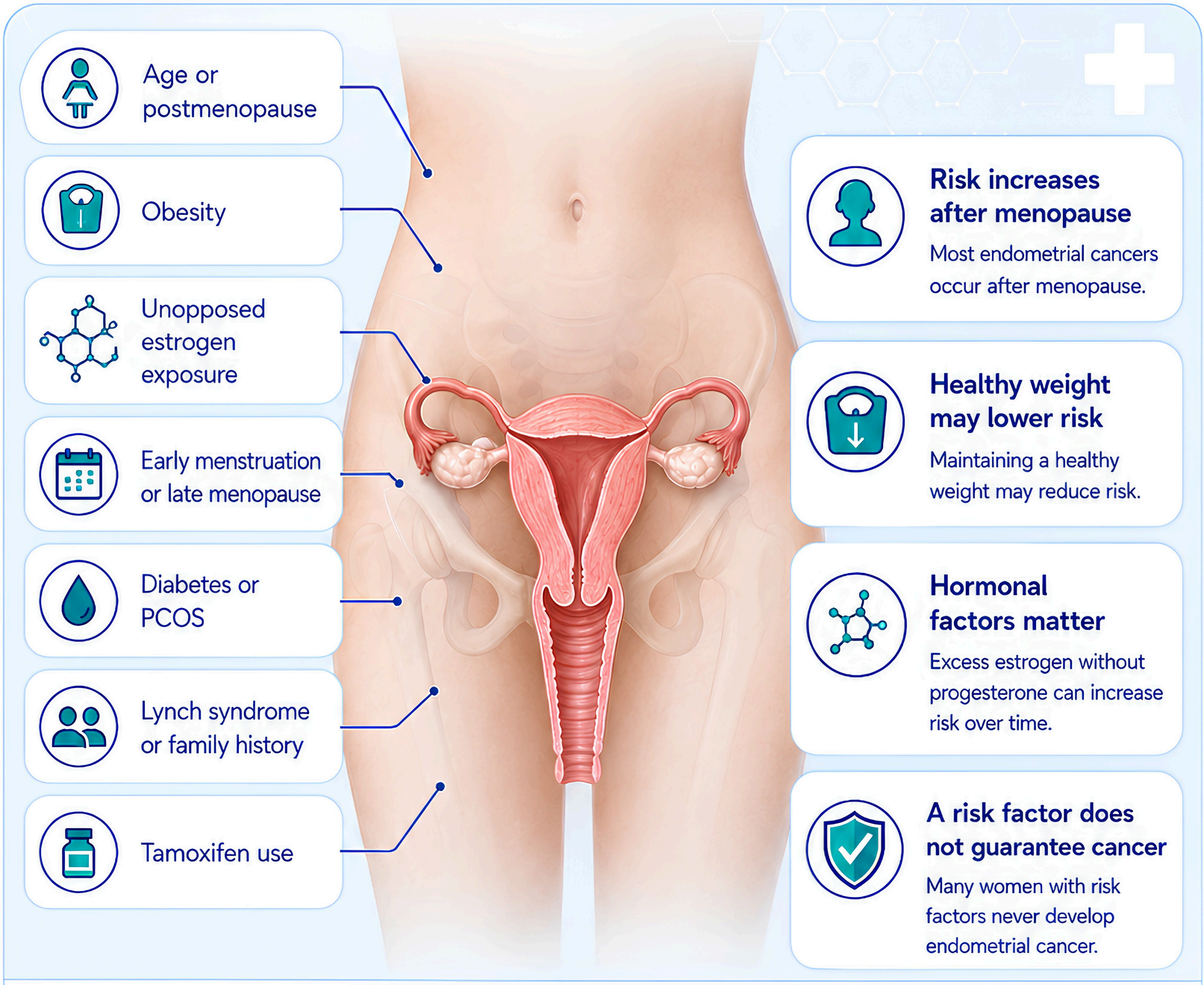
The following factors may increase the risk, but having one or more risk factors does not mean that a person will develop cancer:
Obesity, metabolic syndrome or type 2 diabetes
Long-term exposure to relatively high oestrogen without adequate progesterone
Never having been pregnant, early menstruation or late menopause
Polycystic ovary syndrome and long-term irregular ovulation
Oestrogen-only hormone therapy after menopause
Previous use of tamoxifen
Endometrial hyperplasia, especially with atypical cells
Lynch syndrome or a relevant family history
Symptoms

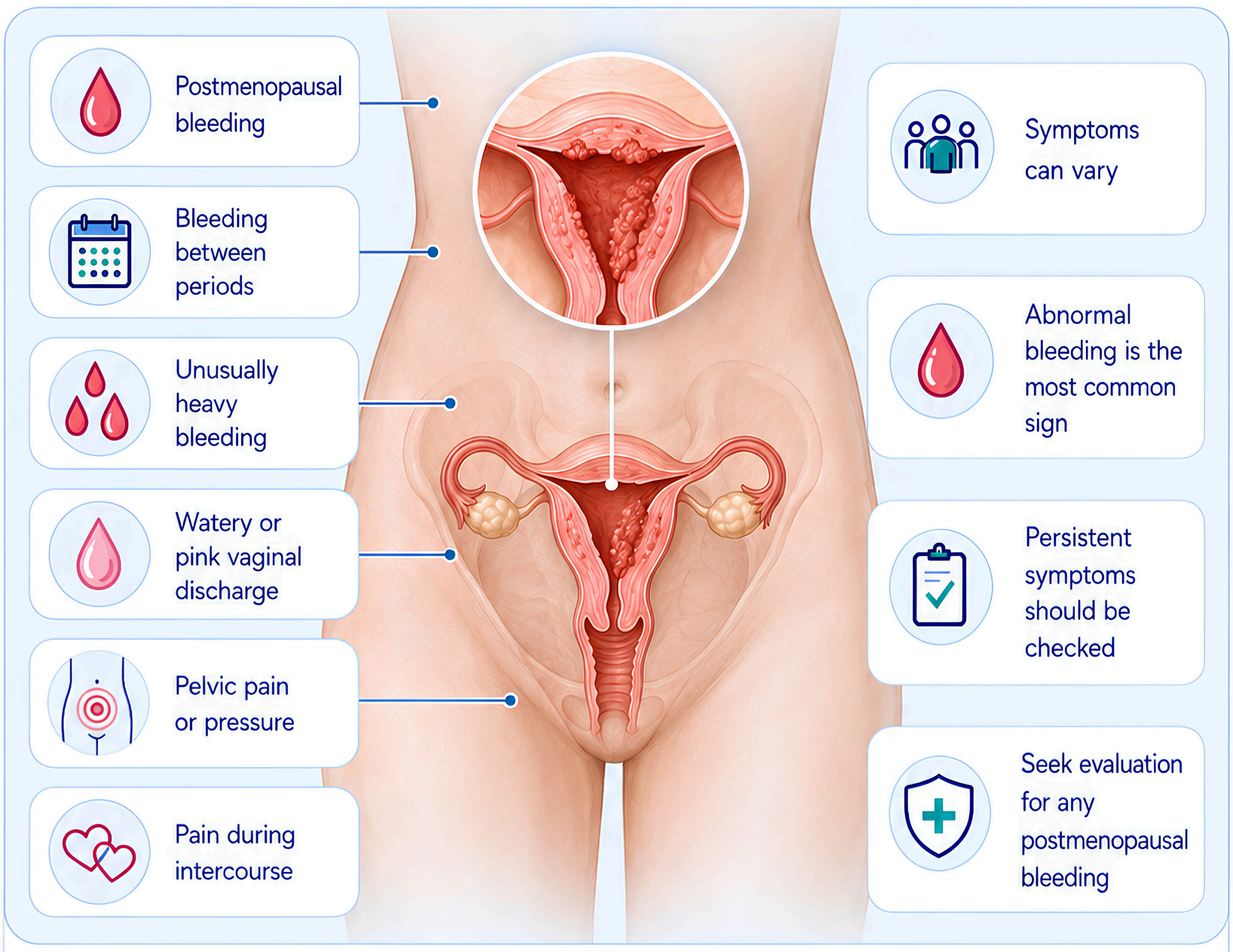
Early disease may not cause obvious symptoms. Medical evaluation is recommended when any of the following symptoms persist, recur, or gradually worsen:
Vaginal bleeding or blood-stained discharge after menopause
Unusually heavy or prolonged menstrual bleeding
Bleeding between menstrual periods
Pelvic pain or pressure
Pain during sexual intercourse
Weight loss, abdominal bloating or fatigue in more advanced disease
Diagnosis

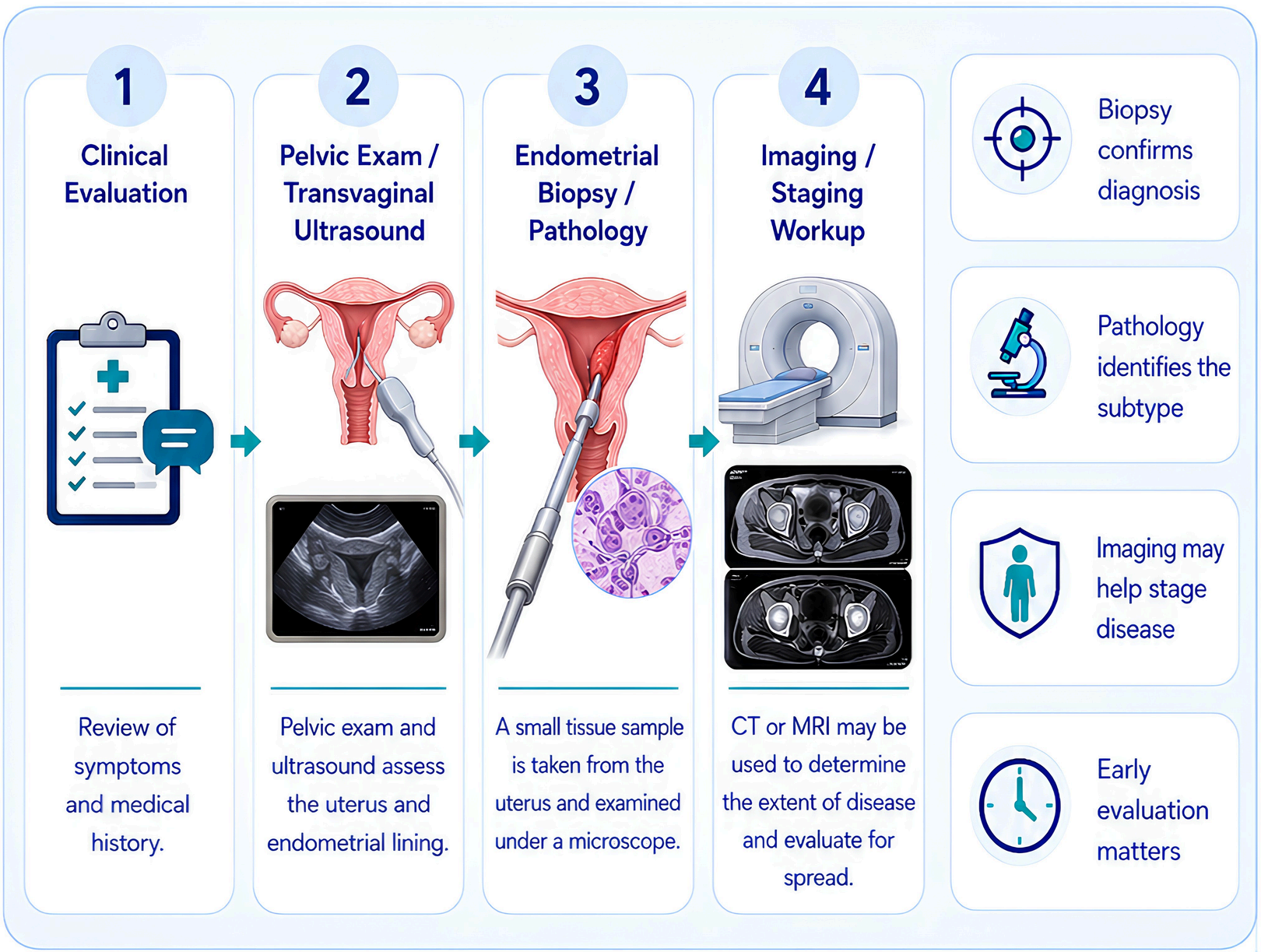
Diagnosis usually combines medical history, physical examination, imaging, laboratory tests, and pathology. The exact tests are selected by the doctor according to the individual case.
Gynaecological Assessment
Review of the bleeding pattern, medicines and family history
Pelvic examination
Imaging
Transvaginal ultrasound to assess endometrial thickness and uterine structure
MRI when needed to assess local invasion
Tissue Confirmation
Endometrial biopsy
Hysteroscopy and curettage
Staging and Molecular Tests
Surgical pathology to assess myometrial invasion, lymph nodes and histological type
MMR, MSI, p53, POLE or other molecular tests in selected cases
Facts (FAQ)
Q: Does a small amount of bleeding after menopause require assessment?
A: Yes. Even a single episode of light bleeding after menopause should be evaluated promptly.
Q: Does a thickened endometrium always mean cancer?
A: No. Endometrial thickness varies with age, the menstrual cycle and hormones, but abnormal thickening may require a biopsy.
Q: Can endometrial cancer be cured?
A: Many cases are found early and can be well controlled with surgery. Outcomes depend on stage, pathology and molecular risk.
Q: Should all women undergo regular screening for endometrial cancer?
A: There is no routine screening programme for all symptom-free women. Prompt evaluation of abnormal bleeding is more important.
Q: Why does obesity increase the risk?
A: Fat tissue can affect oestrogen levels and is associated with insulin resistance and chronic inflammation, which may increase abnormal endometrial growth.