Thyroid Cancer
Description
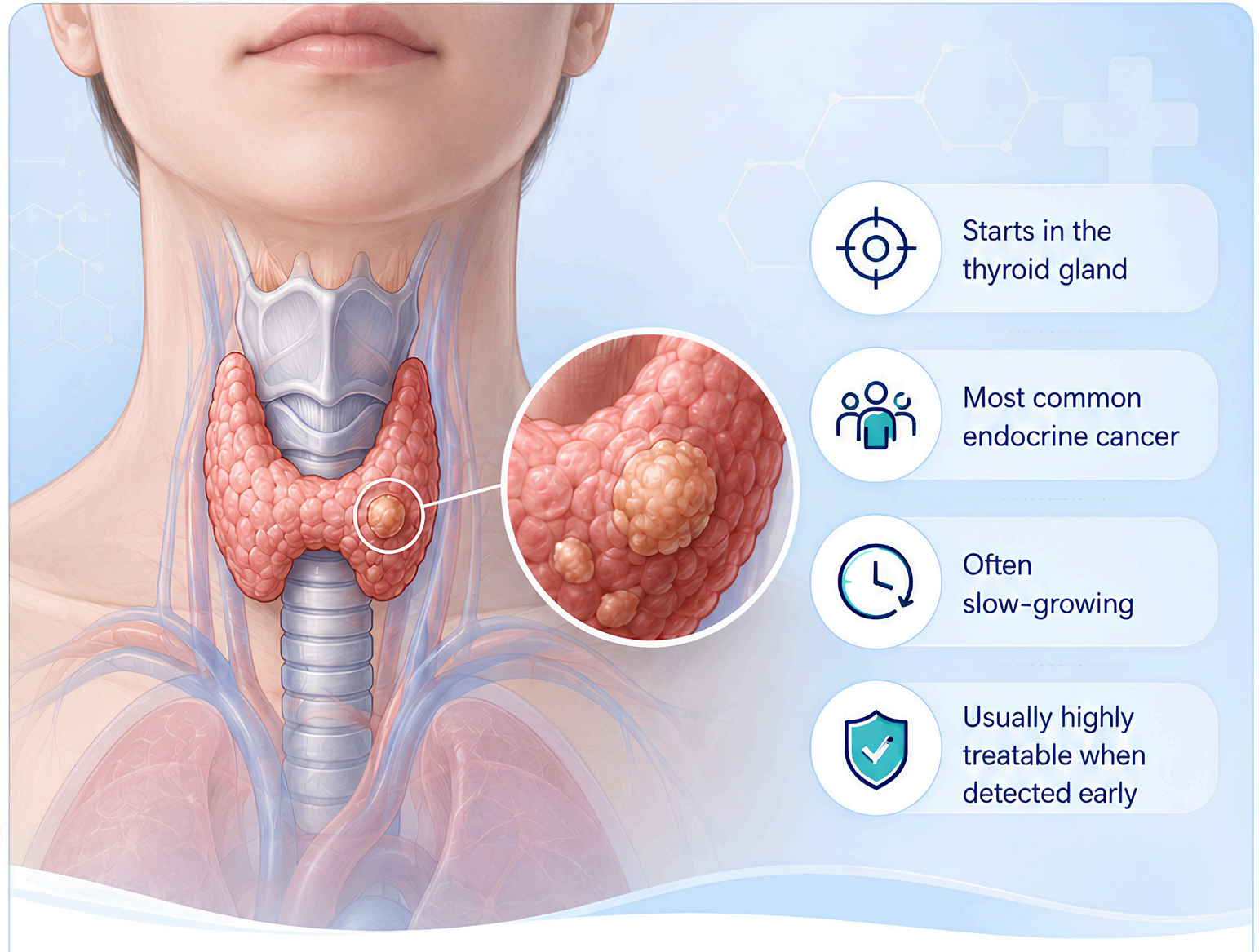
Thyroid cancer is a malignant tumour that develops in the cells of the thyroid gland. The thyroid is located at the front of the neck and produces hormones that help regulate metabolism, heart rate and body temperature. Many thyroid cancers grow slowly and may be found during a physical examination, neck ultrasound or assessment of a thyroid nodule.
A thyroid nodule does not automatically mean cancer, and most nodules are benign. However, a nodule that keeps growing, feels hard, or is accompanied by persistent hoarseness, difficulty swallowing or enlarged lymph nodes in the neck should be assessed promptly. Treatment and outlook depend on the cancer type, stage, age, genetic features and whether the disease has spread.
Types
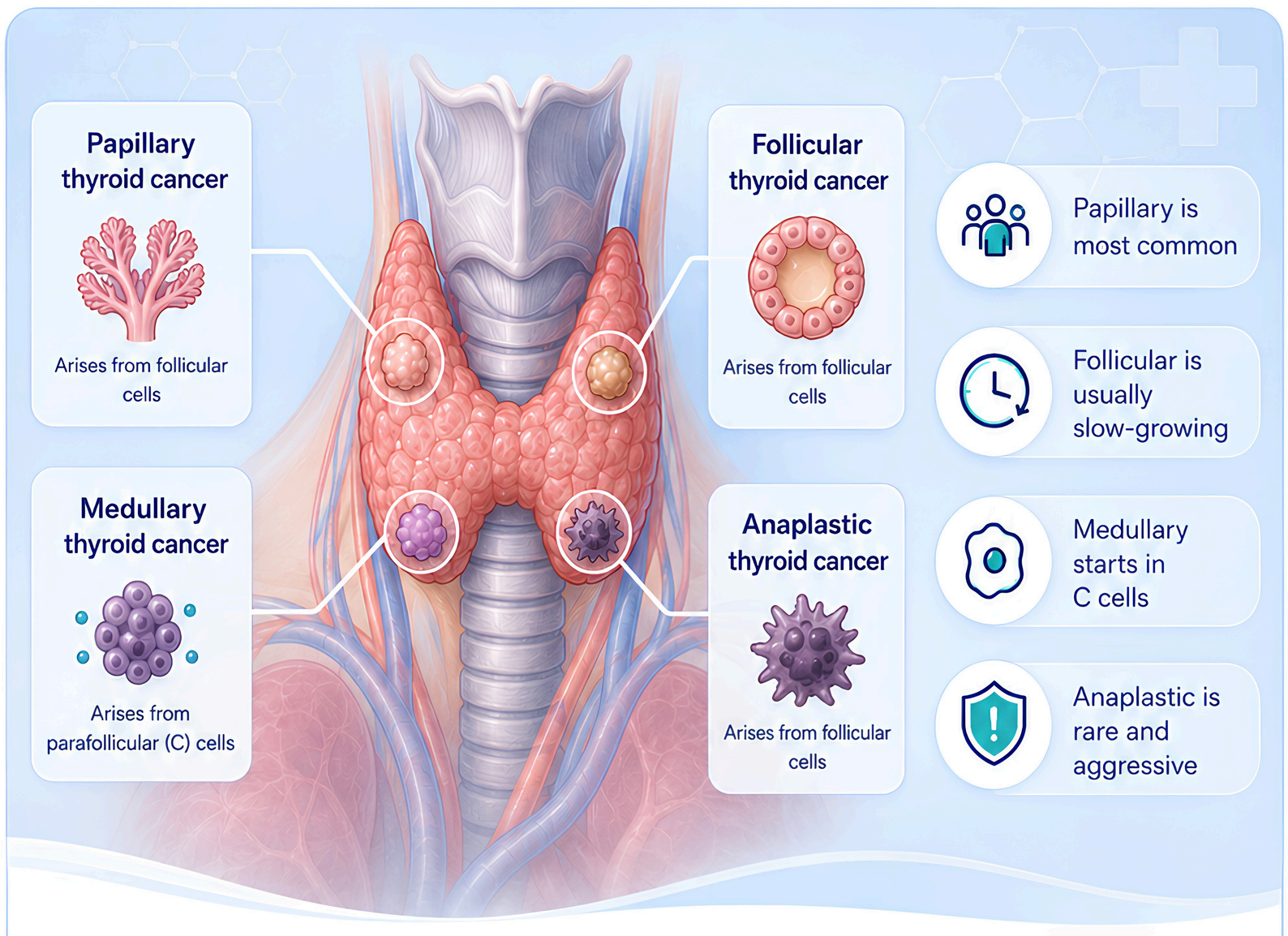
Papillary Thyroid Cancer: The most common type. It usually grows slowly but may spread to lymph nodes in the neck.
Follicular Thyroid Cancer: May spread through the bloodstream to the lungs or bones and usually requires pathological examination for confirmation.
Medullary Thyroid Cancer: Begins in calcitonin-producing C cells. Some cases are linked to RET gene changes and inherited syndromes.
Anaplastic Thyroid Cancer: Rare but fast-growing, and usually requires an urgent treatment plan developed by a multidisciplinary team.
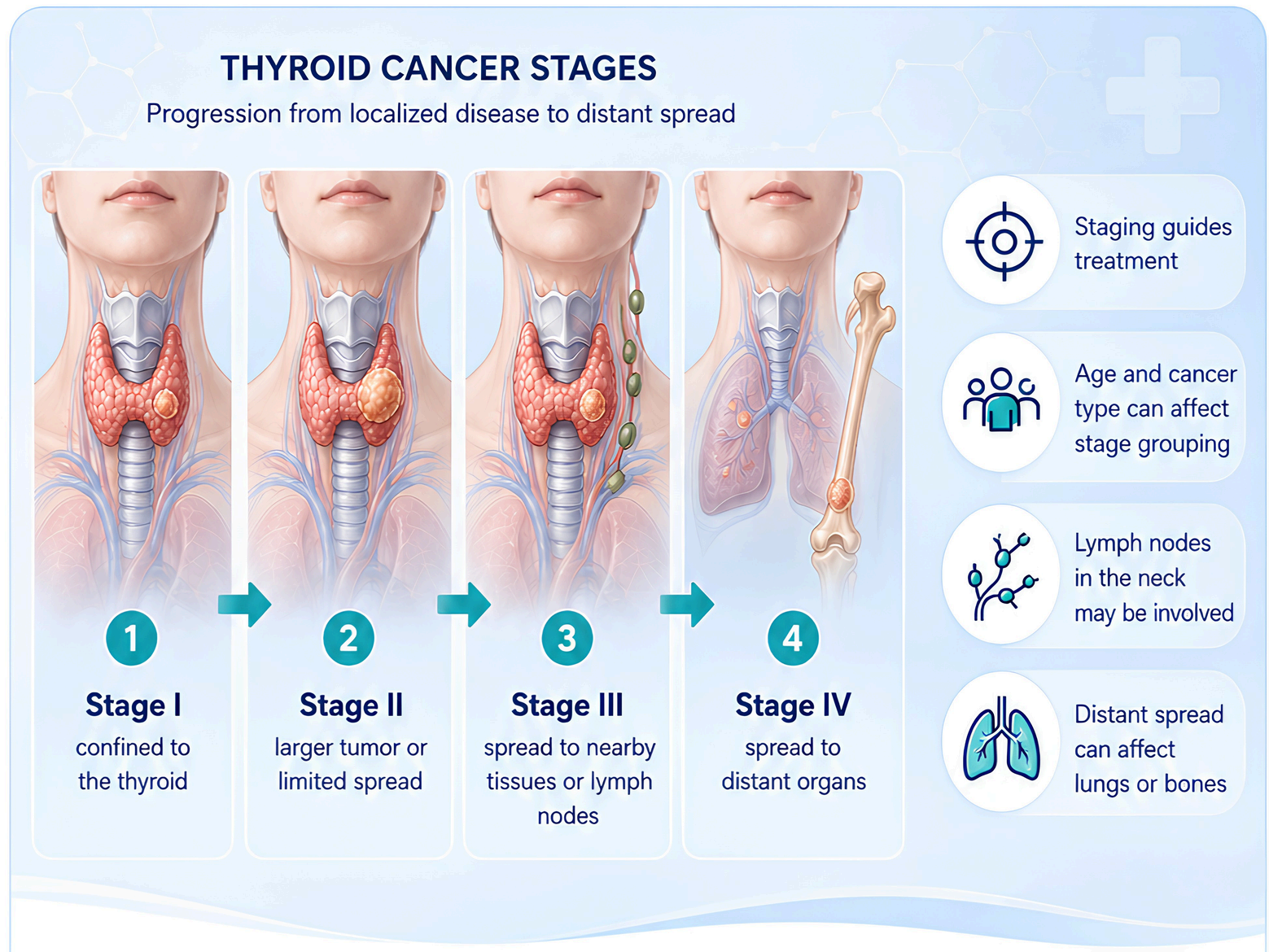
Thyroid cancer is generally staged using the TNM system, which assesses the primary tumour, lymph nodes and distant metastasis. The exact stage definitions vary according to cancer type and the patient’s age.
Stage I: The cancer is confined to the thyroid, or has only limited local extension.
Stage II: The tumour is larger or involves nearby tissue or lymph nodes; distant spread may be classified differently in certain age groups.
Stage III: More extensive local invasion or wider involvement of lymph nodes in the neck.
Stage IV: The cancer invades important nearby structures or has spread to distant organs such as the lungs or bones.
Risk Factors
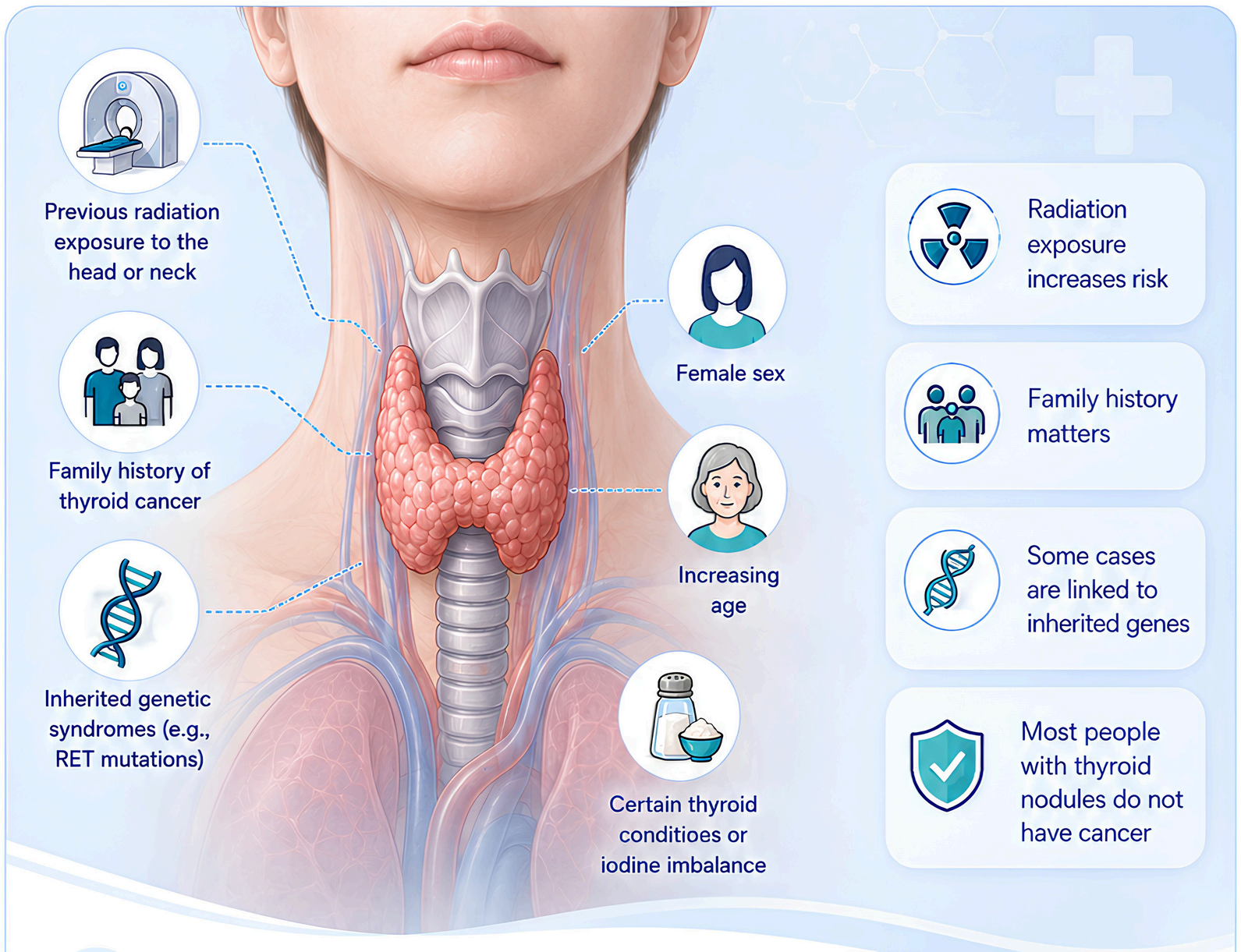
The following factors may increase the risk, but having one or more risk factors does not mean that a person will develop cancer:
Radiation exposure to the head or neck during childhood or adolescence
Family history of thyroid cancer or thyroid disease
Inherited factors involving RET, MEN2 or related syndromes
Female sex and increasing age
Long-standing goitre or certain thyroid disorders
Symptoms
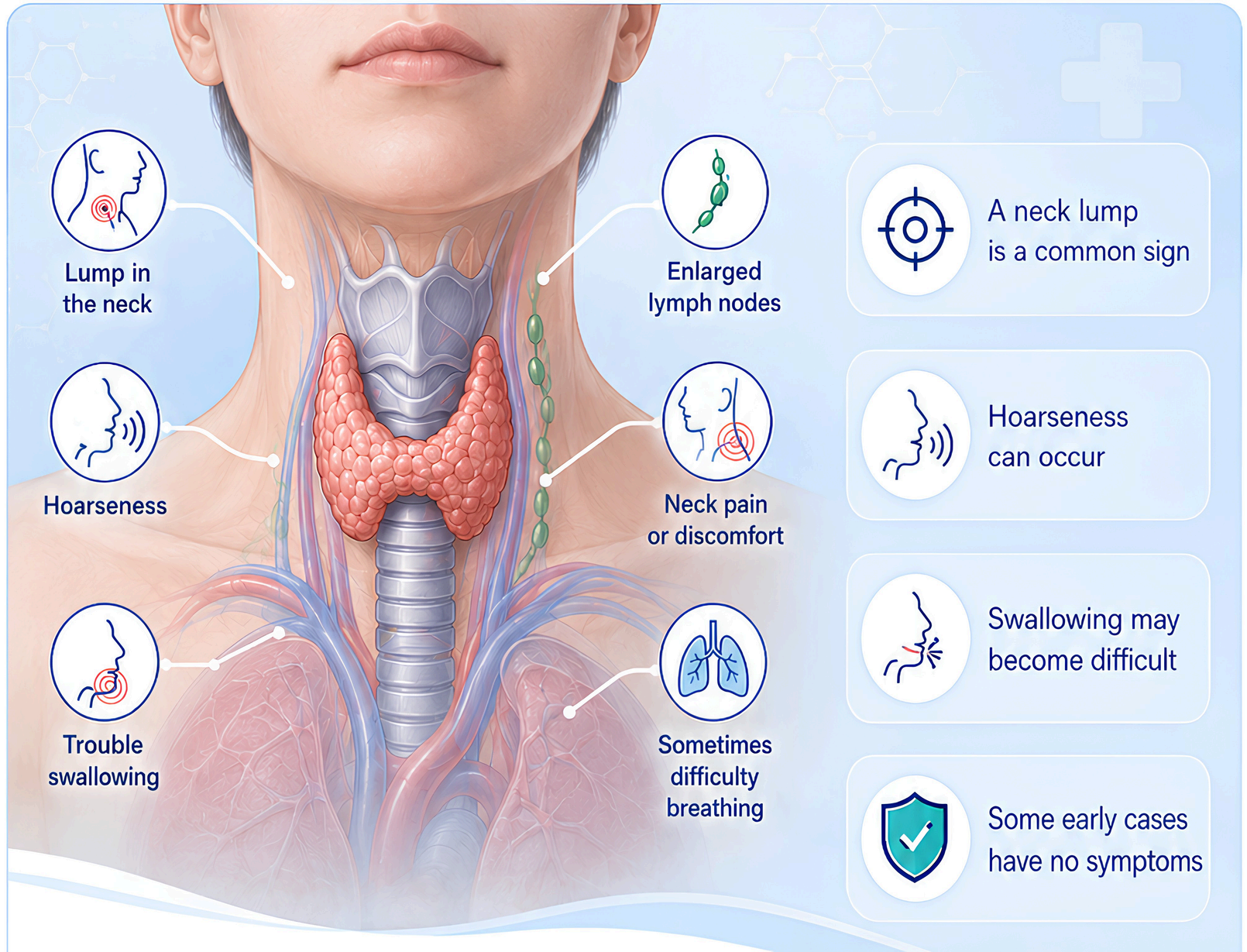
Early disease may not cause obvious symptoms. Medical evaluation is recommended when any of the following symptoms persist, recur, or gradually worsen:
A painless lump or thyroid nodule in the neck
Enlarged lymph nodes in the neck
Persistent hoarseness
Difficulty swallowing or breathing
Neck pain that may occasionally extend to the ear
A nodule that grows noticeably within a short period
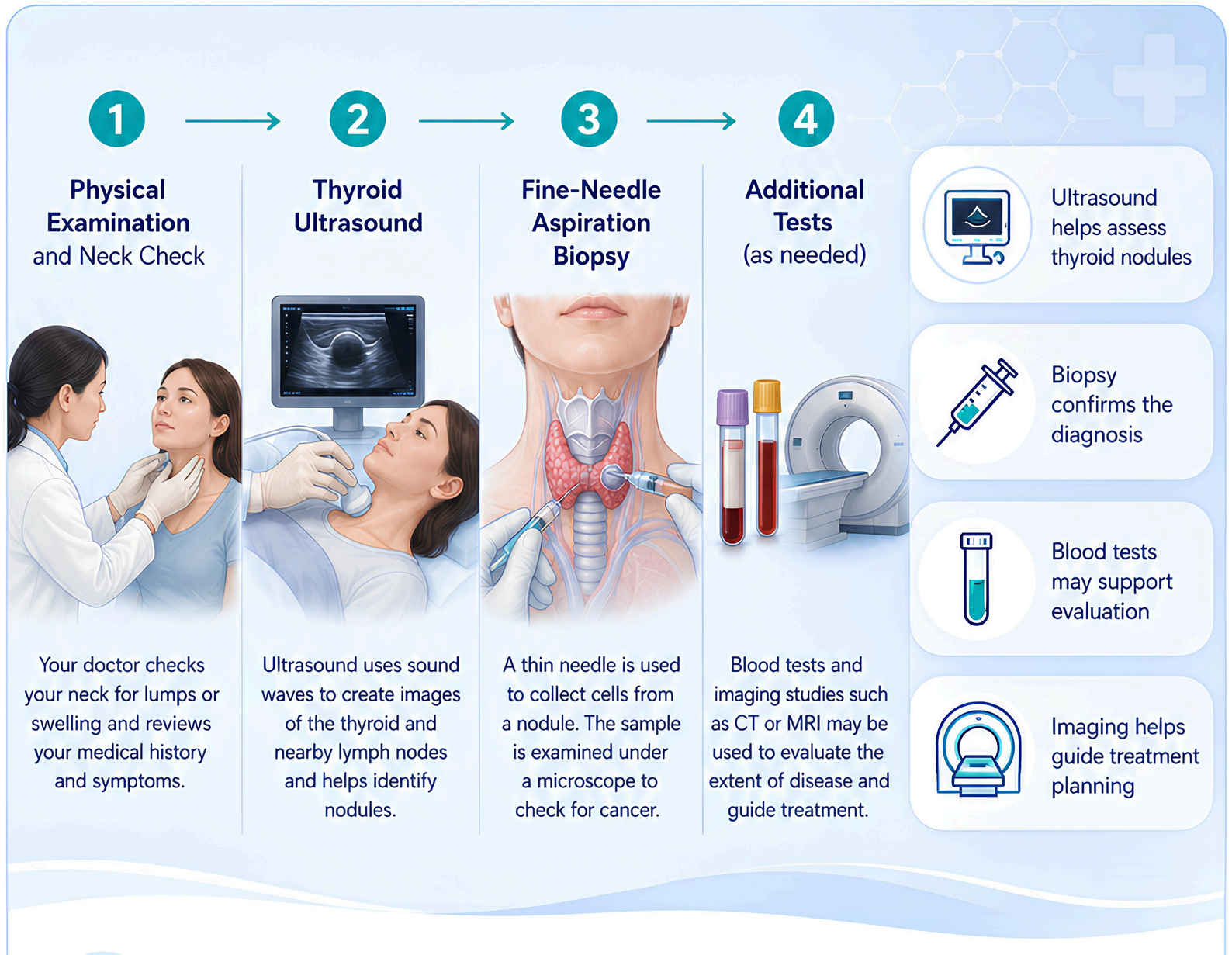
Diagnosis usually combines medical history, physical examination, imaging, laboratory tests, and pathology. The exact tests are selected by the doctor according to the individual case.
Imaging and Laboratory Tests
Ultrasound of the thyroid and neck
Thyroid function tests
Calcitonin, thyroglobulin or relevant genetic tests when indicated
Facts (FAQ)
Q: Does every thyroid nodule mean cancer?
A: No. Most thyroid nodules are benign. Assessment depends on ultrasound features, size, growth pattern and biopsy results.
Q: Can thyroid cancer be cured?
A: Many early and well-differentiated thyroid cancers have favourable treatment outcomes. The result depends on the type, stage, age and whether the cancer has spread.
Q: Does thyroid cancer always affect thyroid function?
A: No. Some patients continue to have normal thyroid function. After total thyroid removal, lifelong thyroid hormone replacement is usually required.
Q: Does every patient need radioactive iodine treatment?
A: No. The decision depends on the pathological type, recurrence risk, stage and postoperative assessment.
Q: Which symptoms require prompt assessment?
A: A rapidly growing neck lump, persistent hoarseness, difficulty swallowing, breathing problems or enlarged neck lymph nodes should be evaluated without delay.