Skin Cancer

Description
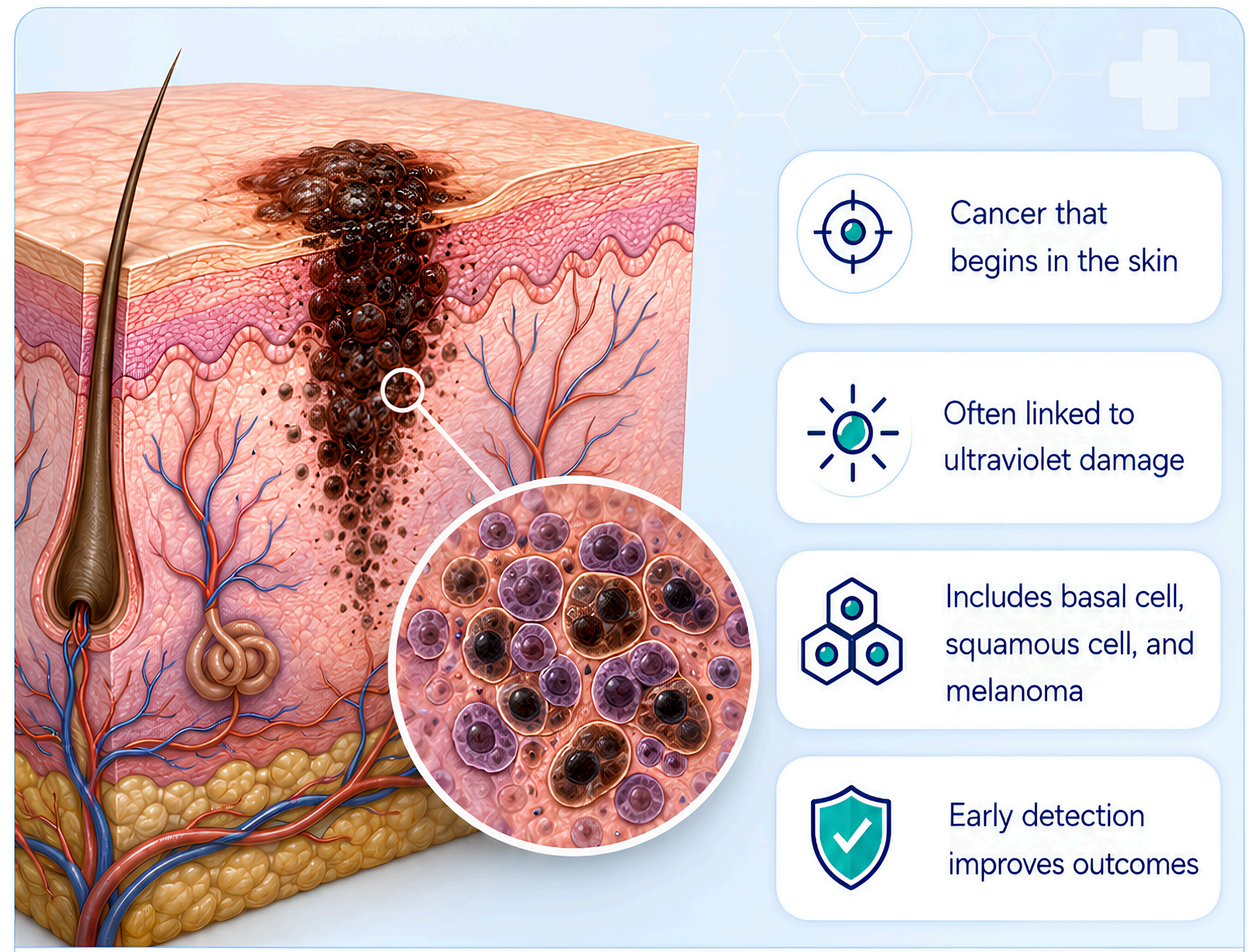
Skin cancer develops when skin cells grow abnormally and become malignant. It is often associated with ultraviolet radiation. The common types are basal cell carcinoma, cutaneous squamous cell carcinoma and melanoma. Most non-melanoma skin cancers grow slowly but can damage nearby tissue, while melanoma is less common and more likely to spread.
Skin cancer can appear on sun-exposed areas but may also develop on the soles, beneath the nails, on the scalp or on skin that receives little sunlight. A new or changing mole, a wound that does not heal, or a lesion that repeatedly bleeds or crusts should be checked by a dermatologist.
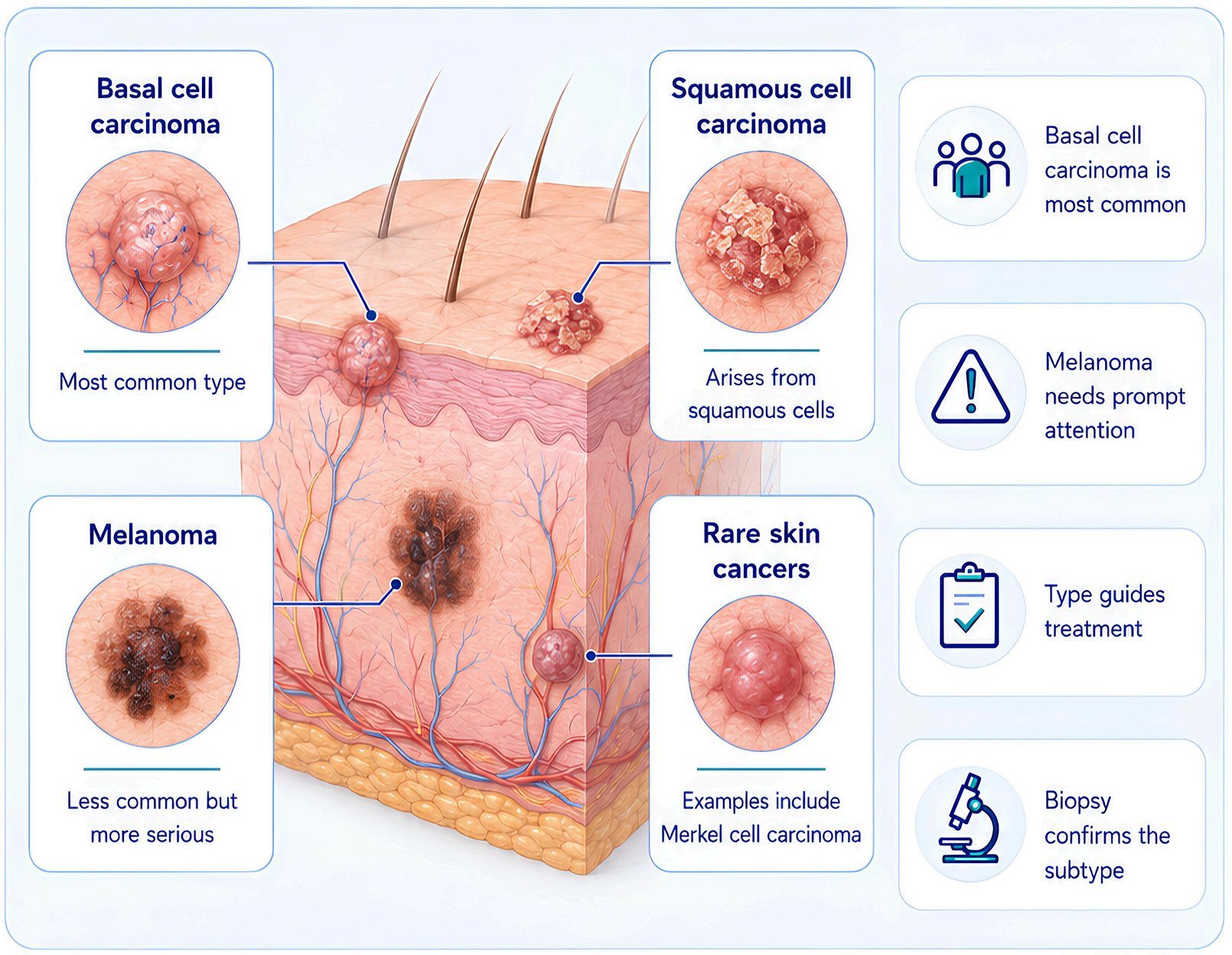
Types

- Basal Cell Carcinoma: The most common type. It usually grows slowly and may appear as a pearly bump, an ulcer or a wound that repeatedly bleeds.
- Cutaneous Squamous Cell Carcinoma: May appear as a rough scaly area, firm nodule, ulcer or rapidly enlarging skin growth.
- Melanoma: Begins in pigment-producing cells and may start as a changing existing mole or a new pigmented lesion. It has a higher risk of spreading.
- Other Rare Skin Cancers: Include Merkel cell carcinoma, cutaneous lymphoma and tumours of skin appendages.
Stages

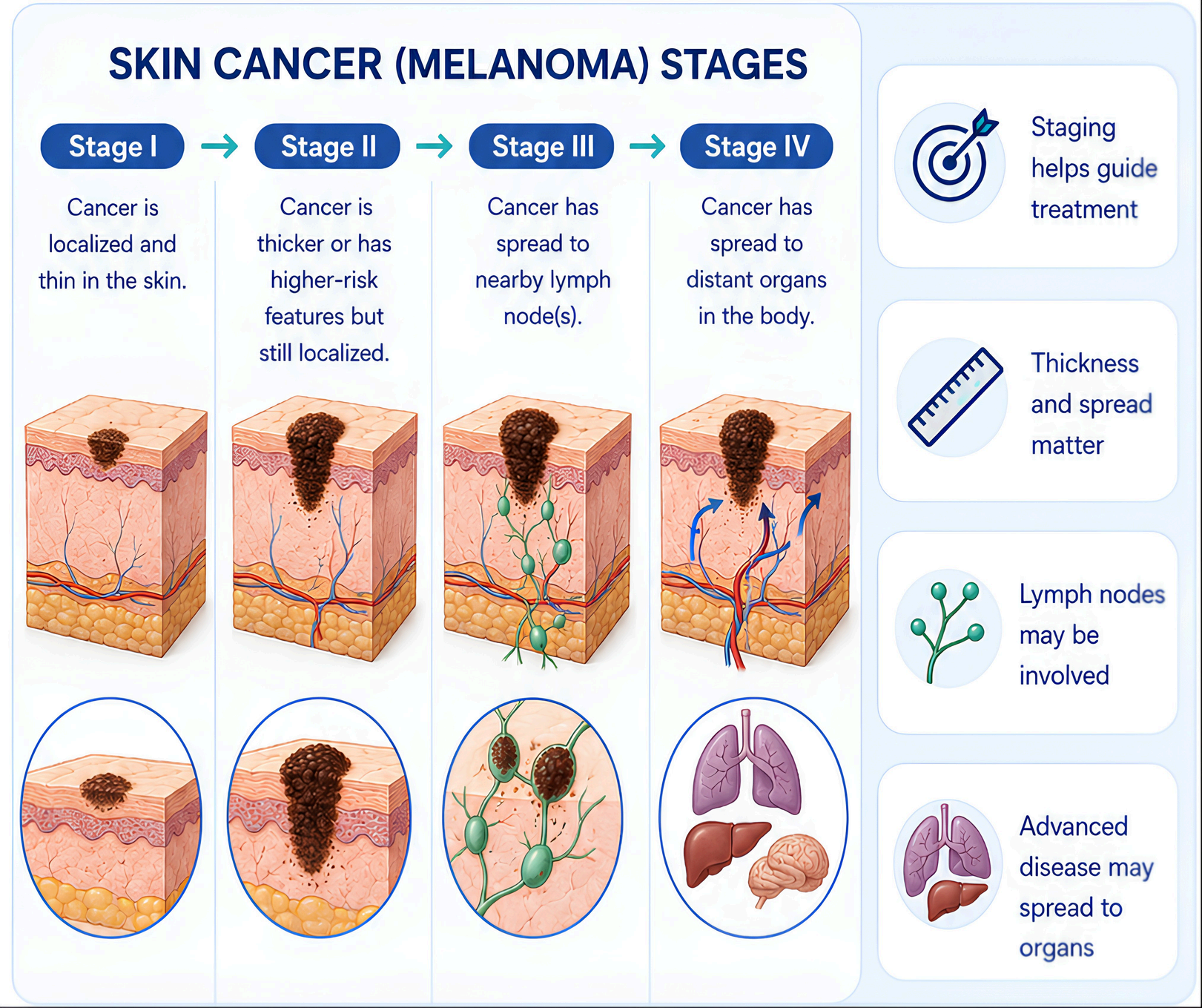
Basal and squamous cell carcinomas are often assessed according to low- or high-risk features. Melanoma is generally staged from 0 to IV using the TNM system.
- Stage 0: Abnormal cells are limited to the outermost layer of skin and have not invaded deeper tissue.
- Stages I–II: Cancer is confined to the skin and is further classified according to thickness, ulceration, size and other high-risk features.
- Stage III: Cancer has spread to nearby lymph nodes, satellite deposits or surrounding tissue.
- Stage IV: Cancer has spread to distant organs such as the lungs, liver, brain or bones.
Risk Factors

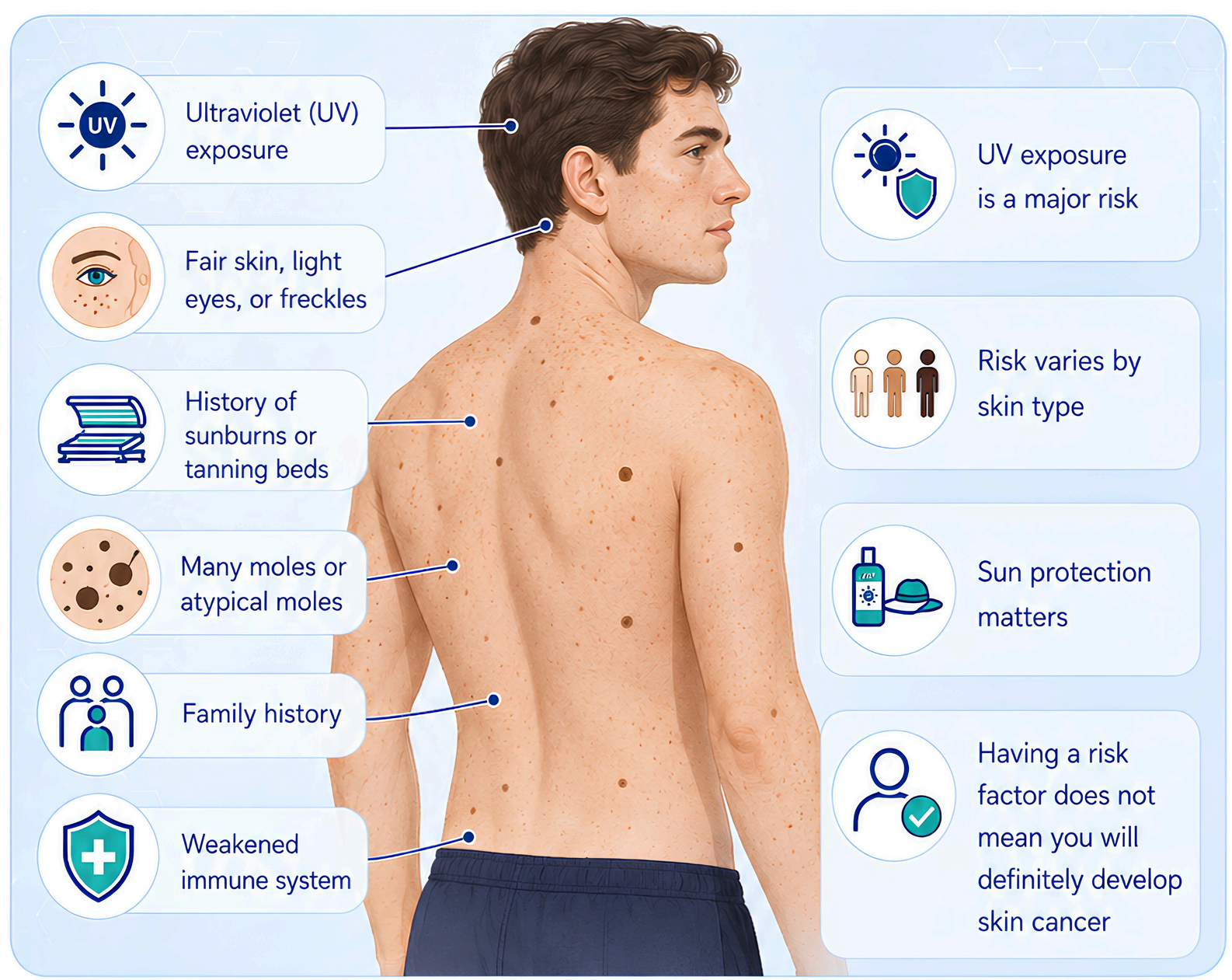
The following factors may increase the risk, but having one or more risk factors does not mean that a person will develop cancer:
Long-term or intense ultraviolet exposure from sunlight or indoor tanning devices
Fair skin, freckles or a tendency to burn easily
Many moles, atypical moles or a family history of melanoma
Previous skin cancer
Immune suppression, including after organ transplantation
Chronic wounds, scars or long-standing inflammation
Arsenic exposure or previous radiation treatment to the affected area
Symptoms

Early disease may not cause obvious symptoms. Medical evaluation is recommended when any of the following symptoms persist, recur, or gradually worsen:
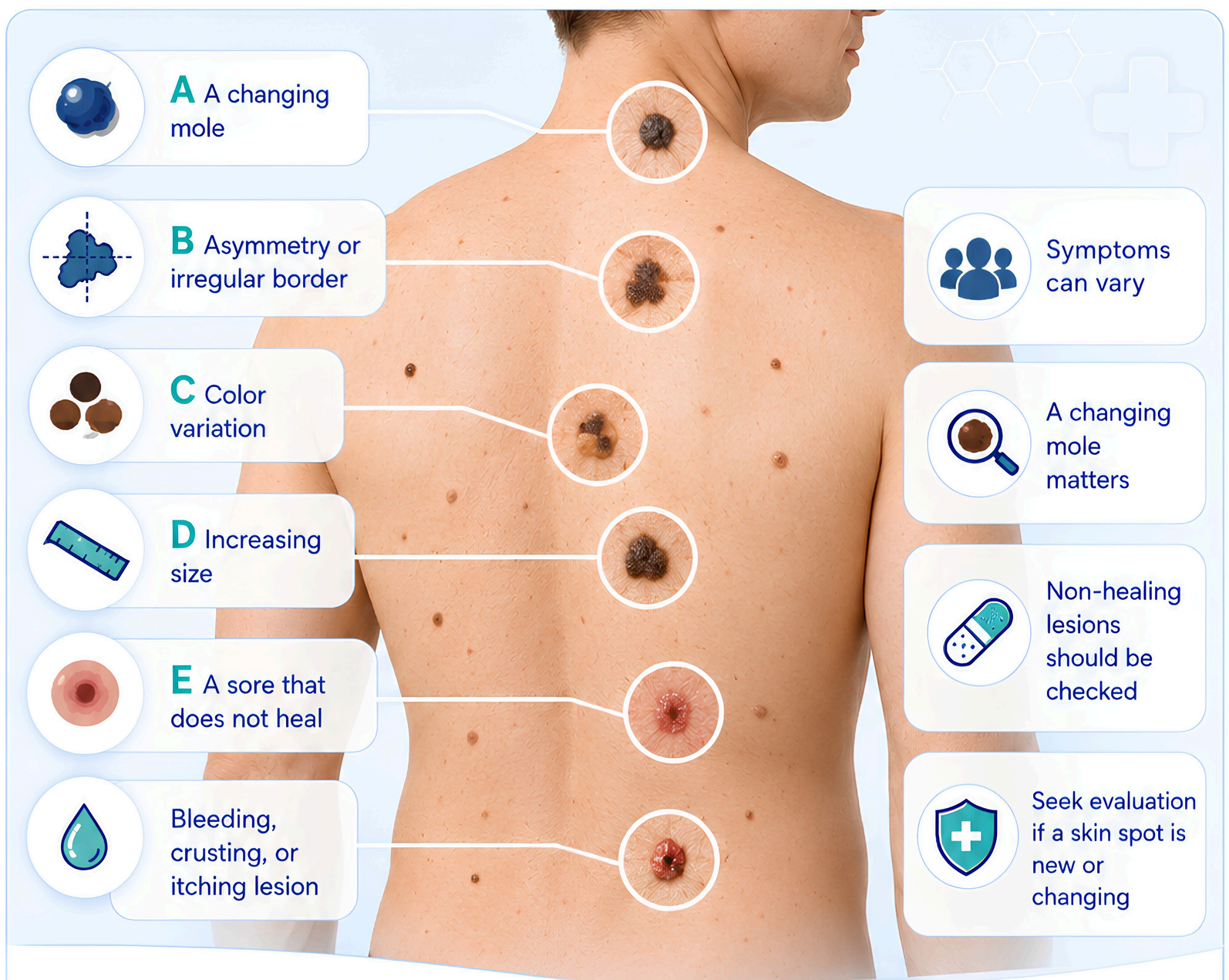
A new or continually changing mole or pigmented spot
ABCDE changes: asymmetry, irregular border, uneven colour, increasing diameter or continuing evolution
A skin wound that does not heal after several weeks
Recurrent bleeding, crusting or ulceration
A pearly, translucent or shiny bump
A rough, scaly, red or hardened patch
An unexplained dark line beneath a nail or pigment spreading around the nail
Diagnosis

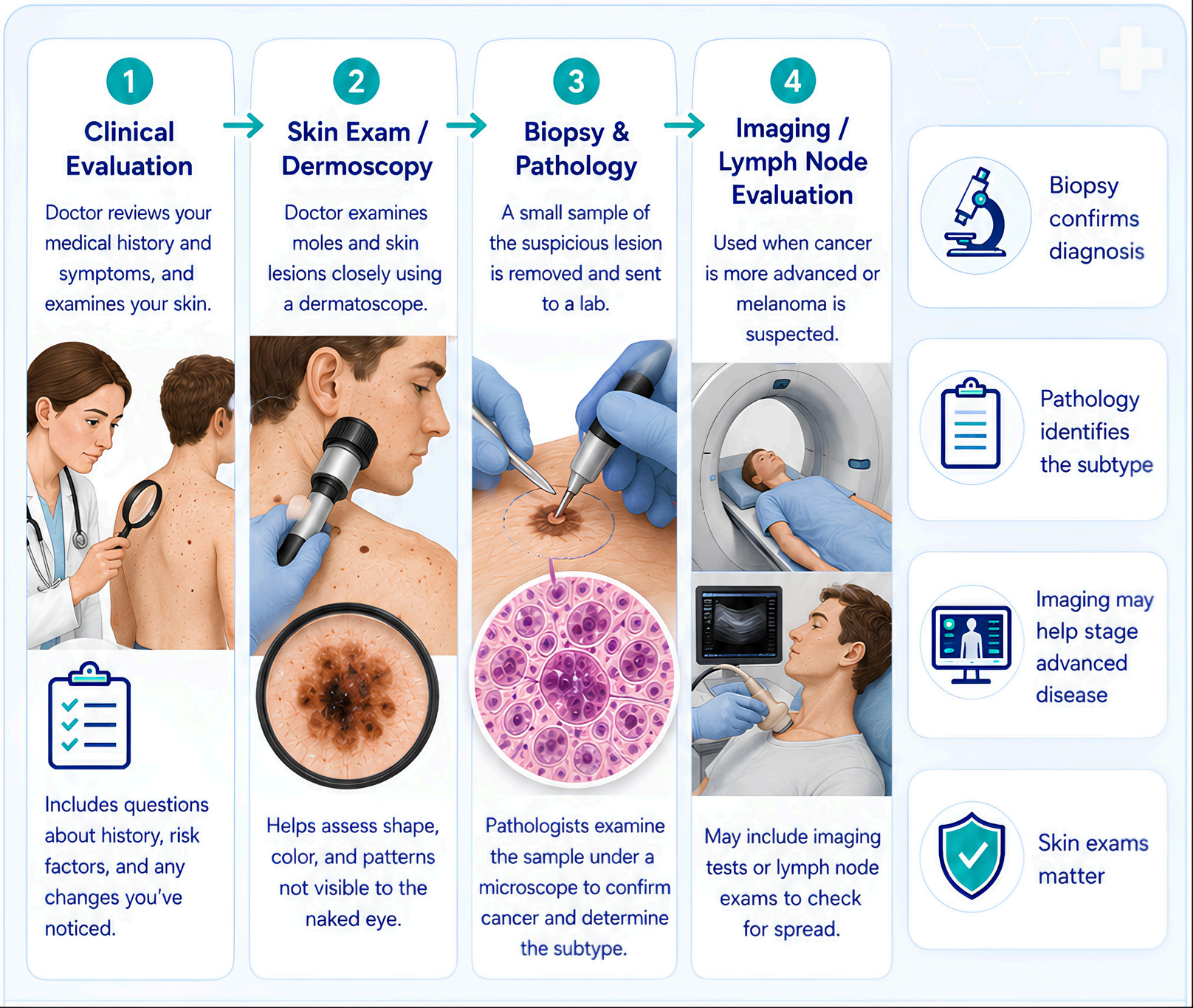
Diagnosis usually combines medical history, physical examination, imaging, laboratory tests, and pathology. The exact tests are selected by the doctor according to the individual case.
Skin Examination
Examination of the entire skin surface, scalp, nails and mucous membranes
Dermoscopy to assess pigment and vascular patterns
Biopsy
Excisional, shave, punch or incisional biopsy
Pathology to determine the cancer type, thickness and high-risk features
Lymph Node Assessment
Sentinel lymph node biopsy may be considered for higher-risk melanoma
Imaging and Staging
Ultrasound, CT, PET-CT or MRI may be used to assess spread in advanced disease
Facts (FAQ)
Q: Does every dark mole become melanoma?
A: No. Most moles are benign. A lesion with ABCDE changes or one that looks noticeably different from the others should be assessed.
Q: Can people with darker skin develop skin cancer?
A: Yes. Skin cancer can occur in any skin tone, and melanoma may develop on the soles, palms or beneath the nails.
Q: Can sun protection really reduce risk?
A: Reducing ultraviolet exposure, using sunscreen, wearing protective clothing and avoiding indoor tanning can help reduce skin damage and the risk of some skin cancers.
Q: Can skin cancer be cured?
A: Many early skin cancers have favourable outcomes after complete removal. Treatment becomes more complex if melanoma has spread.
Q: How long should a non-healing skin lesion be observed?
A: A wound, crusted area or bleeding lesion that has not improved after several weeks, or keeps returning, should be assessed by a doctor.